How to Optimize On-Page SEO for 2025
TL;DR
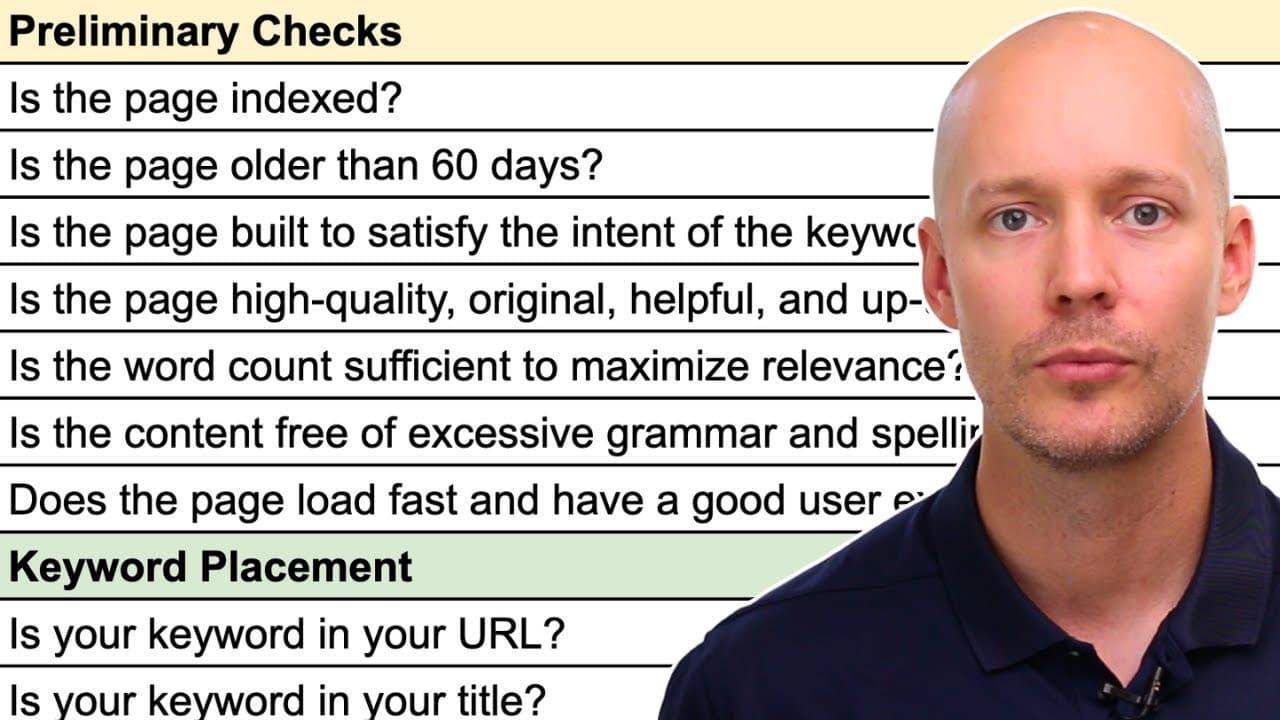
To optimize on-page SEO effectively, ensure your page is indexed and meets preliminary checks, such as satisfying keyword intent and having high-quality, original content. Focus on keyword placement, internal and external linking, and enhancing user engagement to improve ranking. Use tools like Rankability to measure content performance and adjust accordingly.
Transcript
so for this onpage SEO tutorial I'm going to be looking at this page on got seo.com and it's targeting does Google penalize AI content so that is the keyword phrase that it's going after and if we look at the keyword volume it's about 210 searches per month it's not super competitive uh but if we do I'll show you some stuff here in a second but the... Read More
Key Insights
- Indexing is crucial for SEO; without it, other optimizations are irrelevant.
- Content must satisfy the keyword intent to perform well in search rankings.
- High-quality, original content is essential; depth and relevance add value.
- Word count is not a direct ranking factor but helps build content relevance.
- Internal and external links should be to relevant, high-authority sources.
- Images should be original and high-quality to enhance content credibility.
- User engagement metrics, like dwell time, impact search rankings.
- Preliminary checks are the foundation of effective on-page SEO optimization.
Install to Summarize YouTube Videos and Get Transcripts
Explore YouTube Video Summarizer or Get YouTube Transcript Extractor
Questions & Answers
Q: How to ensure a page is indexed by Google?
To ensure a page is indexed by Google, submit the URL to Google Search Console and check its status. Use the 'URL Inspection' tool to see if it's indexed. If not, request indexing. Ensure the page is not blocked by robots.txt and has no 'noindex' tags. Regularly check indexing status to confirm visibility.
Q: What is the importance of keyword intent in SEO?
Keyword intent is crucial in SEO as it aligns content with what users are searching for. Understanding the intent helps create relevant content that answers user queries, increasing the likelihood of engagement and higher rankings. Content that satisfies keyword intent tends to perform better in search results, improving visibility and traffic.
Q: Why is word count not a direct ranking factor?
Word count itself is not a direct ranking factor because search engines prioritize content quality and relevance over quantity. However, longer content can provide more depth and context, allowing for better keyword placement and topic coverage, which indirectly supports SEO by enhancing content relevance and user engagement.
Q: How do internal and external links affect SEO?
Internal links help distribute page authority and guide users through relevant content, improving site navigation and user experience. External links to high-authority sources enhance content credibility and trustworthiness. Both types of links contribute to SEO by improving the content's relevance and authority, which can positively impact search rankings.
Q: What role do images play in on-page SEO?
Images in on-page SEO enhance user experience and engagement. Original, high-quality images improve content credibility and can increase time spent on the page. Properly optimized images with descriptive alt tags and filenames contribute to SEO by improving accessibility and providing additional context for search engines, enhancing content relevance.
Q: How does user engagement impact search rankings?
User engagement impacts search rankings as search engines use metrics like click-through rates, dwell time, and bounce rates to assess content relevance and quality. High engagement indicates valuable content, which can improve rankings. Engaging content encourages users to spend more time on the site and explore further, signaling positive user experience.
Q: What are preliminary checks in on-page SEO?
Preliminary checks in on-page SEO include verifying page indexing, ensuring content satisfies keyword intent, and assessing content quality and originality. These checks form the foundation for effective optimization, ensuring the page is ready for further enhancements. Addressing these basics helps improve content performance and search visibility significantly.
Q: How does Rankability help in SEO optimization?
Rankability assists in SEO optimization by providing tools to measure content performance, such as rankability scores and content briefs. It helps identify content gaps, optimize for natural language processing, and improve keyword placement. By offering insights into content relevance and depth, Rankability aids in creating well-optimized, high-performing content.
Summary & Key Takeaways
-
Indexing is the first step in SEO; ensure your page is indexed for optimizations to be effective. Content must align with keyword intent, be high-quality, and original, while depth and relevance add to its value. Use tools like Rankability to measure and improve content performance.
-
Keyword placement is crucial, and should be strategically positioned in titles, URLs, and headings. Internal and external linking to high-authority sources enhances credibility. User engagement, such as click-through rates and dwell time, significantly impacts ranking.
-
Preliminary checks form the backbone of on-page SEO. These include ensuring content satisfies keyword intent, is original, and has sufficient depth. Addressing these ensures a strong foundation for further optimizations, ultimately improving search performance.
Read in Other Languages (beta)
Share This Summary 📚
Summarize YouTube Videos and Get Video Transcripts with 1-Click
Try YouTube Summary with ChatGPT & Claude or YouTube Transcript Generator
Explore More Summaries from Nathan Gotch 📚






Summarize YouTube Videos and Get Video Transcripts with 1-Click
Try YouTube Summary with ChatGPT & Claude or YouTube Transcript Generator