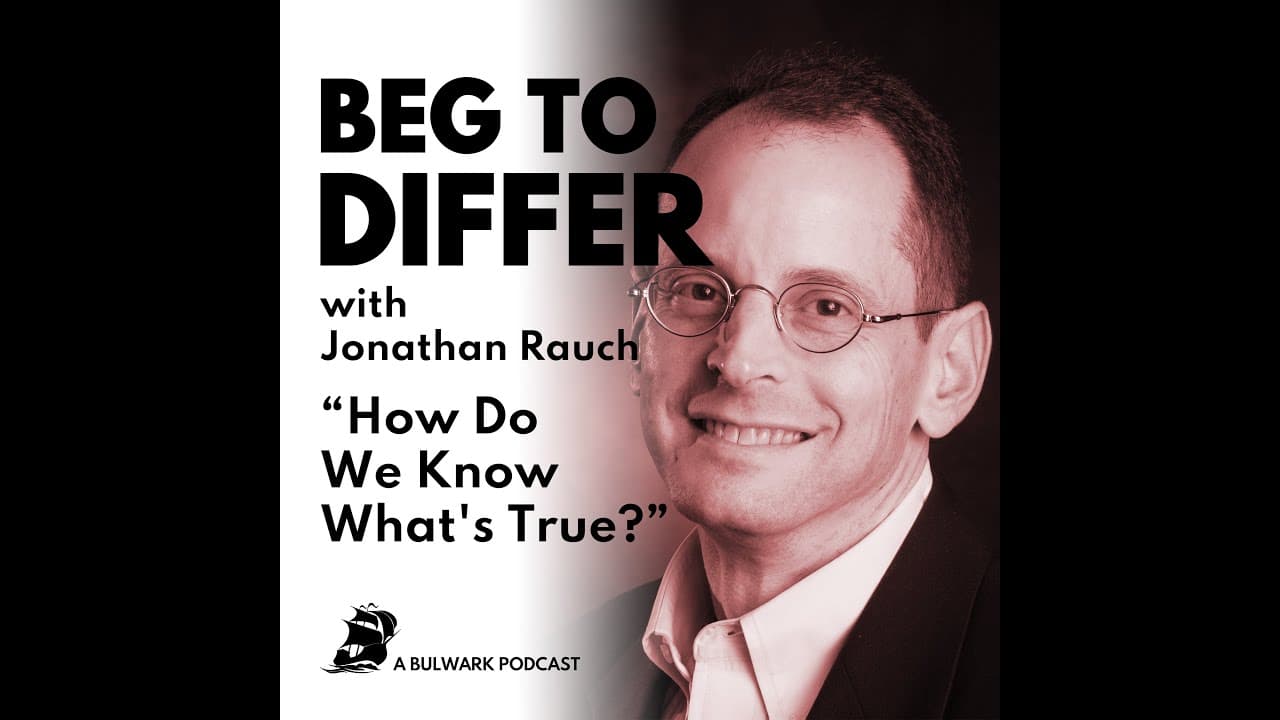
How Do We Know What's True?
TL;DR
Jonathan Rauch discusses the constitution of knowledge and the challenges it faces in the current era of disinformation and attacks on truth.
Transcript
welcome to beg to differ the bulwark's weekly roundtable discussion featuring civil conversation across the political spectrum from center left to center right i'm mona charon syndicated columnist and policy editor at the bulwark and i am joined by our regulars bill galston of the brookings institution in the wall street journal damon linker of the... Read More
Key Insights
- 🛄 The constitution of knowledge is a system that aims to establish truth through persuasion and compromise.
- 🧌 Disinformation and troll epistemology pose significant threats to the constitution of knowledge.
- 🔉 Positive adaptations are already being observed, such as increased media awareness and changes in social media platforms' policies.
- 👊 Education and understanding the tactics of disinformation are crucial in combatting attacks on the constitution of knowledge.
- ☠️ Crime rates and the future of the constitution of knowledge are potential vulnerabilities for Democrats.
- ❓ The Supreme Court's decisions, particularly on issues like abortion, can significantly impact the political landscape.
- 👏 The rise in federal spending proposed by the Biden administration raises both praise for addressing neglected areas and concerns about the long-term impacts.
Install to Summarize YouTube Videos and Get Transcripts
Explore YouTube Video Summarizer or Get YouTube Transcript Extractor
Questions & Answers
Q: How does the constitution of knowledge compare to the US Constitution?
The constitution of knowledge is structurally similar to the US Constitution, as it relies on a system of rules and decentralization to establish truth through persuasion and compromise.
Q: What is troll epistemology and how does it undermine the constitution of knowledge?
Troll epistemology refers to the use of disinformation and conspiracy theories to overwhelm the system of knowledge with false information. It undermines the constitution of knowledge by confusing, dividing, and disorienting people.
Q: Can the constitution of knowledge be adapted to combat disinformation?
Yes, by increasing awareness, promoting media literacy, encouraging ethical journalism, and holding social media platforms accountable, the constitution of knowledge can evolve to counter disinformation.
Q: How can changes in the media landscape impact the constitution of knowledge?
The deterioration of media ethics and bias can create challenges for the constitution of knowledge. More ideological diversity in newsrooms and changes in social media policies and algorithms can help combat the spread of fake news and conspiracy theories.
Summary & Key Takeaways
-
Jonathan Rauch explains how every society has had to establish a system to determine what is true and what is false and how this system is similar to the US Constitution.
-
He highlights the threat of troll epistemology, where disinformation is used to confuse, divide, and disorient people, and emphasizes the effectiveness of information warfare.
-
Rauch acknowledges that the constitution of knowledge requires adaptation and changes to combat disinformation, but he remains cautiously optimistic about its future.
Read in Other Languages (beta)
Share This Summary 📚
Summarize YouTube Videos and Get Video Transcripts with 1-Click
Try YouTube Summary with ChatGPT & Claude or YouTube Transcript Generator
Explore More Summaries from The Bulwark 📚
Summarize YouTube Videos and Get Video Transcripts with 1-Click
Try YouTube Summary with ChatGPT & Claude or YouTube Transcript Generator