No, more CO₂ won't help us grow more food
TL;DR
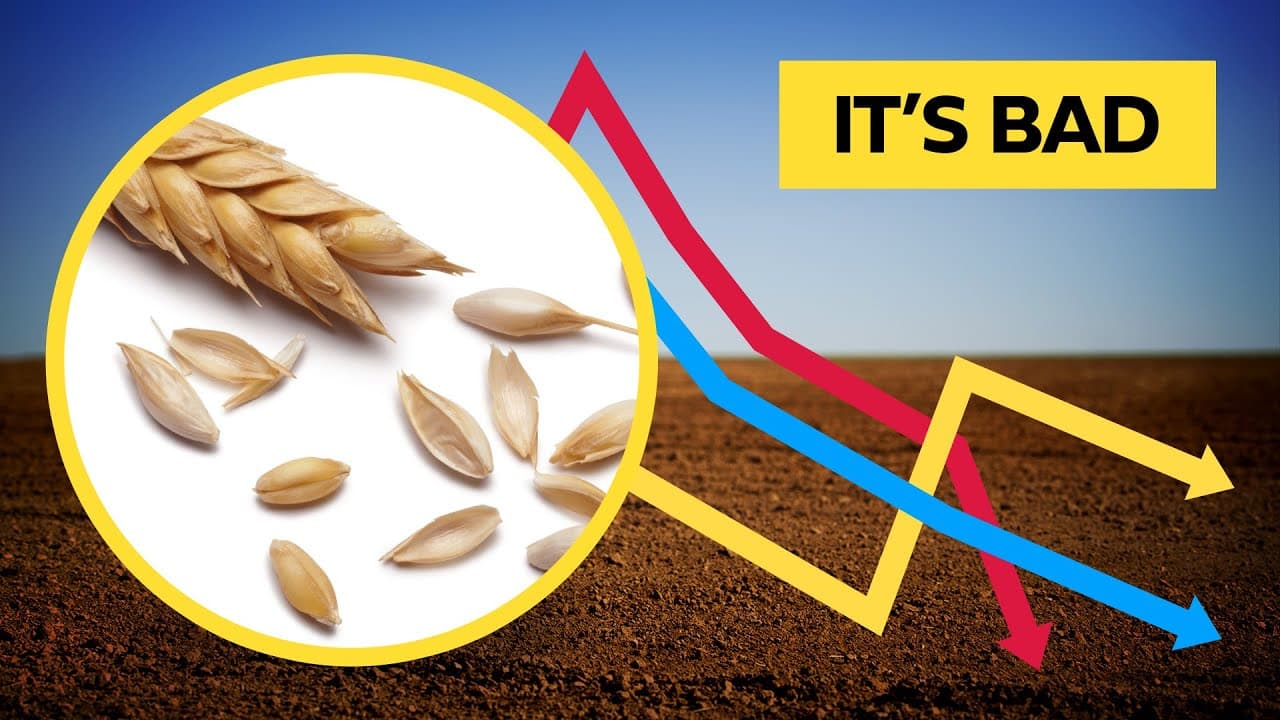
Increasing CO2 levels lead to decreased food production and nutrient deficiency.
Transcript
thanks to brilliant for sponsoring this video stick around to the end to find out how you can learn about maths science and computer science in a fun interactive way over the past 2 000 years our planet's population has increased from around 230 million people to nearly 8 000 million people slowly at first and then incredibly quickly in the past fe... Read More
Key Insights
- 🥺 Increased population leads to higher CO2 levels and energy consumption.
- 😋 Elevated CO2 levels reduce crop yields and nutrient content in food.
- 😋 Climate change-induced droughts worsen agricultural output and food security.
- 😋 Net-zero greenhouse gas emissions can help address food security and nutrition challenges.
- 😋 Fossil fuel burning contributes to rising CO2 levels and food production inefficiency.
- 😋 Nutrient-deficient food poses health risks and societal challenges.
- 😋 Addressing climate change is crucial for ensuring global food security.
Install to Summarize YouTube Videos and Get Transcripts
Explore YouTube Video Summarizer or Get YouTube Transcript Extractor
Questions & Answers
Q: How has Earth's population growth impacted CO2 levels and food production?
The rapid increase in Earth's population has led to higher CO2 levels in the atmosphere due to increased energy usage, negatively impacting food production.
Q: How does increased CO2 affect crop yields and nutrient content in food?
Elevated levels of CO2 result in decreased crop yields and nutrient-dense content in food, causing a global food security and nutrition crisis.
Q: What role does climate change play in agricultural output and food security?
Climate change-induced droughts and warming patterns are worsening agricultural output, posing significant threats to global food security and nutrition.
Q: How can reducing greenhouse gas emissions improve food security and nutrition?
Taking actions to limit greenhouse gas emissions and achieve net-zero status can help mitigate the impacts of climate change on food security and nutrition.
Summary & Key Takeaways
-
Earth's population has rapidly increased while CO2 concentration has risen, impacting food production.
-
More CO2 in the atmosphere results in decreased crop yields and nutrient-deficient food.
-
Climate change-induced droughts and warming threaten global food security and nutrition.
Read in Other Languages (beta)
Share This Summary 📚
Summarize YouTube Videos and Get Video Transcripts with 1-Click
Try YouTube Summary with ChatGPT & Claude or YouTube Transcript Generator
Explore More Summaries from Simon Clark 📚






Summarize YouTube Videos and Get Video Transcripts with 1-Click
Try YouTube Summary with ChatGPT & Claude or YouTube Transcript Generator