How Is the US Creating Barriers for Young People's Future?
TL;DR
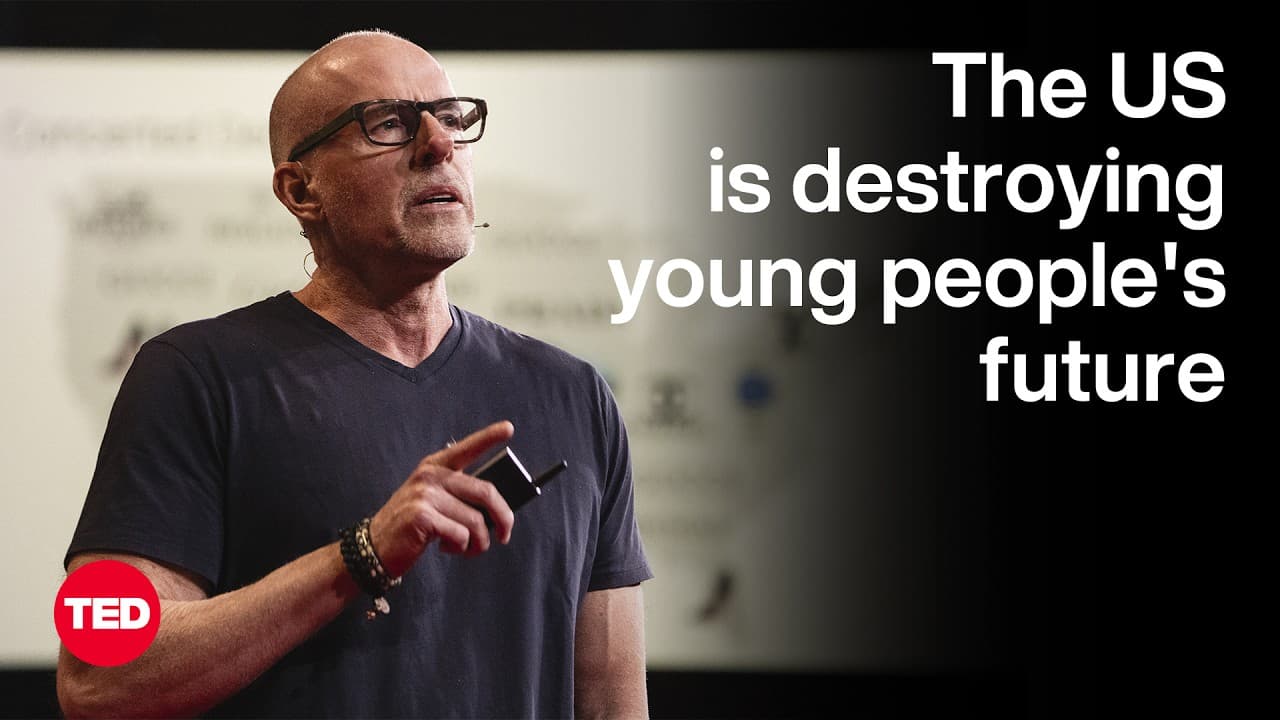
The US is creating barriers for young people's future through rising education and housing costs, purposeful wealth transfer, and stagnant wages. Younger generations are earning less and have fewer opportunities than their parents, leading to frustration and inequality. This situation is exacerbated by systemic issues in higher education and economic policies that prioritize older generations.
Transcript
my name is Scott G I teach NYU and I appreciate your time I have 44 slides in 720 seconds let's light this candle okay so for those of you who don't know me I'm actually a global television store true story I've had four TV series in the last three years two of them have been canceled before they were launched and two were canceled within 6 weeks l... Read More
Key Insights
- 🥺 Younger generations are facing a decline in prosperity and opportunities, leading to frustration and social unrest.
- 🥶 The transfer of wealth from older to younger generations has been purposefully engineered, exacerbating income inequality.
- 😮 The rising cost of higher education and housing is contributing to the economic challenges faced by younger individuals.
- 👶 Minimum wage disparities and restrictions on new housing permits further perpetuate wealth inequality and limit economic upward mobility.
- 🎙️ More videos with Scott Galloway:
Install to Summarize YouTube Videos and Get Transcripts
Explore YouTube Video Summarizer or Get YouTube Transcript Extractor
Questions & Answers
Q: What is the correlation between age and prosperity in the US?
As younger generations get younger, they are experiencing a decline in prosperity, with less purchasing power, fewer opportunities, and reduced economic mobility compared to their parents' generation.
Q: How has minimum wage contributed to the wealth transfer problem?
Minimum wage, purposely kept low, has not kept up with productivity gains, resulting in suppressed earnings for workers. If it had kept pace, the minimum wage would be significantly higher, further exacerbating the wealth inequality gap.
Q: How has the housing market contributed to the wealth transfer issue?
The median home price has increased significantly relative to median household income, making it harder for younger individuals to afford homes. This has been further compounded by restrictions on new housing permits, favoring incumbent homeowners and exacerbating wealth disparities.
Q: How has higher education become a barrier to prosperity for younger individuals?
Higher education has become more expensive and less accessible, making it harder for unremarkable individuals from lower-income backgrounds to secure opportunities for upward mobility. This further perpetuates generational inequality.
Summary & Key Takeaways
-
The younger generations are earning less money, facing skyrocketing costs for education and housing, and experiencing a breakdown in the social contract.
-
The transfer of wealth from older to younger generations has been purposefully engineered, leading to increased inequality and generational discontent.
-
Higher education has become increasingly expensive and inaccessible, contributing to the economic challenges faced by younger individuals.
Read in Other Languages (beta)
Share This Summary 📚
Summarize YouTube Videos and Get Video Transcripts with 1-Click
Try YouTube Summary with ChatGPT & Claude or YouTube Transcript Generator
Explore More Summaries from TED 📚






Summarize YouTube Videos and Get Video Transcripts with 1-Click
Try YouTube Summary with ChatGPT & Claude or YouTube Transcript Generator