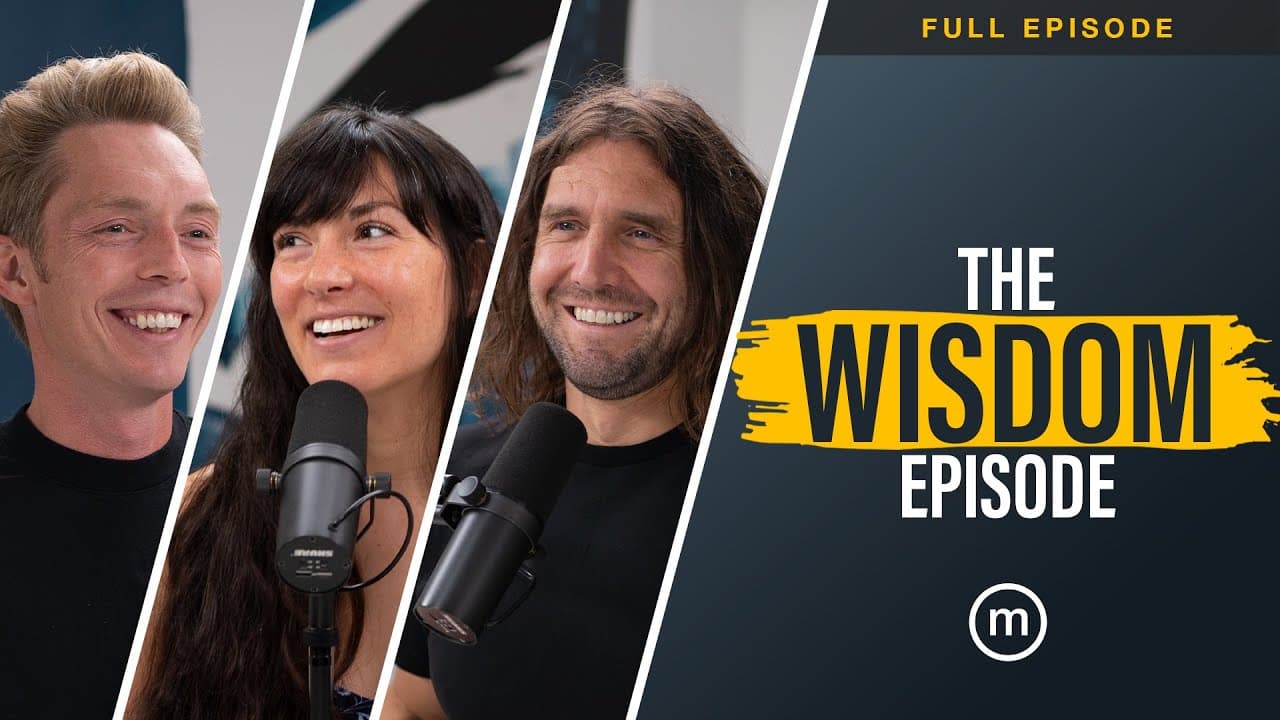
Ep. 311 | Wisdom (Ryan’s 40th Birthday, with His Wife, Mariah)
TL;DR
Exploring wisdom, maturity, and relationships at 40.
Transcript
this episode of the minimalist is brought to you by nobody because advertisements suck this podcast has bad words hello minimizers welcome to the minimalist podcast where we discuss what it means to live a meaningful life with less my name is Joshua Fields Milburn and I'm Ryan Nicodemus and together we are the minimalists and it's my freaking Birth... Read More
Key Insights
- Turning 40 is seen as a significant milestone, often prompting reflection on wisdom and maturity gained over the years.
- Maturity is not necessarily tied to age; young people can be mature, and older people can lack maturity.
- Wisdom is often confused with knowledge; wisdom comes from experience, while knowledge can be acquired through reading and learning.
- In relationships, compromising preferences is different from compromising values; maintaining individual values is crucial for personal happiness.
- The concept of 'whataboutism' in relationships involves deflecting criticism by pointing out the other's faults, which can lead to a cycle of blame.
- Responding instead of reacting in relationships can lead to healthier communication and understanding.
- The 'hedonic treadmill' refers to the tendency to quickly return to a baseline level of happiness despite positive or negative changes.
- Equilibrium in relationships is not about being on the same journey but supporting each other's individual paths.
Install to Summarize YouTube Videos and Get Transcripts
Explore YouTube Video Summarizer or Get YouTube Transcript Extractor
Questions & Answers
Q: When do maturity, wisdom, and knowledge best align?
Maturity, wisdom, and knowledge best align when an individual can apply their acquired knowledge through the lens of experience, resulting in wise decisions. This alignment often occurs when one can balance knowledge with the practical understanding gained from life experiences, leading to informed and mature choices.
Q: How have your needs in a romantic partnership changed as you move toward your 40s?
As I move toward my 40s, my needs in a romantic partnership have evolved to focus more on mutual support and understanding rather than dependency. I have learned the importance of maintaining individual happiness and not relying solely on my partner to fulfill all emotional needs. This shift has led to a healthier, more balanced relationship.
Q: What is 'whataboutism'?
'Whataboutism' is a rhetorical tactic where one responds to an accusation or criticism by making a counter-accusation or pointing out a similar issue in the other person. In relationships, it can lead to a cycle of blame and prevent constructive communication, as it deflects from addressing the original concern.
Q: How has responding instead of reacting helped your relationship?
Responding instead of reacting has helped my relationship by fostering better communication and understanding. By taking a moment to process emotions before responding, I can address issues more calmly and thoughtfully, reducing the likelihood of escalating conflicts and promoting a more supportive and empathetic environment.
Q: Are Ryan and Mariah always in agreement regarding their minimalist practices; and, if not, how do they find compromise with one another?
Ryan and Mariah are not always in agreement regarding their minimalist practices, but they find compromise by respecting each other's preferences and maintaining open communication. They focus on supporting each other's individual journeys and make decisions that align with their shared values, allowing for flexibility and mutual understanding.
Q: How do you find equilibrium in your relationship when an individual is on their minimalist journey but their partner is not?
Finding equilibrium involves respecting each other's individual paths and supporting one another without coercion. It's important to focus on personal growth and lead by example, allowing the partner to observe the benefits of minimalism. Communication and understanding help maintain harmony while respecting each other's differences.
Q: What is the 'hedonic treadmill'?
The 'hedonic treadmill' is a concept that describes the tendency for people to return to a baseline level of happiness despite experiencing positive or negative events. It highlights how individuals adapt to changes and often seek new desires, which can lead to a cycle of chasing happiness without achieving lasting satisfaction.
Q: What guests have you had at your tour stops?
The tour stops have featured a variety of guests, including Dr. John Delony, Ian Cron, VV, Amy Stroup, Canyon City, Dr. Joanne Cacciatore, and others. Each guest brings unique insights and perspectives, enriching the discussions and engaging the audience with diverse topics related to minimalism and personal growth.
Summary & Key Takeaways
-
This episode explores the themes of wisdom, maturity, and relationships as Ryan celebrates his 40th birthday. The discussion delves into how maturity isn't necessarily tied to age and how wisdom is derived from experience rather than just knowledge.
-
The conversation highlights the importance of maintaining individual values in relationships and how compromising preferences should not lead to compromising core values. The episode also touches on the concept of 'whataboutism' and the importance of responding rather than reacting.
-
The episode addresses how couples can find equilibrium when one partner is on a minimalist journey, emphasizing support over coercion. The 'hedonic treadmill' is discussed as a reminder that happiness levels tend to stabilize despite changes in circumstances.
Read in Other Languages (beta)
Share This Summary 📚
Summarize YouTube Videos and Get Video Transcripts with 1-Click
Try YouTube Summary with ChatGPT & Claude or YouTube Transcript Generator
Explore More Summaries from The Minimalists Podcast 📚




Summarize YouTube Videos and Get Video Transcripts with 1-Click
Try YouTube Summary with ChatGPT & Claude or YouTube Transcript Generator