Thermal Compound Paste, Heat Sink, Air vs Water Cooling Explained
TL;DR
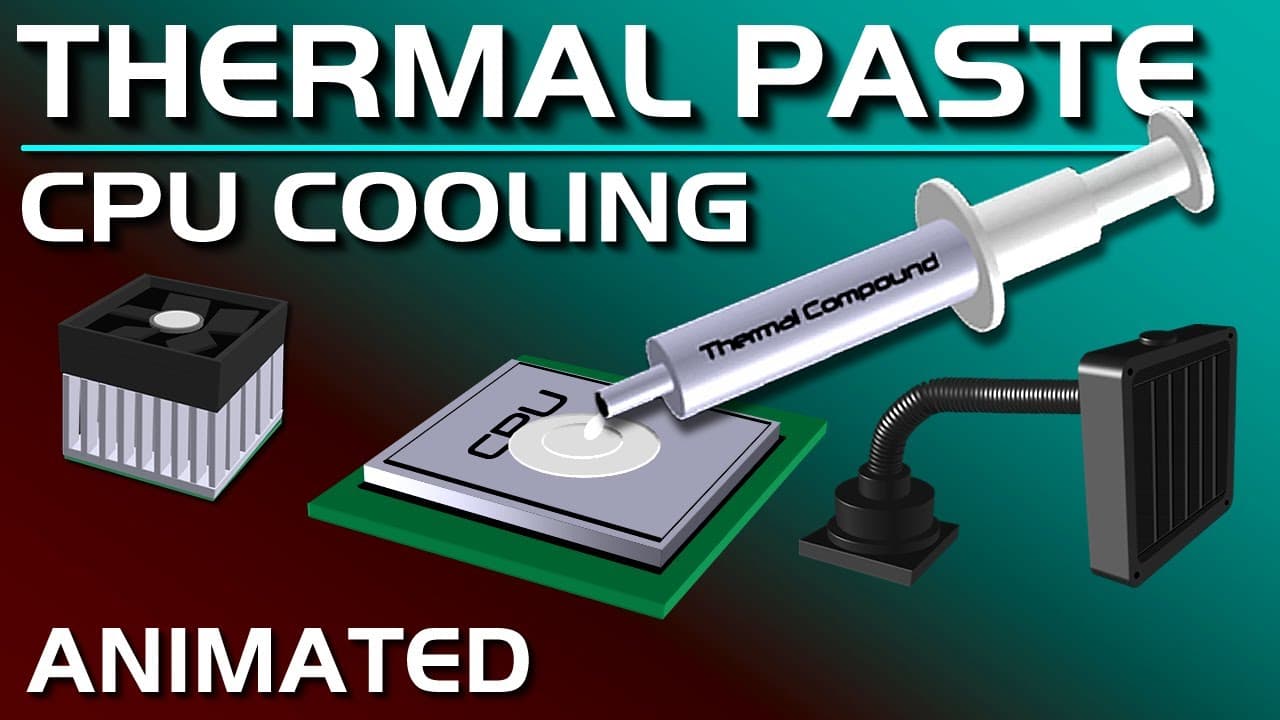
Explains air and water cooling for CPUs, including components and benefits.
Transcript
Hello everyone, in this video we're going to talk about CPU cooling. And we're going to talk about the components that are involved in CPU cooling and we're also going to discuss the two different types of cooling that can be used to cool a CPU, such as air cooling and water cooling. Now the biggest heat generator i... Read More
Key Insights
- The CPU is the primary heat generator in a computer and requires effective cooling solutions to prevent overheating.
- Air cooling involves using a heat sink and fan to dissipate heat from the CPU, which is the most common method.
- A heat sink increases the surface area for better air contact, aiding in efficient heat dissipation from the CPU.
- Thermal compound paste fills microscopic gaps between the CPU and heat sink, improving heat transfer efficiency.
- Water cooling uses a pump, hosing, and radiator to circulate water, offering superior cooling compared to air cooling.
- Water coolers are quieter and more effective but are also more expensive and less common than air coolers.
- High-performance and overclocked computers benefit more from water cooling due to its enhanced cooling capabilities.
- The video provides a personal recommendation for a third-party air cooler as a cost-effective solution for standard CPU cooling needs.
Install to Summarize YouTube Videos and Get Transcripts
Explore YouTube Video Summarizer or Get YouTube Transcript Extractor
Questions & Answers
Q: What is the primary purpose of a heat sink in CPU cooling?
The primary purpose of a heat sink in CPU cooling is to increase the surface area of the CPU, allowing for better air contact and efficient heat dissipation. The heat sink absorbs heat from the CPU, which is then cooled by air, typically with the assistance of a fan, to prevent the CPU from overheating.
Q: How does thermal compound paste improve CPU cooling?
Thermal compound paste improves CPU cooling by filling in the microscopic air gaps between the CPU and the heat sink. These gaps arise due to the imperfections in the flat surfaces of the CPU and heat sink. By filling these gaps, the thermal compound ensures maximum contact and improves heat transfer efficiency, keeping the CPU cooler.
Q: Why might someone choose water cooling over air cooling for their CPU?
Someone might choose water cooling over air cooling for their CPU because water cooling provides superior cooling performance, which is especially beneficial for high-performance or overclocked computers. Water cooling systems are also quieter than air cooling systems. However, they are more expensive and typically used in specialized computing setups where enhanced cooling is necessary.
Q: What are the components of a water cooling system for CPUs?
A water cooling system for CPUs typically consists of a pump, hosing, and a radiator. The pump circulates water throughout the system, the hosing directs the flow of water, and the radiator, equipped with a fan, cools the water by drawing air through it. This setup allows for efficient heat removal from the CPU.
Q: Why is air cooling more common than water cooling in standard computers?
Air cooling is more common than water cooling in standard computers because it is less expensive and easier to install. Most standard computer setups do not require the enhanced cooling performance provided by water cooling, making air cooling a sufficient and cost-effective solution for the majority of users.
Q: What personal recommendation does the video provide regarding CPU coolers?
The video provides a personal recommendation for a third-party CPU air cooler, which the creator has consistently used in their computer builds. This cooler is suggested as a cost-effective solution for standard CPU cooling needs, offering better performance than the stock coolers that typically come with CPUs, making it a preferred choice for the creator.
Q: In what scenarios is water cooling particularly beneficial?
Water cooling is particularly beneficial in scenarios involving high-performance computing, such as gaming or when overclocking the CPU. These scenarios generate more heat than standard operations, and water cooling's superior heat dissipation capabilities help maintain optimal CPU temperatures, ensuring system stability and performance.
Q: What is the role of the CPU fan in air cooling systems?
The role of the CPU fan in air cooling systems is to move air across the heat sink, enhancing the cooling process. By circulating air, the fan helps dissipate heat absorbed by the heat sink from the CPU, ensuring that the CPU remains at a safe operating temperature and preventing overheating.
Summary & Key Takeaways
-
The video discusses two primary methods of cooling a CPU: air cooling and water cooling. Air cooling, the more common method, uses a heat sink and fan to dissipate heat, while water cooling employs a pump and radiator system for superior cooling.
-
A heat sink is vital for increasing the CPU's surface area for air contact, facilitating better heat dissipation. Thermal compound paste is crucial for filling microscopic gaps between the CPU and heat sink, enhancing heat transfer efficiency.
-
Water cooling, though more effective and quieter than air cooling, is more expensive and typically used in high-performance or overclocked computers. The video also includes a personal recommendation for a third-party air cooler as a cost-effective solution.
Read in Other Languages (beta)
Share This Summary 📚
Summarize YouTube Videos and Get Video Transcripts with 1-Click
Try YouTube Summary with ChatGPT & Claude or YouTube Transcript Generator
Explore More Summaries from PowerCert Animated Videos 📚






Summarize YouTube Videos and Get Video Transcripts with 1-Click
Try YouTube Summary with ChatGPT & Claude or YouTube Transcript Generator