Skills Wars Are the New Trade Wars
TL;DR
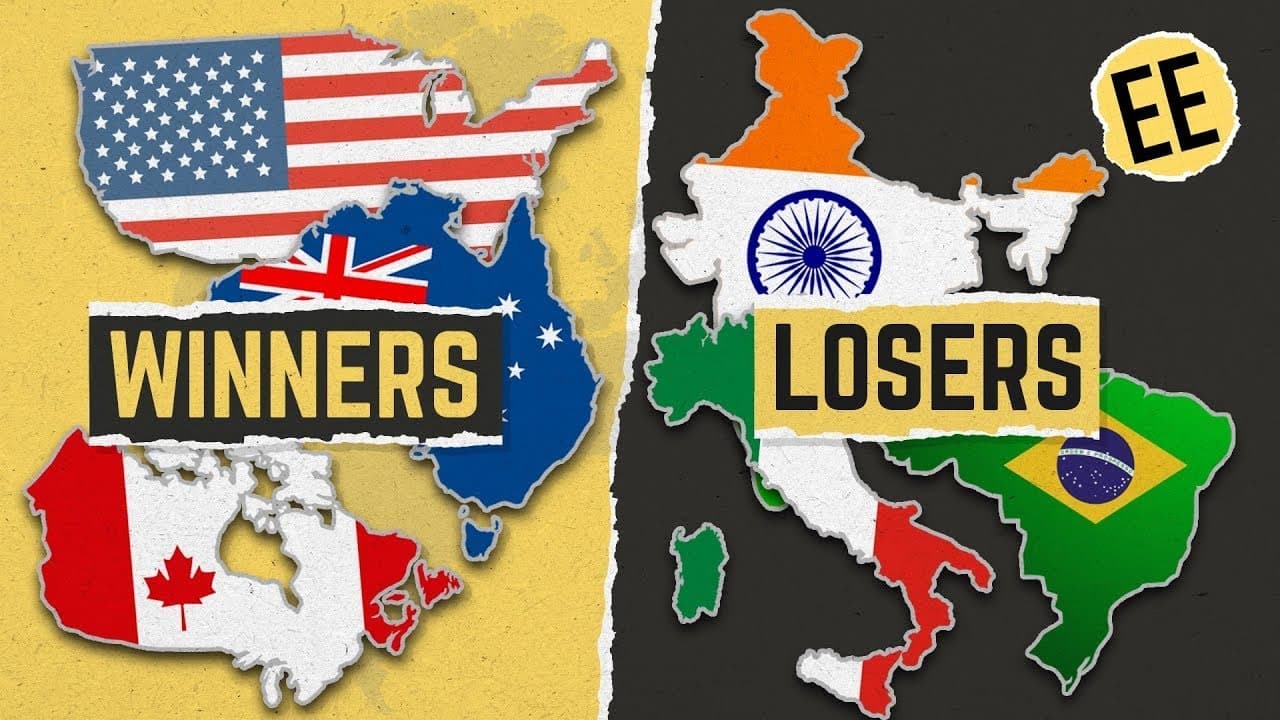
Skilled labor migration is reshaping global economies, akin to trade wars.
Transcript
modern trade Wars taking place right now in the world around us are costing the global economy trillions of dollars but the impact of what is ultimately just taxes tariffs subsidies and quotas on internationally traded Goods maybe all but insignificant compared to fights over a far more valuable resource skilled labor International Trade used to be... Read More
Key Insights
- Modern trade wars, costing trillions, pale in comparison to the economic impact of skilled labor migration, which is reshaping global economies.
- The standardization of shipping containers revolutionized global trade, making it cheaper and more efficient, but also more fragile to disruptions.
- Globalization has positively impacted economies, allowing countries to rapidly develop by providing low-cost goods, though it has also led to job losses domestically.
- Skilled labor migration benefits host countries by filling roles, boosting economies, and contributing through taxes, but can detrimentally impact the home countries of these workers.
- Countries like Australia benefit significantly from international students, who contribute economically before potentially becoming skilled workers in the host nation.
- Expatriate workers can offer immediate expertise for developing projects, as seen in Taiwan's industrial expansion, without the long-term investment in training local workers.
- Countries losing skilled workers to migration face economic challenges, as seen in Italy, where youth unemployment and underemployment drive graduates to seek opportunities abroad.
- Policies to manage skilled labor migration could include incentives for attracting workers or restrictions to retain talent, but these solutions present ethical and economic challenges.
Install to Summarize YouTube Videos and Get Transcripts
Explore YouTube Video Summarizer or Get YouTube Transcript Extractor
Questions & Answers
Q: How has the standardization of shipping containers impacted global trade?
The standardization of shipping containers, which became popular in the 1960s, revolutionized global trade by making it more efficient and cost-effective. This innovation allowed for goods to be transported more easily and cheaply across the globe, reducing the need for domestic manufacturing and increasing reliance on international suppliers. However, this efficiency also introduced fragility, as seen in the 2021 shortage of shipping containers, which disrupted supply chains despite an abundance of goods.
Q: What are the economic benefits of skilled labor migration for host countries?
Host countries benefit from skilled labor migration as it fills labor shortages, enhances economic productivity, and contributes to tax revenues. Skilled migrants often bring expertise that can advance industries and drive innovation. Additionally, international students contribute economically through tuition fees and living expenses, and they may become valuable skilled workers if they remain in the host country. This influx of talent can bolster the host nation's economy and global competitiveness.
Q: What challenges do countries face when they lose skilled workers to migration?
Countries losing skilled workers to migration face significant economic challenges, such as a reduced workforce for key industries and a loss of potential tax revenue. This is particularly problematic for countries like Italy, where high youth unemployment and underemployment drive educated individuals to seek better opportunities abroad. The loss of talent can hinder economic growth and development, as investments in education do not yield returns if graduates work overseas, contributing to other economies instead.
Q: How do expatriate workers benefit host countries in large-scale projects?
Expatriate workers provide immediate expertise for large-scale projects, allowing host countries to quickly advance infrastructure and industrial initiatives without the long-term investment in training local workers. For example, during Taiwan's industrial expansion in the 1970s, expatriates were brought in to design and oversee projects like nuclear power plants. This approach allows for rapid project completion and skill transfer, enhancing the host country's industrial capabilities and economic development.
Q: What role do international students play in the economies of host countries?
International students play a crucial role in the economies of host countries by contributing financially through tuition fees and living expenses. In countries like Australia, education is a significant export, with international students supporting local economies during their studies. Upon graduation, these students may become skilled workers, further contributing to the host nation's industries and tax revenues. This dynamic supports economic growth and enhances the host country's global competitiveness.
Q: What are the potential policy responses to manage skilled labor migration?
Potential policy responses to manage skilled labor migration include offering incentives to attract skilled workers, such as low taxes or guaranteed jobs, and implementing restrictions to retain domestic talent. Some countries may consider citizenship-based taxation to ensure they benefit financially from citizens working abroad. However, these solutions present ethical and economic challenges, as they may impact individual freedoms and international relations, and require careful consideration to balance national interests with global cooperation.
Q: How does the loss of skilled workers impact developing countries?
The loss of skilled workers can severely impact developing countries by depleting their workforce of young, productive individuals who are essential for economic development. These countries often struggle to offer competitive income levels and working conditions compared to advanced economies, leading to a brain drain. This trend threatens their ability to build robust industries and improve living standards, as they lose the talent needed to drive innovation and growth, exacerbating economic disparities on a global scale.
Q: What are the ethical considerations in implementing policies to retain skilled workers?
Implementing policies to retain skilled workers raises ethical considerations, such as the potential infringement on individual freedoms and the right to pursue better opportunities. Restrictive measures, like citizenship-based taxation or outright bans on working abroad, may be seen as limiting personal choice and mobility. Balancing national interests with respect for individual rights is crucial, as overly restrictive policies could damage international relations and undermine the principles of a free and open global economy.
Summary & Key Takeaways
-
The video highlights the economic impact of skilled labor migration, comparing it to trade wars. While globalization has facilitated efficient trade, it also leads to job competition and losses domestically. Countries benefit by attracting skilled workers, but their home countries face economic challenges due to talent loss.
-
Skilled migration benefits advanced economies by filling labor gaps and boosting economic contributions, whereas countries like Italy struggle with high youth unemployment, driving graduates to seek opportunities abroad. The video discusses potential policies to manage skilled migration, weighing economic benefits against ethical considerations.
-
Expatriate workers offer immediate expertise for large-scale projects, as seen in Taiwan's industrial expansion, without long-term investments in local training. Host countries benefit economically from international students, who contribute through fees and taxes, but this dynamic can disadvantage their home countries economically.
Read in Other Languages (beta)
Share This Summary 📚
Summarize YouTube Videos and Get Video Transcripts with 1-Click
Try YouTube Summary with ChatGPT & Claude or YouTube Transcript Generator
Explore More Summaries from Economics Explained 📚


Summarize YouTube Videos and Get Video Transcripts with 1-Click
Try YouTube Summary with ChatGPT & Claude or YouTube Transcript Generator