Geometric Deep Learning | Michael Bronstein || Radcliffe Institute
TL;DR
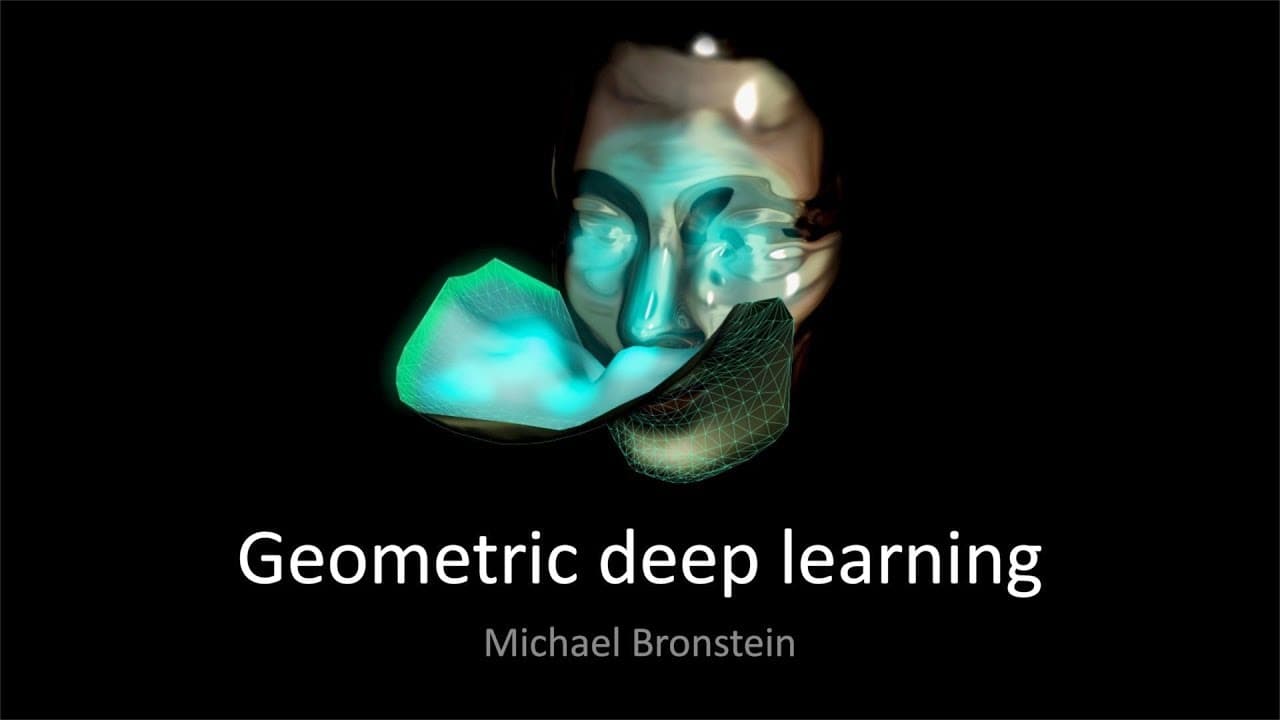
Geometric deep learning is a new trend in machine learning that combines meaningful geometric structures with powerful neural networks to solve problems related to non-Euclidean data.
Transcript
[MUSIC PLAYING] - So good afternoon, everybody. I'm very glad to see here so many friendly and familiar faces. Thank you for coming here this hour. It's really a great honor for me to be here on the stage and I would like to think the Radcliffe Institute for giving me this opportunity for the amazing fellowship program which I'm part of. And to tha... Read More
Key Insights
- 🚱 Geometric deep learning combines geometric structures and neural networks to solve problems related to non-Euclidean data.
- 😀 It has shown success in face recognition, motion capture, social networks, recommendation systems, drug design, and more.
- 🤗 Geometric deep learning overcomes the limitations of hand-crafted features by allowing neural networks to learn from data and capture complex patterns and relationships.
Install to Summarize YouTube Videos and Get Transcripts
Explore YouTube Video Summarizer or Get YouTube Transcript Extractor
Questions & Answers
Q: How does geometric deep learning overcome the limitations of traditional hand-crafted features?
Traditional hand-crafted features require prior assumptions about what constitutes meaningful information. Geometric deep learning, on the other hand, uses neural networks that can learn from data and capture complex patterns and relationships in geometric structures, leading to more accurate and efficient results.
Q: What are some applications of geometric deep learning?
Geometric deep learning has been successfully applied in face recognition, motion capture, social networks, recommendation systems, and drug design. It shows potential for solving problems in various fields that involve non-Euclidean data.
Q: How does geometric deep learning improve drug design?
Geometric deep learning can be used to screen molecules and predict their properties, such as efficiency against pathogens or toxicity. By employing neural networks on graphs that represent molecules, this approach can significantly speed up the process of discovering and designing new drugs.
Q: How does geometric deep learning benefit recommendation systems?
In recommendation systems, geometric deep learning leverages the social network of users to predict their preferences for movies, products, or other items. By aggregating scores from a user's social neighborhood, this approach can provide more accurate recommendations than traditional approaches.
Summary & Key Takeaways
-
Geometric deep learning aims to apply deep learning methods to data with non-Euclidean geometric structures, such as surfaces, graphs, and networks.
-
By incorporating geometric models and prior knowledge into neural network architectures, geometric deep learning can learn and generalize better in tasks like face recognition, motion capture, and material design.
-
Geometric deep learning shows promising results in various applications, such as social networks, recommendation systems, and drug design.
Read in Other Languages (beta)
Share This Summary 📚
Summarize YouTube Videos and Get Video Transcripts with 1-Click
Try YouTube Summary with ChatGPT & Claude or YouTube Transcript Generator
Explore More Summaries from Harvard University 📚





Summarize YouTube Videos and Get Video Transcripts with 1-Click
Try YouTube Summary with ChatGPT & Claude or YouTube Transcript Generator