Liberals still have no plan to stabilize food prices (ft. Franco Terrazzano)
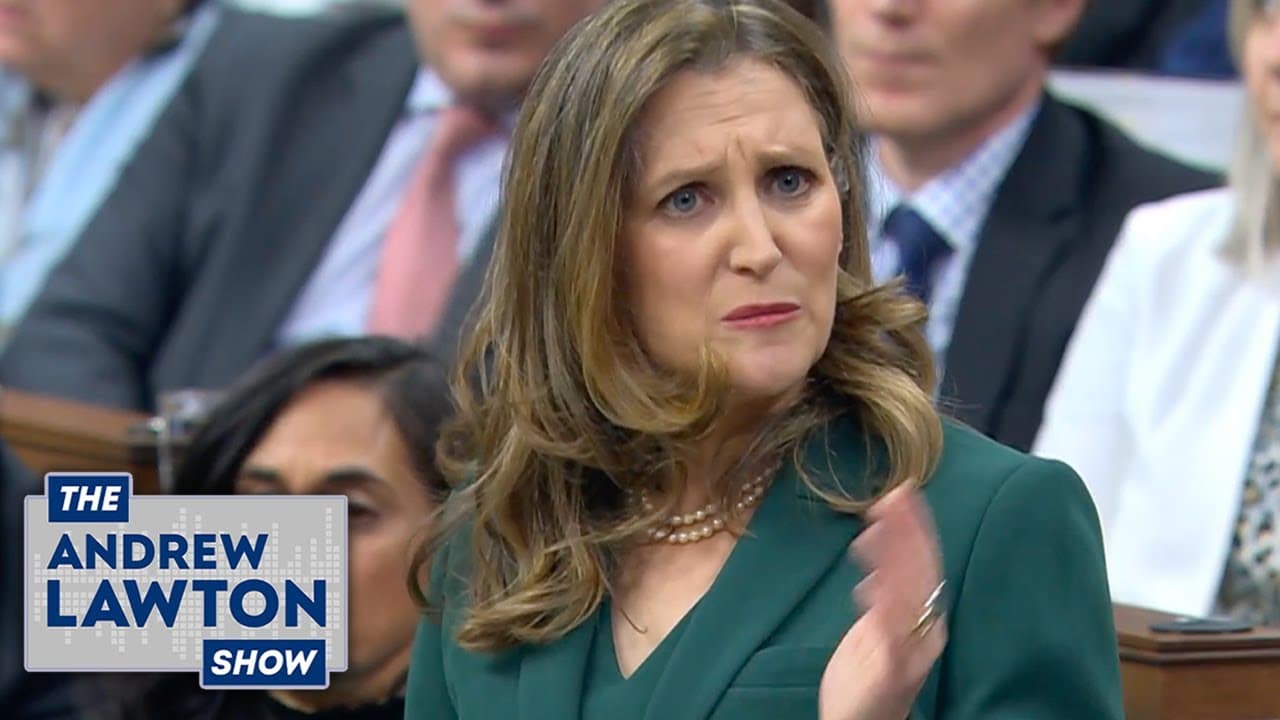
TL;DR
Grocery prices remain high despite government promises to lower them, raising concerns among Canadians.
Transcript
you're tuned in to the Andrew lton show uh with that I want to get to some economic pocketbook issues because we might not find ourselves facing the uh barrel of the canadi Human Rights Commission gun but we are facing the grocery store price tags and have you noticed things getting better France Philipe champagne a couple of weeks back came out an... Read More
Key Insights
- 😑 Canadians express increasing frustration over grocery prices despite government claims of progress.
- 🫵 Political strategies, like summoning grocery chains, are viewed as ineffective public relations rather than substantive change.
- 🚕 Proposals for a grocery tax could worsen financial conditions for everyday Canadians rather than improve them.
- 😋 The failure to address existing taxes, particularly the carbon tax, means food prices remain inflated.
- 💗 Reports from the Parliamentary Budget Officer highlight the government's fiscal irresponsibility and growing debt.
- ✋ Many Canadians are concerned that higher taxes are inevitable consequences of the government’s current spending habits.
- 😀 Public perception indicates a growing disconnect between government rhetoric and the reality of economic conditions faced by citizens.
Install to Summarize YouTube Videos and Get Transcripts
Explore YouTube Video Summarizer or Get YouTube Transcript Extractor
Questions & Answers
Q: What recent government actions were taken regarding grocery prices in Canada?
Recently, the Canadian government summoned major grocery chains to Ottawa, demanding they lower their prices. Minister Franҫois-Philippe Champagne announced that chains had committed to a plan, expecting results by Thanksgiving. However, reports indicate that consumers see little evidence of these promised price reductions.
Q: How has the government's approach to grocery prices been received by the public?
Public reception has been largely negative, as many Canadians feel the government's measures have not tangibly impacted grocery prices. Instead, they perceive the situation as mere political theater, with empty promises failing to address the real issue of rising living costs.
Q: What is the proposed grocery tax, and how would it affect consumers?
The grocery tax suggested by Prime Minister Trudeau is seen as a measure intended to hold grocery chains accountable. Critics argue that this tax would ultimately be passed onto consumers, further increasing grocery prices rather than providing any meaningful relief.
Q: What role does the carbon tax play in the price of groceries?
The carbon tax contributes significantly to increased grocery prices by raising costs for farmers, truck drivers, and retailers. These raised operational costs trickle down to consumers, leading to higher prices at the checkout while also failing to demonstrably reduce emissions.
Q: How are current government financial policies impacting Canadians?
Critics indicate that the government's financial policies, including rising deficit spending and high interest payments, are creating more economic strain for Canadians. The government is accumulating debt at unsustainable levels, which may lead to further tax increases and inflated prices for essential goods.
Q: What insights were presented about Canada’s fiscal position?
Contrary to claims of a favorable fiscal position, recent reports suggest soaring deficits and debt levels, exacerbated by increased tax burdens. Many Canadians are skeptical of the government's assertion of a 'strong' fiscal stance, given their daily experiences with rising costs and inflation.
Summary & Key Takeaways
-
Canadians are frustrated as grocery prices continue to rise despite a government initiative where grocery chains committed to lowering prices, expected by Thanksgiving.
-
The government's proposed solutions, including a potential grocery tax, have been criticized as ineffective and likely to burden consumers further rather than alleviate their financial strain.
-
Experts argue that underlying problems, such as the carbon tax, need addressing to truly reduce food costs, and that current government measures are insufficient.
Read in Other Languages (beta)
Share This Summary 📚
Summarize YouTube Videos and Get Video Transcripts with 1-Click
Try YouTube Summary with ChatGPT & Claude or YouTube Transcript Generator
Explore More Summaries from True North 📚


Summarize YouTube Videos and Get Video Transcripts with 1-Click
Try YouTube Summary with ChatGPT & Claude or YouTube Transcript Generator