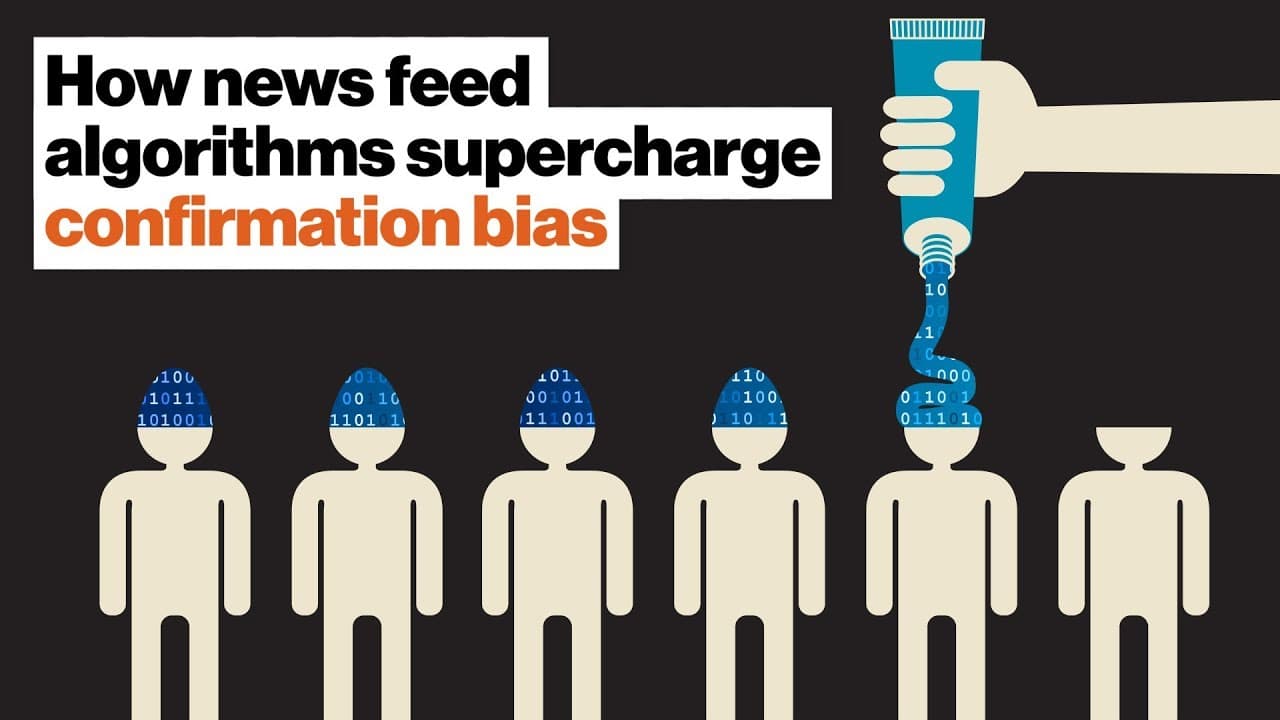
How news feed algorithms supercharge confirmation bias | Eli Pariser | Big Think
TL;DR
Algorithms create filter bubbles of biased information, impacting democracy and individual perspectives.
Transcript
A filter bubble is your own personal universe of information that’s been generated by algorithms that are trying to guess what you’re interested in. And increasingly online we live in these bubbles. They follow us around. They form part of the fabric of most websites that we visit and I think we’re starting to see how they’re creating some challeng... Read More
Key Insights
- 👁️🗨️ Filter bubbles, created by algorithms, restrict exposure to diverse perspectives.
- 🤔 Automatic information selection limits critical thinking and fosters biased views.
- 🥺 Algorithms lack representative data, leading to skewed editorial judgments.
- 🥹 Creators of algorithms hold responsibility for shaping information consumption.
- 🛄 Neutrality claims in algorithms overlook inherent biases and value judgments.
- 🫵 Editorial judgment in algorithms influences what users see and its impact on societal views.
- ✊ The power of algorithms in information curation requires ethical considerations.
Install to Summarize YouTube Videos and Get Transcripts
Explore YouTube Video Summarizer or Get YouTube Transcript Extractor
Questions & Answers
Q: What are filter bubbles, and how do they affect our online experience?
Filter bubbles are personalized information universes created by algorithms, limiting diverse perspectives and potentially skewing views based on biased content selection.
Q: Why is the automatic nature of filter bubbles concerning?
The automatic selection of information by algorithms deprives individuals of exposure to a wide range of viewpoints, leading to a distorted understanding of reality and limiting critical thinking.
Q: How do algorithms influence editorial judgments and value assessments?
Algorithms, despite claims of neutrality, inherently make value judgments that prioritize certain information over others, shaping what users see and influencing perceptions based on incomplete data.
Q: What responsibility do creators of algorithms have in shaping information consumption?
Creators of algorithms must acknowledge their role as powerful editors and strive to incorporate ethical considerations to ensure a more diverse and balanced representation of information.
Summary & Key Takeaways
-
Filter bubbles are personal information universes created by algorithms, impacting the information we see online.
-
Algorithms determine what we see without our knowledge, leading to missing out on diverse perspectives.
-
Algorithms lack the full representation of human interests, shaping biased views and editorial judgments.
Read in Other Languages (beta)
Share This Summary 📚
Summarize YouTube Videos and Get Video Transcripts with 1-Click
Try YouTube Summary with ChatGPT & Claude or YouTube Transcript Generator
Explore More Summaries from Big Think 📚



Summarize YouTube Videos and Get Video Transcripts with 1-Click
Try YouTube Summary with ChatGPT & Claude or YouTube Transcript Generator