What’s Eating The Titanic?
TL;DR
Wooden shipwrecks decay quickly due to shipworms, while iron shipwrecks in deep, cold waters are consumed by iron-chomping microbes.
Transcript
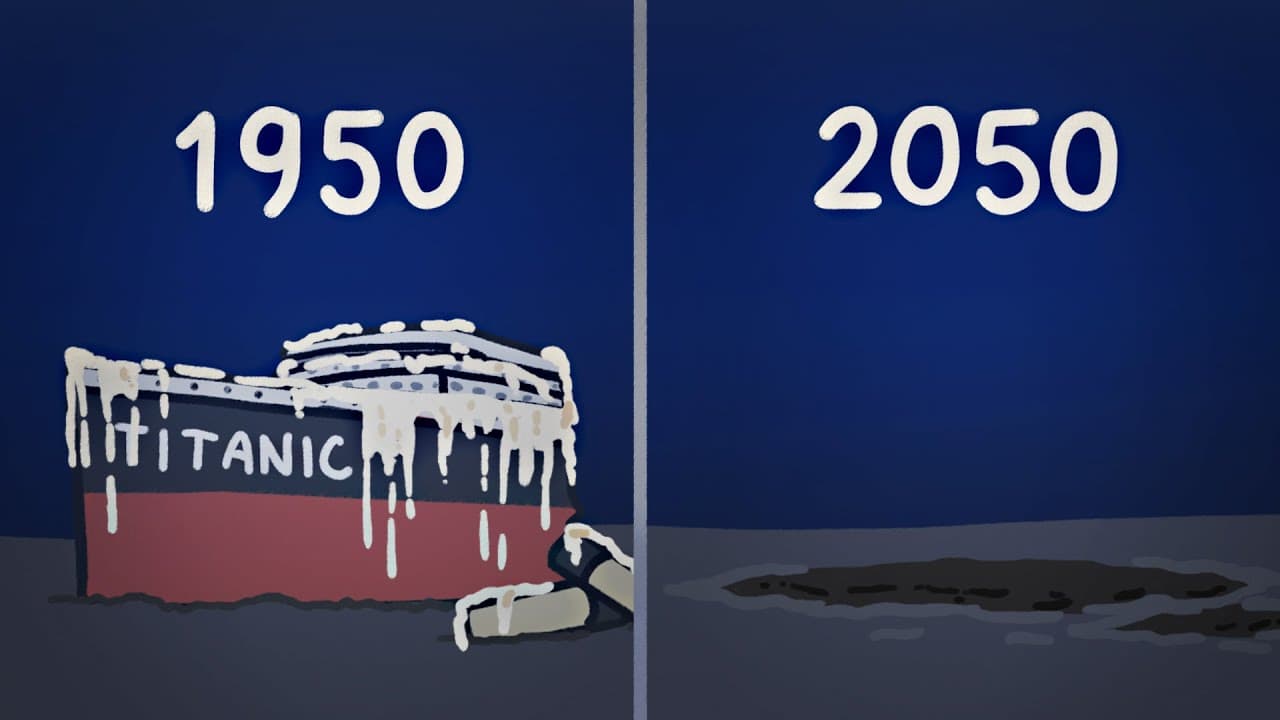
The Titanic was once thought to be indestructible, and we all know how that turned out. And now it's dying a second death on the seafloor as it erodes. It’s disappearing so quickly that experts predict that by 2050 there will be no sign of it. Meanwhile, this Greek merchant ship, which sank 2400 years ago, is super well preserved – what t... Read More
Key Insights
- 🌊 Shipwrecks decay differently based on the materials they are made of and ocean conditions.
- 🤑 Wooden shipwrecks decay quickly in warm, shallow, oxygen-rich waters due to shipworms.
- ♻️ Iron shipwrecks can be well-preserved in deep, cold, oxygen-poor waters, but can be consumed by iron-chomping microbes.
- ♻️ The Titanic is expected to be fully consumed by iron-chompers by 2050.
Install to Summarize YouTube Videos and Get Transcripts
Explore YouTube Video Summarizer or Get YouTube Transcript Extractor
Questions & Answers
Q: What determines how long a shipwreck lasts on the seafloor?
The materials the ship is made of and the oxygen levels at the seabed where it sank are key factors. Wooden ships decay faster in warm, shallow, oxygen-rich waters, while iron ships deteriorate due to iron-chomping organisms in deep, cold, oxygen-poor waters.
Q: Why do wooden shipwrecks decay quickly in warm, shallow waters?
Shipworms and other decomposers thrive in these conditions, breaking down wooden shipwrecks for organic matter. Shipworms can completely break down a wooden ship in as little as two years in these environments.
Q: How do iron shipwrecks fare in deep, cold waters?
In deep, cold waters with low oxygen levels, wooden shipwrecks can be well-preserved due to the lack of decomposers. Iron shipwrecks, on the other hand, can be consumed by iron-chomping microbes that run on iron instead of oxygen.
Q: What is expected to happen to the Titanic shipwreck by 2050?
Scientists predict that iron-chomping microbes will consume the entire Titanic shipwreck by 2050, leading to its complete disappearance on the seafloor.
Summary & Key Takeaways
-
Shipwrecks decay differently based on the materials they are made of and the ocean conditions they sink in.
-
Wooden shipwrecks are eaten by shipworms in warm, shallow, oxygen-filled waters, while iron shipwrecks are consumed by iron-chomping microbes in deep, cold, oxygen-poor waters.
-
The Titanic, a famous iron ship, is predicted to be fully consumed by iron-chompers by 2050.
Read in Other Languages (beta)
Share This Summary 📚
Summarize YouTube Videos and Get Video Transcripts with 1-Click
Try YouTube Summary with ChatGPT & Claude or YouTube Transcript Generator
Explore More Summaries from MinuteEarth 📚






Summarize YouTube Videos and Get Video Transcripts with 1-Click
Try YouTube Summary with ChatGPT & Claude or YouTube Transcript Generator