What Does Noam Chomsky's Manufacturing Consent Teach Us?
TL;DR
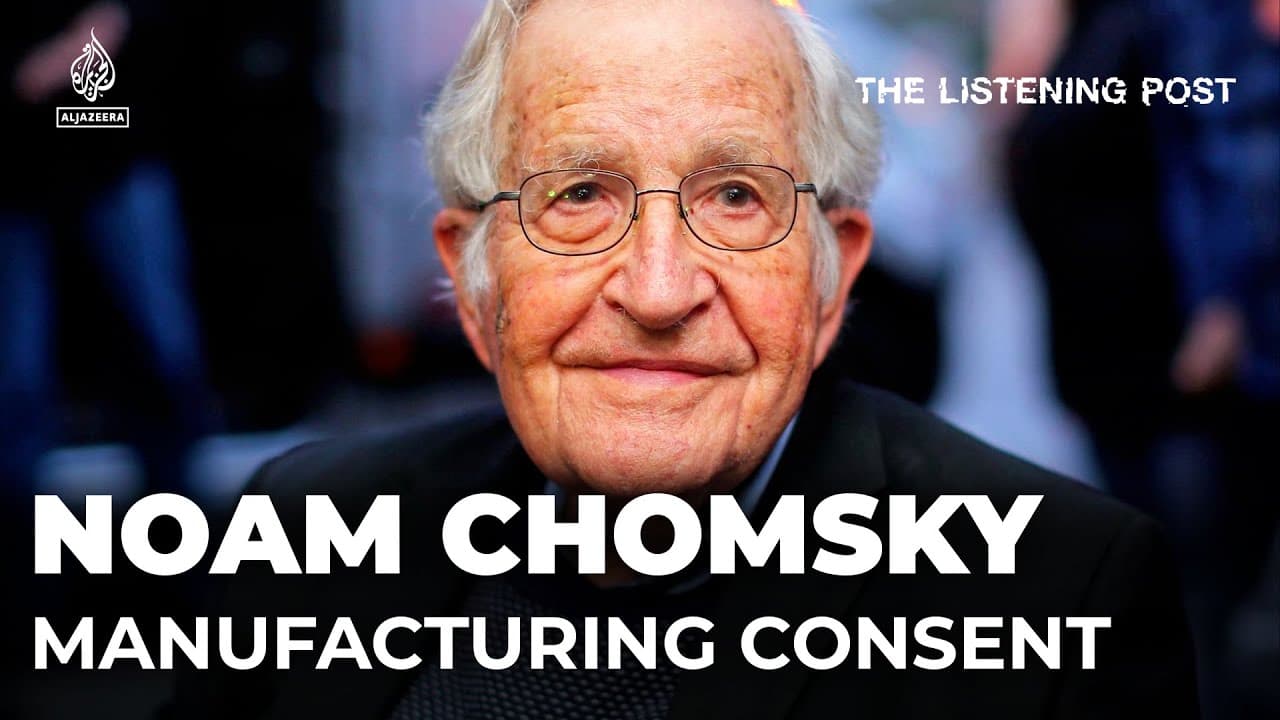
Noam Chomsky's 'Manufacturing Consent' reveals how media serves corporate and political powers, often sidelining critical journalism. The book's 'five filters' model illustrates how ownership, advertising, sourcing, flak, and the emphasis on a common enemy shape news narratives, ultimately molding public consent. Despite the digital age offering more information access, the clash between public interest and personal biases persists.
Transcript
hello i'm richard gisbert and you're watching a special edition of the listening post it's been 30 years now since the publication of one of the most influential books ever written about the institution that we cover the media manufacturing consent the political economy of the mass media was co-authored by noam chomsky and e... Read More
Key Insights
- Manufacturing Consent critiques how media aligns with political and corporate power, suppressing dissenting voices and prioritizing profit over critical journalism.
- The book's 'five filters' theory explains how media ownership, advertising, sourcing, flak, and anti-communism shape news narratives and public consent.
- Noam Chomsky emphasizes the structural framework of media within capitalist societies, suggesting that media output aligns with the interests of concentrated private power.
- Critics argue that the media's role as a propaganda tool is challenged today by diverse information sources, yet the book remains a critical guide for journalists.
- The book's influence extends globally, with journalists like Matt Taibbi and Amira Hass acknowledging its impact on their understanding of media and power.
- Despite increased access to information, public interest often aligns with personal interests, limiting the impact of critical journalism.
- The internet and social media offer opportunities to counter media concentration, though they also pose challenges to democracy through misinformation.
- Chomsky critiques the superficiality of media sound bites, advocating for deeper analysis to challenge prevailing narratives and assumptions.
Install to Summarize YouTube Videos and Get Transcripts
Explore YouTube Video Summarizer or Get YouTube Transcript Extractor
Questions & Answers
Q: What are the main critiques of the media in Manufacturing Consent?
Manufacturing Consent critiques the media's alignment with political and corporate power, arguing that media often defends the agendas of governments and corporations. It highlights how media ownership, advertising, and sourcing influence news narratives, suppress dissenting voices, and prioritize profit over critical journalism, ultimately manufacturing public consent.
Q: How does Chomsky describe the media's role in western democracies?
Chomsky describes the media's role in western democracies as a tool for manufacturing consent, where media acts within a structural framework that aligns with the interests of concentrated private power. He argues that media output is shaped by corporate and political agendas, challenging the notion of media as an independent check on power.
Q: What are the 'five filters' described in Manufacturing Consent?
The 'five filters' in Manufacturing Consent are ownership, advertising, sourcing, flak, and anti-communism. These filters explain how media narratives are shaped by corporate interests, reliance on advertisers, dependence on official sources, negative responses to dissenting journalism, and the use of common enemies to manufacture public consent.
Q: How has Manufacturing Consent influenced journalists globally?
Manufacturing Consent has had a profound impact on journalists globally, providing a framework for understanding media's role in power dynamics. Journalists like Matt Taibbi and Amira Hass acknowledge its influence on their critical analysis of media, highlighting its relevance in questioning the narratives and assumptions perpetuated by mainstream journalism.
Q: What challenges does the internet pose to media concentration?
While the internet offers opportunities to counter media concentration by providing diverse information sources, it also poses challenges to democracy through the spread of misinformation and manipulation. Social media platforms can be used for both constructive purposes and undermining democratic processes, as seen in various political contexts worldwide.
Q: How does Chomsky view the impact of media sound bites?
Chomsky criticizes media sound bites for their superficiality, arguing that they serve as a form of propaganda by simplifying complex issues into easily digestible narratives. He advocates for deeper analysis and challenges to prevailing assumptions, emphasizing the importance of breaking down prejudices and providing comprehensive context in media reporting.
Q: How do critics view the power of media according to Manufacturing Consent?
Critics of Manufacturing Consent argue that the book's denunciatory tone may overstate the power of the media establishment and underestimate the critical faculties of the public. They question whether media is as homogenous as the book suggests and highlight the existence of diverse information sources that challenge the media's role as a propaganda tool.
Q: What is Chomsky's approach to consuming news?
Despite being a sharp critic of mainstream media, Chomsky starts his news day with the New York Times, acknowledging its comprehensive coverage. He emphasizes the importance of considering sources critically, shopping around for diverse perspectives, and not dismissing conventional news outlets entirely, providing a lesson for news consumers today.
Summary & Key Takeaways
-
Manufacturing Consent, co-authored by Noam Chomsky and Edward Herman, critiques how media aligns with power structures, prioritizing corporate and political interests over independent journalism.
-
The book's 'five filters' theory explains how media ownership, advertising, sourcing, flak, and anti-communism shape news narratives, manufacturing public consent.
-
Despite increased access to information, public interest often aligns with personal interests, limiting the impact of critical journalism, though the internet offers potential for countering media concentration.
Read in Other Languages (beta)
Share This Summary 📚
Summarize YouTube Videos and Get Video Transcripts with 1-Click
Try YouTube Summary with ChatGPT & Claude or YouTube Transcript Generator
Explore More Summaries from Al Jazeera English 📚



Summarize YouTube Videos and Get Video Transcripts with 1-Click
Try YouTube Summary with ChatGPT & Claude or YouTube Transcript Generator