Bynum Tudor Lecture - Desmond Tutu - Oxford University
TL;DR
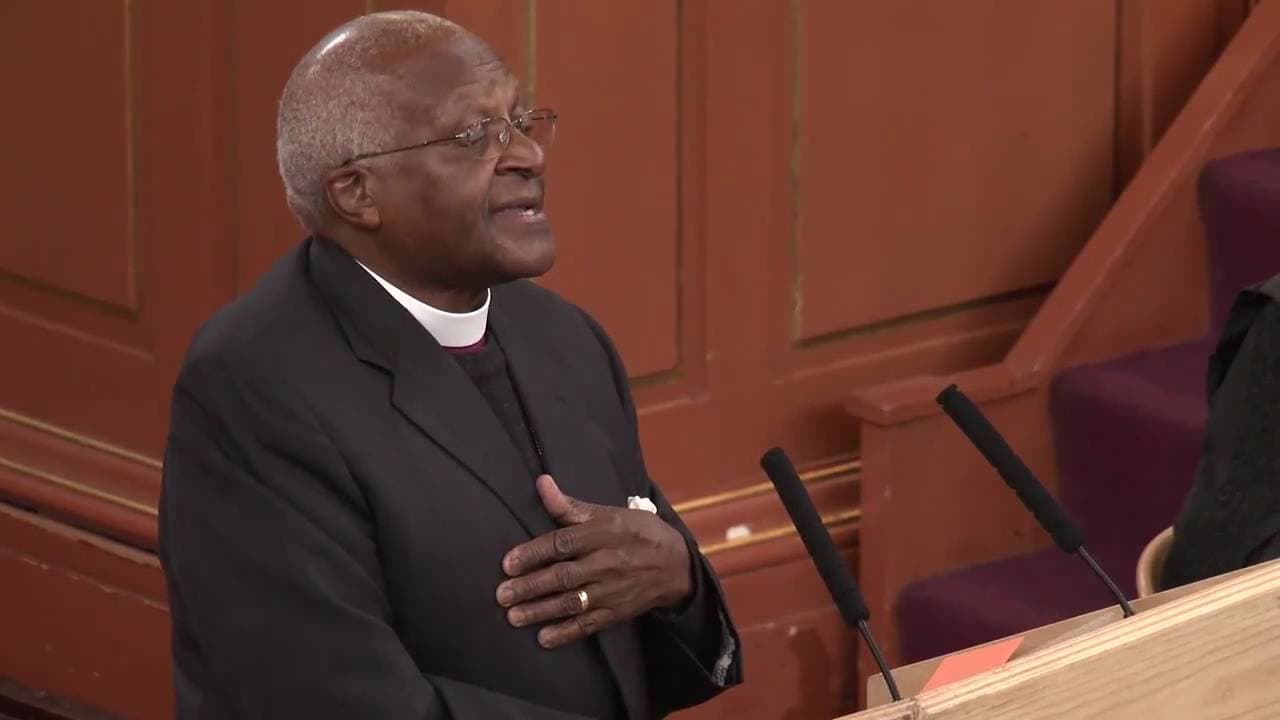
Archbishop Desmond Tutu shares insights on reconciliation, human rights, and global challenges during a lecture at Kellogg College.
Transcript
so welcome everybody to this kellogg college 2010 bynum cheetah lecture welcome particularly to this sheldonian theater this magnificent extension to kellogg college keller college is of course absolutely delighted um to have the archbishop desmond tutu as our bynum cheetah fellow this year after he's given his lecture the chancellor of the univers... Read More
Key Insights
- 🌍 International pressure played a pivotal role in ending apartheid in South Africa.
- 🍝 Truth commissions serve as platforms for healing and reconciliation by acknowledging past injustices.
- 💋 Magnanimity and forgiveness are essential for moving forward from a history marked by conflict and oppression.
- 🗯️ Global action is needed to address social justice issues like poverty, climate change, and human rights violations.
- 😯 Desmond Tutu's speech highlights the significance of unity, compassion, and cooperation in building a better future.
- ✊ Historical lessons emphasize the transformative power of reconciliation and understanding.
- 🌐 Individual bravery and courage, like that of Tutu and Obama, can inspire positive change on a global scale.
Install to Summarize YouTube Videos and Get Transcripts
Explore YouTube Video Summarizer or Get YouTube Transcript Extractor
Questions & Answers
Q: What role did international pressure play in ending apartheid in South Africa?
International pressure, combined with domestic activism, was crucial in dismantling apartheid by leveraging economic sanctions and global awareness to push for change. Desmond Tutu's lecture highlights how international solidarity can drive significant transformations.
Q: How did truth commissions contribute to reconciliation in South Africa?
Truth commissions served as platforms for victims and perpetrators to share their stories, fostering understanding, reconciliation, and healing. Tutu's speech underscores the importance of acknowledging past atrocities as a step towards building a more inclusive future.
Q: Why does Archbishop Tutu emphasize magnanimity in addressing historical injustices?
Tutu's emphasis on magnanimity underscores the power of forgiveness, empathy, and reconciliation in healing deep-seated wounds, allowing individuals and societies to move forward from a history marked by violence and oppression.
Q: How does Tutu's speech advocate for global action on social justice issues?
Tutu's call for global cooperation echoes the need to address pressing challenges such as poverty, climate change, and human rights violations collectively. His message inspires individuals to work towards a more equitable and sustainable world.
Summary & Key Takeaways
-
Desmond Tutu recounts the pivotal role played in ending apartheid, highlighting the power of international pressure.
-
Tutu emphasizes the importance of magnanimity in reconciliation, drawing parallels to truth commissions in South Africa.
-
He calls for global action on human rights, climate change, and social justice, urging individuals to embrace unity and compassion.
Read in Other Languages (beta)
Share This Summary 📚
Summarize YouTube Videos and Get Video Transcripts with 1-Click
Try YouTube Summary with ChatGPT & Claude or YouTube Transcript Generator