Uber's plan to get more people into fewer cars | Travis Kalanick
TL;DR
Travis Kalanick discusses the future of human-driven transportation, the history of the jitney, and the impact of technology and regulation.
Transcript
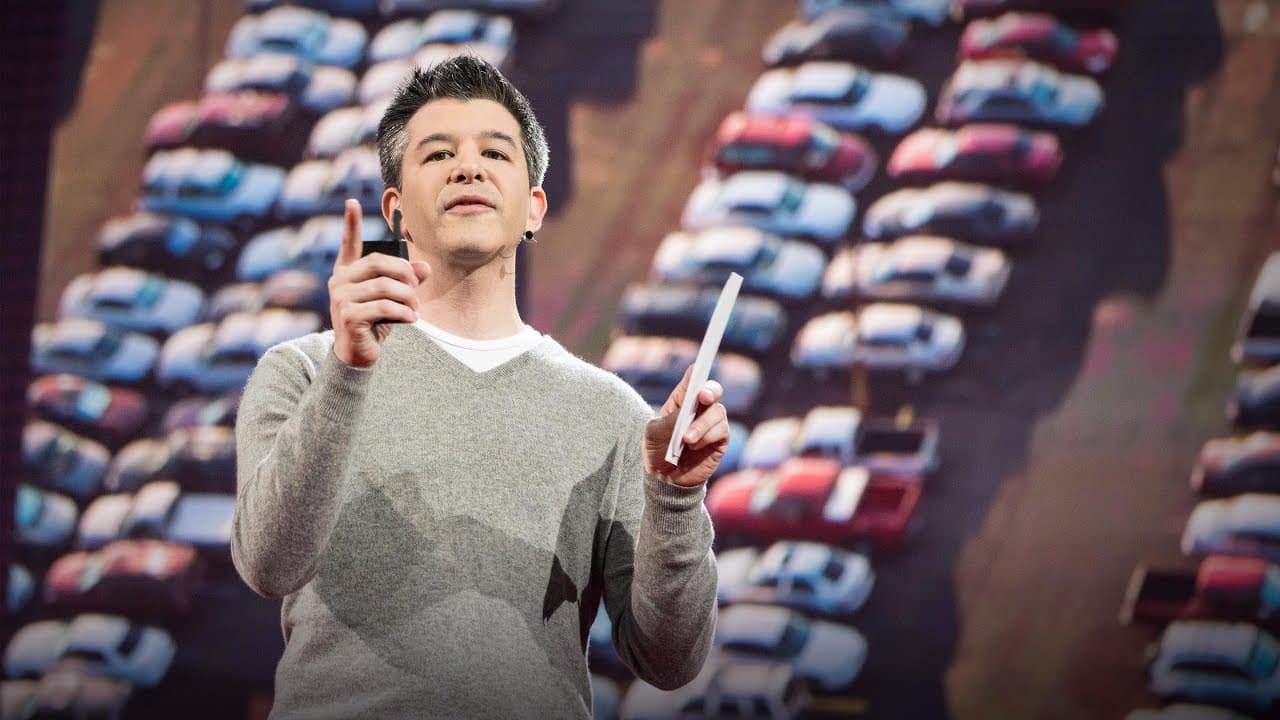
Today I wanted to -- well, this morning -- I want to talk about the future of human-driven transportation; about how we can cut congestion, pollution and parking by getting more people into fewer cars; and how we can do it with the technology that's in our pockets. And yes, I'm talking about smartphones ... not self-driving cars. But to get started... Read More
Key Insights
- 🚕 The jitney, created in 1914, was a precursor to Uber and allowed people to get affordable rides wherever they wanted to go for a nickel. It gained popularity quickly, but was eventually regulated out of existence by the existing transportation monopoly.
- 🏢 The rise of car ownership has led to increased traffic congestion, lost productivity, and a significant carbon footprint. In the US alone, 7 billion hours are wasted sitting in traffic each year.
- 🚗 On average, 96% of the time, cars are sitting idle, taking up valuable land and space. There is a need for more efficient use of vehicles to reduce the number of cars on the road and free up land in cities.
- 🌍 UberPOOL, launched in 2014, has been successful in increasing the number of people carpooling and reducing the number of cars on the road. It has taken millions of miles off the roads and reduced CO2 emissions.
- 🚙 The launch of uberCOMMUTE aims to turn commuter cars into shared cars in order to reduce traffic congestion. However, regulations have become a barrier to the success of this initiative.
- 💰 Despite criticism, lowering prices for Uber rides has actually benefited drivers by increasing the number of trips and minutes of productivity per hour, resulting in higher earnings.
- 🚗 Self-driving cars could potentially revolutionize the transportation industry, but implementation will take longer than expected and will come with its own set of challenges.
- 🌍 Embracing new technology and working with cities during the transition to self-driving cars is crucial in order to create a better world with improved quality of life for commuters.
Install to Summarize YouTube Videos and Get Transcripts
Explore YouTube Video Summarizer or Get YouTube Transcript Extractor
Questions & Answers
Q: What is the future of human-driven transportation according to the video?
According to the video, the future of human-driven transportation involves getting more people into fewer cars, cutting congestion, pollution, and parking. This can be achieved through the use of smartphones and technology.
Q: What was the "Uber way before Uber"?
The "Uber way before Uber" was the jitney, which was introduced in 1914 by LP Draper in Los Angeles. The jitney was essentially a car with a sign that offered rides to people for a nickel (jitney) to their desired destination.
Q: How did the existing transportation monopoly respond to the jitney?
The existing transportation monopoly was not happy about the success of the jitney and went to cities across the country to get regulations put in place to slow down its growth. These regulations included licenses, lengthy hours for drivers, and even installing backseat lights to prevent an activity called "spooning."
Q: What were the consequences of the jitney being regulated out of existence?
The regulation of the jitney led to a rise in car ownership and the need for individuals to own their own cars. This resulted in increased traffic congestion, lost productivity, and a significant carbon footprint. Additionally, a large portion of land and space is now used for storing idle cars.
Q: What is the impact of UberPOOL on reducing congestion and carbon emissions?
The introduction of UberPOOL, a carpooling feature, has been successful in reducing congestion and carbon emissions. In Los Angeles, it has taken 7.9 million miles off the roads and removed 1.4 thousand metric tons of CO2 from the air. In China, where the feature has been implemented on a larger scale, there have been 15 million UberPOOL trips per month, resulting in exponential growth of shared rides and reduced congestion.
Q: How does Uber plan to turn commuter cars in suburbs into shared cars?
Uber has recently launched a feature called uberCOMMUTE, which allows people to become Uber drivers on their way to work and be matched with neighbors who are heading in the same direction. By turning individual commuter cars into shared cars, Uber aims to reduce the number of cars on the road and promote carpooling in suburban areas.
Q: How does Uber plan to address the issue of regulation and pricing for shared rides?
Uber recognizes the challenges posed by regulations and pricing for shared rides. It is willing to work with regulators to find smart regulations that enable more people to benefit from affordable shared rides. Uber believes that regulations should be focused on ensuring safety and quality of service rather than restricting innovation. Additionally, the pricing for shared rides needs to strike a balance between affordability for riders and fair earnings for drivers.
Summary & Key Takeaways
-
The speaker discusses the future of human-driven transportation and the potential benefits of getting more people into fewer cars using smartphone technology.
-
He introduces the concept of the "jitney," a type of shared ride service that existed over 100 years ago, and highlights how it was regulated out of existence, leading to increased car ownership and the associated negative consequences.
-
The speaker discusses the success of UberPOOL, a shared ride option offered by Uber, and talks about the potential of turning every car into a shared car through the use of technology and smart regulation.
Read in Other Languages (beta)
Share This Summary 📚
Summarize YouTube Videos and Get Video Transcripts with 1-Click
Try YouTube Summary with ChatGPT & Claude or YouTube Transcript Generator
Explore More Summaries from TED 📚

Summarize YouTube Videos and Get Video Transcripts with 1-Click
Try YouTube Summary with ChatGPT & Claude or YouTube Transcript Generator