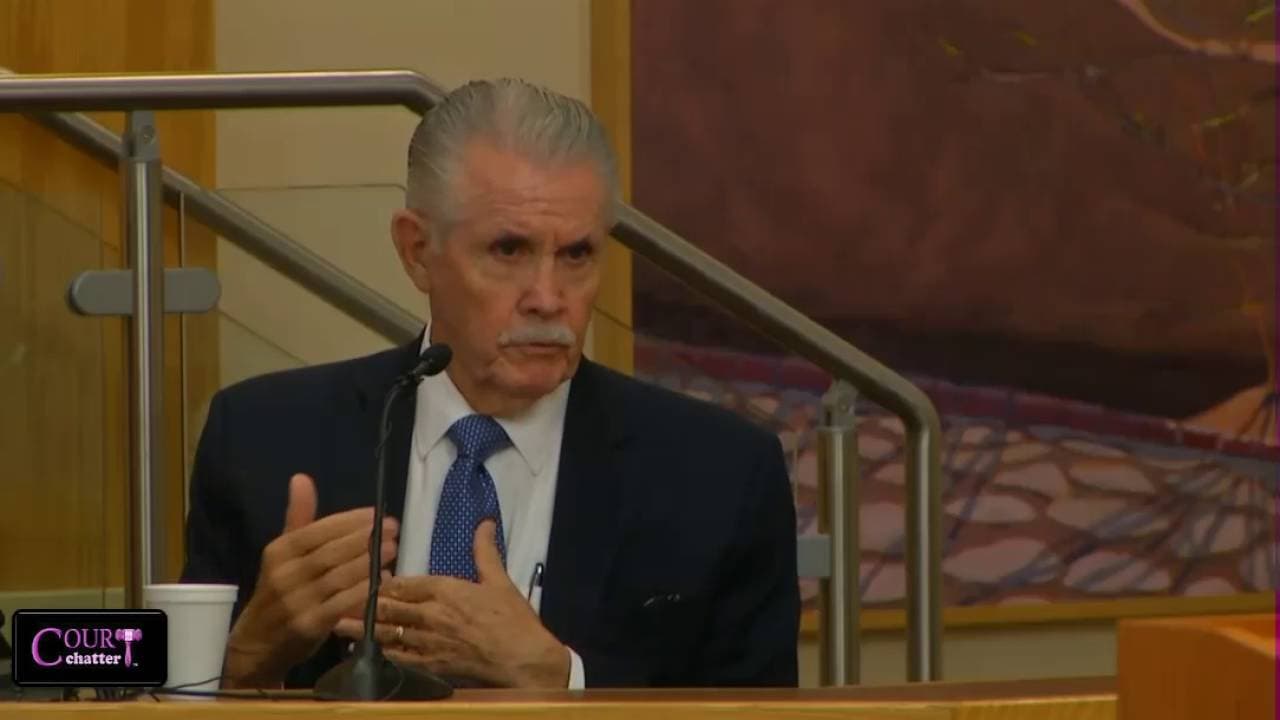
Sandy and Perez Trial Day 10 Part 2 09/30/16
TL;DR
Analyzing the use of layered less lethal responses in police training and tactics.
Transcript
whose extended respect for your honor that's why I never sat down sandy Your Honor I have no idea what the questions the Korean yes yeah that would be something that would be difficult to do in my opinion based on my being up there in that environment because if you have to first of all understand that the officers are going to have to be in some p... Read More
Key Insights
- 👮 Rough terrain and proximity to suspects pose challenges for officers during apprehensions.
- 😒 Layered less lethal responses prioritize minimizing the use of deadly force while ensuring the safety of all parties.
- 😜 Training programs and associations advocate for the adoption of non-lethal approaches in handling mentally ill individuals with weapons.
- 🖐️ Distraction devices play a crucial role in creating disorientation and compliance among targeted individuals.
- 🔨 Effective deployment of non-lethal tools requires training and understanding of their impact on suspects.
- 😒 The use of distraction devices is intended to incapacitate individuals temporarily without causing lasting harm.
- 🍧 Recommendations from training programs emphasize the importance of having multiple options available to respond to different scenarios.
Install to Summarize YouTube Videos and Get Transcripts
Explore YouTube Video Summarizer or Get YouTube Transcript Extractor
Questions & Answers
Q: Why was it deemed inappropriate for officers to sit down during the apprehension of the suspect?
Sitting down would hinder the officers' ability to maintain visual contact with the suspect and navigate through the rough terrain effectively, compromising safety.
Q: How did the layered less lethal response plan contribute to the decision-making process during the incident?
The plan allowed for multiple non-lethal options to be deployed sequentially, minimizing the need for deadly force and considering the safety of both officers and the suspect.
Q: What recommendations do training programs offer regarding the use of layered less lethal approaches?
Training programs recommend utilizing multiple non-lethal options to increase the chances of a successful resolution and reduce the risk of escalation during interactions with mentally ill individuals.
Q: How does the deployment of distraction devices impact individuals targeted by these devices?
Distraction devices create a bright flash and pressure wave that temporarily impairs vision and causes discomfort, making individuals disoriented and more compliant.
Summary & Key Takeaways
-
Police officers faced challenges in maneuvering through rough terrain and maintaining safety while trying to apprehend a suspect.
-
A layered less lethal plan was implemented, utilizing distraction devices, tasers, and canines to avoid deadly force.
-
Training programs and associations recommend the use of layered less lethal responses for mentally ill individuals armed with deadly weapons.
Read in Other Languages (beta)
Share This Summary 📚
Summarize YouTube Videos and Get Video Transcripts with 1-Click
Try YouTube Summary with ChatGPT & Claude or YouTube Transcript Generator
Explore More Summaries from Law&Crime Network 📚




Summarize YouTube Videos and Get Video Transcripts with 1-Click
Try YouTube Summary with ChatGPT & Claude or YouTube Transcript Generator