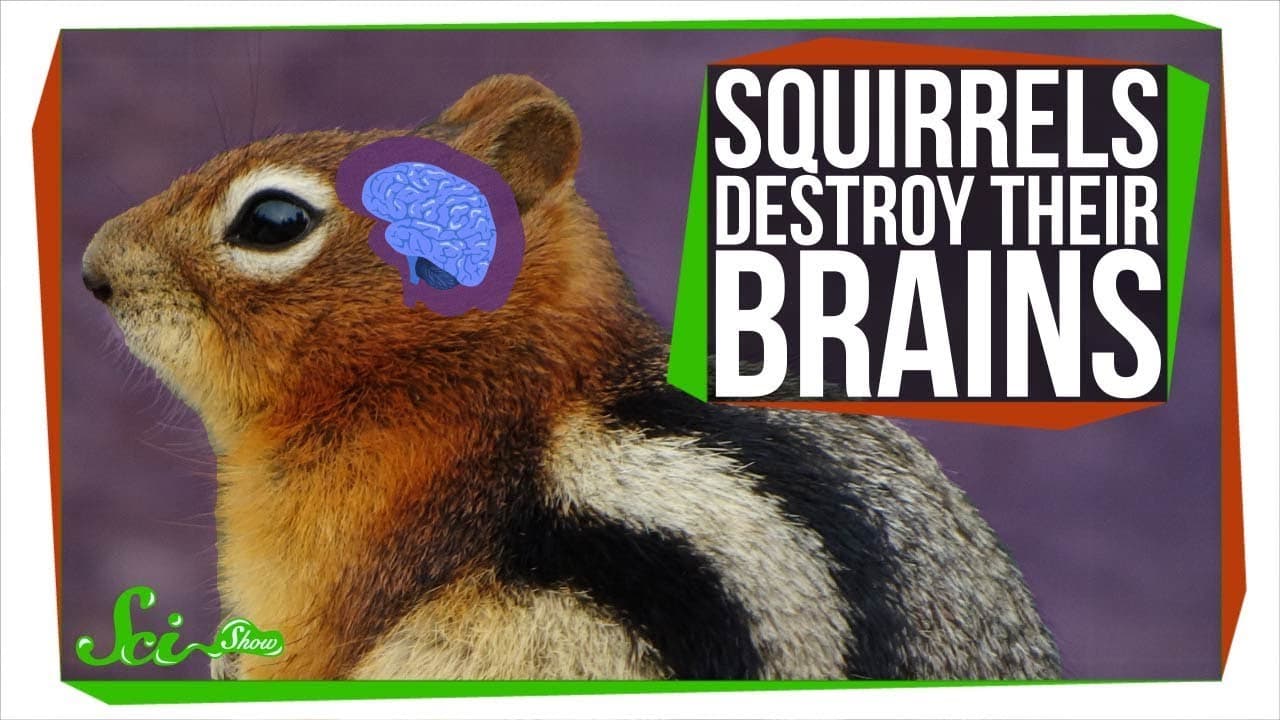
Why These Squirrels Destroy Their Brains Every Winter
TL;DR
Hibernating ground squirrels deconstruct and rebuild their brains every 2-3 weeks during winter, showcasing remarkable neural plasticity.
Transcript
[ ♪ Intro ] We tend to think of our brains, at least by adulthood, as being pretty static. There will be some changes, but for the most part, the large structural shifts are over. But that’s not the case with hibernating ground squirrels. Several species actually deconstruct part of their brains, only to rebuild them again. And they don’t just do i... Read More
Key Insights
- 🧠 Hibernating squirrels deconstruct and rebuild their brains frequently to adapt to their energy-saving hibernation cycles.
- 🧠 The rapid regeneration of brain structures in hibernating squirrels showcases unparalleled synaptic plasticity.
- 🧠 Scientists are intrigued by the potential applications of studying hibernating squirrels' brain rebuilding abilities for human diseases.
- 🧠 Ground squirrels' brain reorganization during hibernation highlights the unique adaptations of these animals.
- 🧠 Hibernating squirrels show remarkable abilities in conserving energy by efficiently rebuilding their brains.
- 🧠 The hibernating squirrels' brain reconstruction process is quicker than that of non-hibernating animals, highlighting their unique neural adaptability.
- 😷 The study of hibernating squirrels' brain plasticity could offer valuable insights into neurobiological research and potential human medical applications.
Install to Summarize YouTube Videos and Get Transcripts
Explore YouTube Video Summarizer or Get YouTube Transcript Extractor
Questions & Answers
Q: Why do hibernating ground squirrels deconstruct and rebuild their brains every 2-3 weeks?
Hibernating squirrels undergo this neural construction to save energy and adapt to the extreme temperature changes during their hibernation cycles.
Q: How do hibernating squirrels exhibit impressive synaptic plasticity compared to non-hibernating animals?
Hibernating squirrels can regrow their brain structures in just hours, a process that takes months in rats, showcasing unparalleled neural adaptability.
Q: What potential applications do scientists see in studying hibernating squirrels' brain rebuilding abilities for human diseases?
Researchers believe that understanding and potentially mimicking the neural plasticity of hibernating squirrels could offer insights into treating human diseases like strokes.
Summary & Key Takeaways
-
Ground squirrels hibernate in cycles, deconstructing and rebuilding their brains every 2-3 weeks to save energy.
-
During hibernation, squirrel brains shrink, but quickly re-grow when they wake up, a process known as synaptic plasticity.
-
The ability of hibernating squirrels to rapidly rebuild their brains intrigues scientists for potential human application.
Read in Other Languages (beta)
Share This Summary 📚
Summarize YouTube Videos and Get Video Transcripts with 1-Click
Try YouTube Summary with ChatGPT & Claude or YouTube Transcript Generator
Explore More Summaries from SciShow 📚


Summarize YouTube Videos and Get Video Transcripts with 1-Click
Try YouTube Summary with ChatGPT & Claude or YouTube Transcript Generator