Why Limit International Trade?
TL;DR
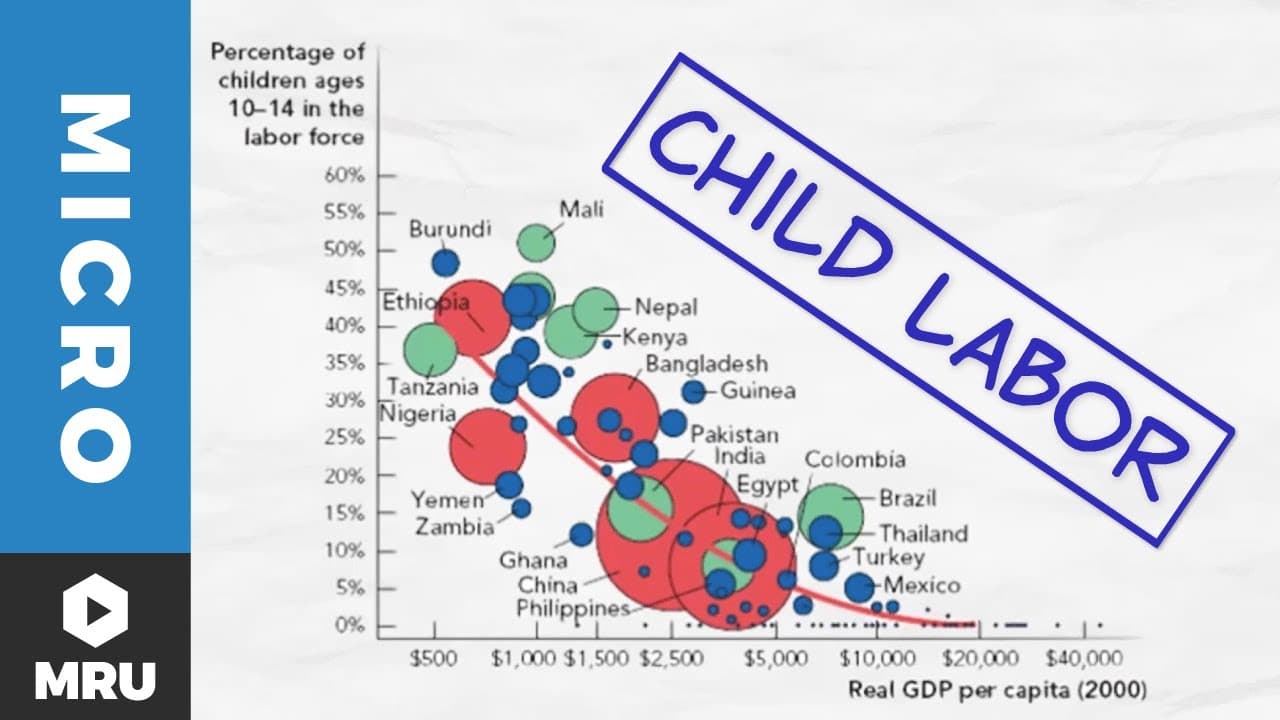
International trade doesn't destroy jobs overall; it reallocates them from import-competing to export industries, leading to higher wages due to comparative advantage. While concerns about child labor, national security, and strategic protectionism are valid, they often have limited applicability. Economic growth, rather than trade restrictions, is the key to reducing child labor and enhancing national well-being.
Transcript
♪ [music] ♪ - [Alex] In our previous videos, we explained the benefits of trade. Today we're going to evaluate some of the arguments that one often hears about limiting international trade. International trade is a controversial subject. There's a lot of arguments surrounding it. We're not going to go through all of them by any means. But here... Read More
Key Insights
- Trade reallocates jobs from import-competing to export industries, generally increasing wages due to comparative advantage.
- Economic growth, not trade restrictions, is crucial for reducing child labor in developing countries.
- Job destruction is often a sign of economic progress, as new jobs are created in growing sectors.
- Protectionist policies can backfire, leading to unintended negative consequences such as reduced wages.
- Strategic trade protectionism theoretically benefits a country, but practical execution is challenging and risky.
- National security arguments for trade restrictions are often overstated and misused for political gain.
- Key industries may benefit from protection, but identifying them accurately is difficult and politically influenced.
- Free trade is generally more beneficial, while protectionism works well only in specific, limited circumstances.
Install to Summarize YouTube Videos and Get Transcripts
Explore YouTube Video Summarizer or Get YouTube Transcript Extractor
Questions & Answers
Q: How does international trade affect jobs in the U.S.?
International trade reallocates jobs from import-competing industries to export industries, rather than destroying them outright. This shift generally leads to higher wages due to the principle of comparative advantage. While job displacement can occur, especially in low-skill sectors, the overall impact of trade is positive for the economy, fostering growth and higher income levels.
Q: Why is child labor a concern in international trade?
Child labor is a concern because it often indicates economic poverty. In developing countries, children work out of necessity. Economic growth is the most effective way to reduce child labor, as it raises living standards and decreases the need for child labor. Trade restrictions targeting child labor can backfire, reducing family income and increasing reliance on child labor.
Q: What role does economic growth play in reducing child labor?
Economic growth plays a crucial role in reducing child labor by improving living standards and reducing poverty. As countries become wealthier, the necessity for child labor diminishes, and children are more likely to attend school. Policies that promote economic growth, such as free trade and investment in education, are more effective in reducing child labor than trade restrictions.
Q: How can protectionist policies backfire?
Protectionist policies can backfire by creating unintended negative consequences, such as reducing wages and limiting consumer choice. For example, when countries ban child labor, it can lead to lower wages and increased reliance on child labor. Protectionism can also provoke retaliatory measures from other countries, shrinking global trade and reducing overall economic welfare.
Q: What are the risks of strategic trade protectionism?
Strategic trade protectionism aims to increase a country's share of trade gains by limiting exports, allowing domestic firms to act like a cartel. However, this approach is risky because it can lead to retaliatory actions from other countries, reducing global trade and economic welfare. The complexity of execution and potential for shrinking markets make it a less viable strategy in practice.
Q: How valid are national security arguments for trade restrictions?
National security arguments for trade restrictions are often overstated and misused for political gain. While some industries, like vaccine production, may warrant protection, many claims are exaggerated. The challenge lies in distinguishing genuinely critical industries from those using security as a pretext for protectionism, which can lead to inefficient resource allocation.
Q: Why is it difficult to identify key industries for protection?
Identifying key industries for protection is challenging because political and economic factors often influence decisions. While some industries may offer significant spillovers, accurately predicting which ones will drive future growth is difficult. Political biases can lead to the protection of industries that do not necessarily contribute to national welfare, resulting in inefficiencies.
Q: What is the overall conclusion about free trade vs. protectionism?
The overall conclusion is that free trade is generally more beneficial than protectionism. Free trade allows for the efficient allocation of resources, leading to economic growth and higher living standards. While protectionism may work in specific, limited circumstances, it often results in negative consequences, such as reduced consumer choice and retaliatory trade measures from other countries.
Summary & Key Takeaways
-
International trade doesn't destroy jobs but moves them from import-competing to export industries, boosting wages due to comparative advantage. Concerns about child labor and national security are often overstated. Economic growth is key to reducing child labor, not trade restrictions.
-
Job destruction is a natural part of economic progress, as new jobs emerge in growing sectors. Strategic trade protectionism can theoretically benefit a country, but practical execution is challenging and risky due to potential retaliation and market shrinkage.
-
National security arguments for trade restrictions are often overstated. Identifying key industries for protection is difficult and politically influenced. Overall, free trade is generally more beneficial, while protectionism is effective only in specific, limited circumstances.
Read in Other Languages (beta)
Share This Summary 📚
Summarize YouTube Videos and Get Video Transcripts with 1-Click
Try YouTube Summary with ChatGPT & Claude or YouTube Transcript Generator
Explore More Summaries from Marginal Revolution University 📚

Summarize YouTube Videos and Get Video Transcripts with 1-Click
Try YouTube Summary with ChatGPT & Claude or YouTube Transcript Generator