What Is the Difference Between Probability and Likelihood?
TL;DR
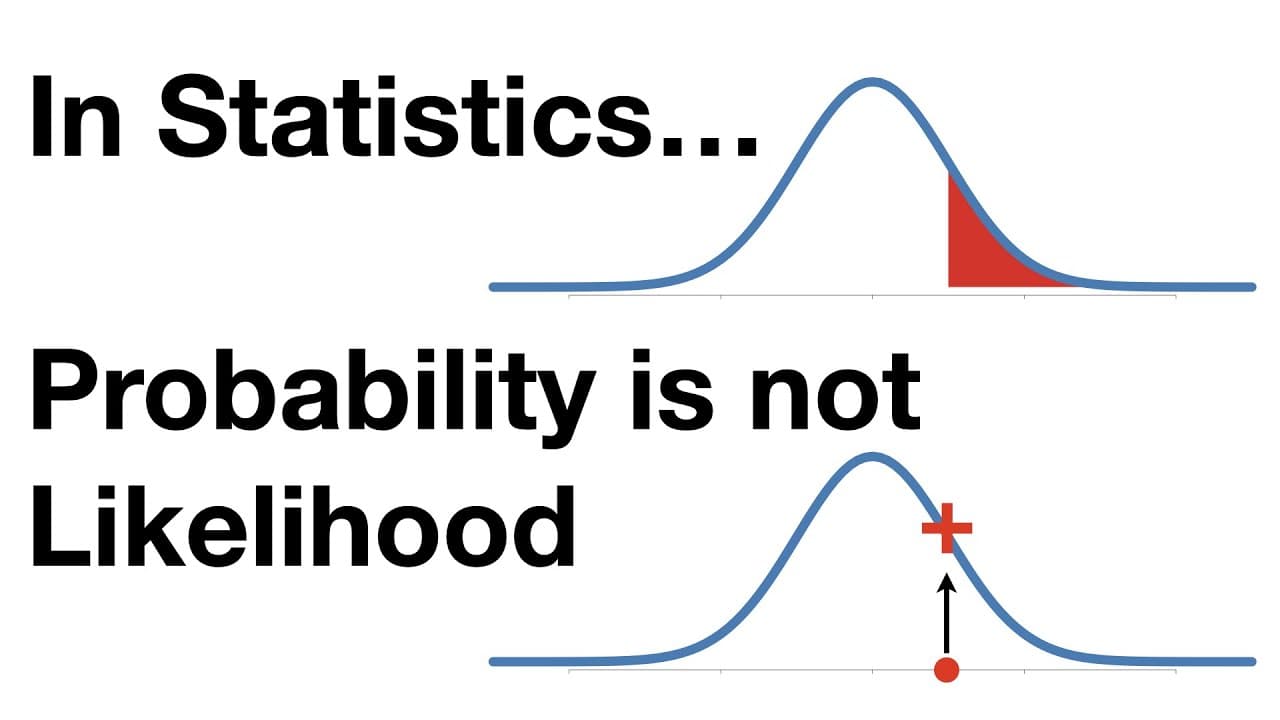
Probability represents the chance of an event by calculating the area under a distribution curve, while likelihood refers to the probability of observed data points based on a fixed distribution. Essentially, probability uses the shape of a distribution, whereas likelihood adjusts the distribution according to the observed data.
Transcript
stet quest makes me feel so happy so very very very very very very very happy stat quest hello I'm Josh Dahmer and welcome to stat quest today we're gonna be talking about the difference between probability and likelihood these are two closely related concepts that are very easy to get confused even I mix them up from time to time so enough of this... Read More
Key Insights
- 😥 Probability is about the distribution's area under the curve, while likelihood deals with specific data points on the curve.
- ❓ Understanding the difference between probability and likelihood is critical for statistical analysis and inference.
- 😥 Probability and likelihood involve manipulating distribution parameters to assess the chance of events or data point occurrences.
- 😥 Probability focuses on the distribution's shape, while likelihood adjusts the distribution based on observed data points.
- 🖐️ Probability and likelihood play crucial roles in statistical modeling and hypothesis testing.
- 😥 Probability calculations involve adjusting the area under a fixed distribution curve, while likelihood calculations modify the distribution based on fixed data points.
- ⚾ Both probability and likelihood are essential concepts in statistics for making informed decisions based on data observations.
Install to Summarize YouTube Videos and Get Transcripts
Explore YouTube Video Summarizer or Get YouTube Transcript Extractor
Questions & Answers
Q: What is the fundamental difference between probability and likelihood?
Probability deals with the chance of an event based on a distribution, whereas likelihood focuses on the probability of observed data given a certain distribution.
Q: How do probabilities and likelihoods change with different data points?
Probabilities change by adjusting the area under a curve for different data points, whereas likelihoods shift the distribution to match observed data points.
Q: In what situations would understanding probability and likelihood be crucial?
These concepts are essential in statistics, especially when analyzing data distributions and making inferences based on observed data points.
Q: What is the mathematical notation used for probability and likelihood in distributions?
The probability notation signifies the event given the distribution parameters, while likelihood notation represents data given the distribution parameters.
Summary & Key Takeaways
-
Probability refers to the area under a distribution curve, representing the chance of an event occurring.
-
Likelihood involves fixed data points on the curve, showing the probability of observed data given a specific distribution.
-
Probability focuses on the distribution's shape, while likelihood adjusts the distribution based on observed data.
Read in Other Languages (beta)
Share This Summary 📚
Summarize YouTube Videos and Get Video Transcripts with 1-Click
Try YouTube Summary with ChatGPT & Claude or YouTube Transcript Generator
Explore More Summaries from StatQuest with Josh Starmer 📚




Summarize YouTube Videos and Get Video Transcripts with 1-Click
Try YouTube Summary with ChatGPT & Claude or YouTube Transcript Generator