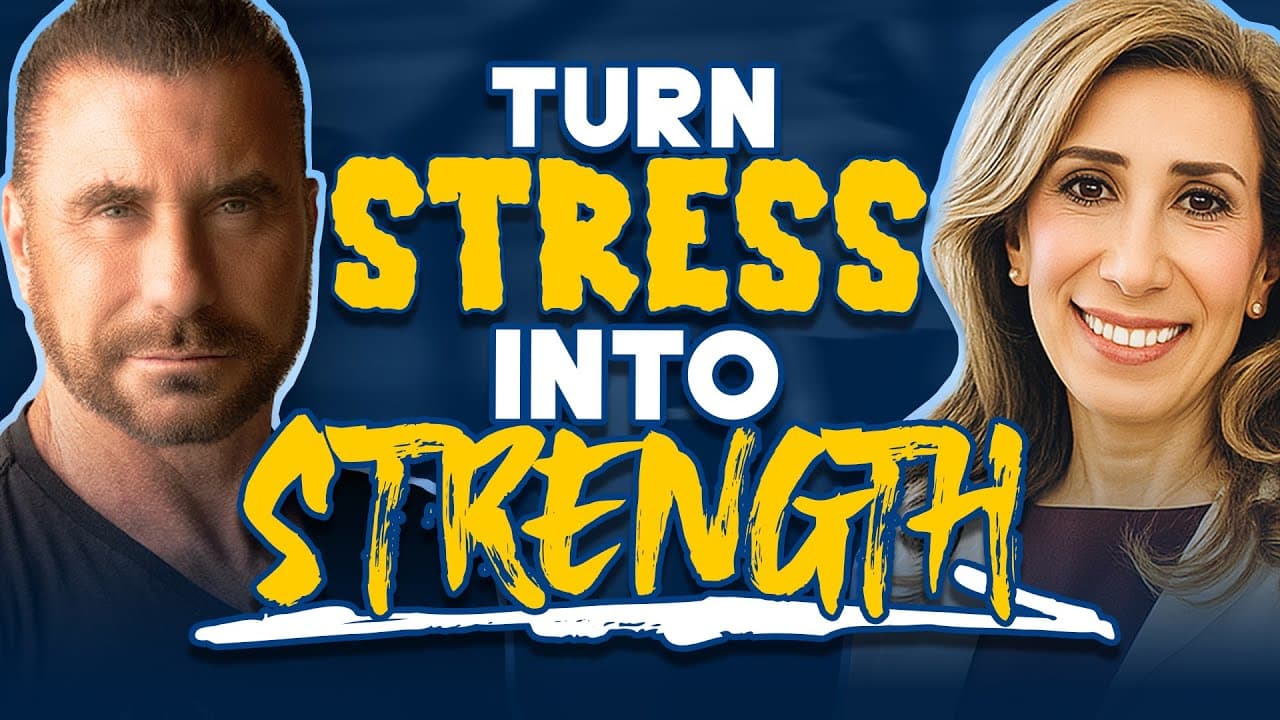
STOP Avoiding Stress...It's Making You Weaker! Ft. Sharon Bergquist
TL;DR
Not all stress is harmful; some stressors build resilience and health.
Transcript
We've learned in the last two decades is that not all stress horns and in fact there are types of stress that enrich us. They help us grow. We actually need these types of stressors to build our resilience against the chronic stressors that harm us. Plant phytochemicals. Brief bursts of vigorous exercise. going through periods of food scarcity like... Read More
Key Insights
- Not all stress is detrimental; certain stressors can enhance resilience and contribute to personal growth.
- The concept of hormesis involves mild to moderate stress followed by recovery, leading to physiological benefits.
- Five beneficial stressors include plant phytochemicals, vigorous exercise, intermittent fasting, temperature extremes, and mental challenges.
- Recovery is crucial after stress to allow the body to build resilience and prevent cumulative harm.
- Interval training is more beneficial than long workouts as it triggers acute stress responses that enhance energy production.
- Cold and heat exposure activate cellular stress responses, making the body more resilient to environmental changes.
- Intermittent fasting and longer fasting periods can trigger autophagy, leading to cellular regeneration.
- Pushing past comfort zones strategically can enhance mental resilience and cognitive function.
Install to Summarize YouTube Videos and Get Transcripts
Explore YouTube Video Summarizer or Get YouTube Transcript Extractor
Questions & Answers
Q: What is the main idea behind the concept of hormesis?
Hormesis is the idea that mild to moderate stress followed by recovery can lead to physiological benefits. It originates from a Greek word meaning 'to excite,' suggesting that stress in the right amount can stimulate growth and resilience at the cellular level.
Q: Why is recovery considered essential after experiencing stress?
Recovery is crucial because it allows the body to repair damage, build new pathways, and enhance resilience. Without recovery, stress can accumulate and become harmful, preventing the body from adapting and growing stronger.
Q: How does interval training compare to long workouts in terms of benefits?
Interval training is more beneficial because it provides acute stress that activates the central nervous system, leading to adaptations that increase energy production and resilience. It involves brief, intense exercise followed by recovery, which optimizes physiological responses.
Q: What role do plant phytochemicals play in stress adaptation?
Plant phytochemicals, which are natural plant chemicals, activate the body's stress responses, enhancing antioxidant defenses and reducing inflammation. They help the body become more resilient by triggering beneficial stress responses at the cellular level.
Q: How does fasting contribute to cellular health?
Fasting triggers a metabolic switch that leads to autophagy, where the body recycles old and damaged cells. This process promotes cellular regeneration and enhances metabolic efficiency, contributing to overall health and longevity.
Q: What is the significance of the Goldilocks zone in stress management?
The Goldilocks zone refers to the optimal level of stress that is challenging but not overwhelming. Staying within this zone allows for growth and resilience without causing harm, as it stimulates beneficial adaptations in the body and brain.
Q: Why is strategic recovery important for high performers?
High performers benefit from strategic recovery because it helps mitigate the cumulative effects of stress. By planning recovery periods, they can maintain high performance levels while preventing burnout and promoting long-term health.
Q: How can one reframe their relationship with stress for better health outcomes?
Reframing stress involves recognizing that certain stressors are beneficial and can be strategically added to enhance resilience. By focusing on good stress and incorporating recovery, individuals can improve their health, cognitive function, and overall well-being.
Summary & Key Takeaways
-
The discussion highlights the importance of embracing certain types of stress to build resilience and improve health. Sharon Bergquist explains how stress can be beneficial when managed correctly, emphasizing the need for recovery.
-
The concept of hormesis, which involves mild stress followed by recovery, is crucial for physiological growth. Five beneficial stressors are identified, including exercise and intermittent fasting.
-
The importance of recovery is stressed, as it allows the body to repair and build resilience. The conversation also touches on the benefits of interval training, temperature extremes, and fasting for cellular health.
Read in Other Languages (beta)
Share This Summary 📚
Summarize YouTube Videos and Get Video Transcripts with 1-Click
Try YouTube Summary with ChatGPT & Claude or YouTube Transcript Generator
Explore More Summaries from Ed Mylett 📚




Summarize YouTube Videos and Get Video Transcripts with 1-Click
Try YouTube Summary with ChatGPT & Claude or YouTube Transcript Generator