Sleep Doctor: What Should You Avoid If You Wake Up at 3AM?
TL;DR
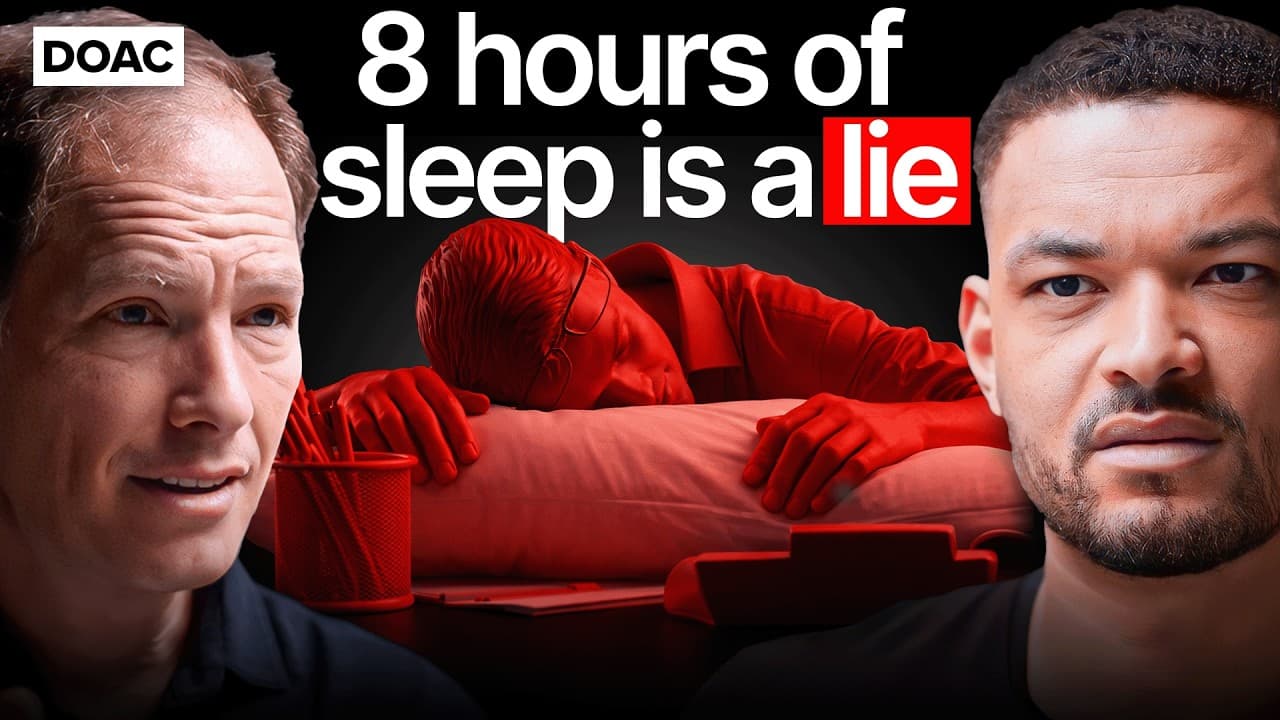
If you wake up at 3AM, avoid checking your phone or leaving bed unless necessary, then use 4-7-8 breathing to lower your heart rate and relax. Sleep specialist Dr. Bruce also explains how chronotypes influence melatonin and other hormones, why consistent wake-up times matter, and how the 3-2-1 evening rule supports better sleep. Read on for practical guidance on insomnia, melatonin, sleep apnea, and sleep quality.
Transcript
What are the most popular questions people come to you with as a sleep doctor? >> There's three biggies. Number one is, "What do I do if I fall asleep, okay, and I wake up in the middle of the night and I can't fall back asleep?" >> And you can help people with that. >> Absolutely. The second question is, "What pillow should I buy?" And I'm going t... Read More
Key Insights
- Waking up at 3AM is often due to a biological temperature spike.
- Avoid checking your phone or getting out of bed to keep your heart rate low.
- Use 4-7-8 breathing to relax and fall back asleep.
- Understanding your chronotype can optimize your daily schedule.
- Melatonin is a sleep regulator, not an initiator, and affects various medications.
- Insomnia often stems from anxiety or depression, and CBT-I can be effective.
- Sleep apnea affects 1 in 7 people, but 90% remain undiagnosed.
- Quality of sleep is more crucial than quantity, especially as you age.
Install to Summarize YouTube Videos and Get Transcripts
Explore YouTube Video Summarizer or Get YouTube Transcript Extractor
Questions & Answers
Q: What should you do if you wake up at 3AM and cannot fall back asleep?
Avoid checking your phone or getting out of bed unless necessary, because the goal is to keep your heart rate low. Try 4-7-8 breathing: inhale for 4 seconds, hold for 7 seconds, and exhale for 8 seconds to relax and help yourself fall back asleep.
Q: Why might you wake up at 3AM?
A natural biological rise in body temperature can cause you to wake around 3AM. Checking your phone or unnecessarily leaving bed may disrupt your sleep further.
Q: What is a chronotype, and how does it affect sleep?
A chronotype is described as a genetic sleep code that influences when the brain releases melatonin, cortisol, adrenaline, and dopamine. Understanding it can help identify suitable times for sleeping and activities such as drinking coffee or alcohol.
Q: What is the role of melatonin in sleep?
Melatonin regulates sleep timing rather than directly initiating sleepiness. It can interact with antidepressants, birth control, and blood pressure medications, so supplementation should be approached cautiously.
Q: What is the 3-2-1 rule for better sleep?
Stop eating 3 hours before bed, stop working 2 hours before bed, and avoid screens during the final hour. This sequence is intended to help the body and mind wind down before sleep.
Q: How can insomnia be treated?
Cognitive behavioral therapy for insomnia, or CBT-I, can address the behavioral and cognitive sides of sleep difficulty. Insomnia often arises from anxiety or depression, while a consistent wake-up time and calming bedtime routine may also support better sleep.
Q: How common is undiagnosed sleep apnea?
Sleep apnea affects 1 in 7 people, and 90% of cases remain undiagnosed. It can prevent deep sleep, making detection and treatment important for sleep quality.
Q: Why can sleep quality matter more than sleep quantity?
The restorative quality of sleep affects how well you feel and function during the day, and it becomes especially important with age. Sleep apnea can interfere with deep sleep and is associated here with increased Alzheimer’s risk.
Q: Why do I keep waking up from the same nightmare?
You may keep waking because the dream becomes so emotional that it interrupts your sleep before you finish processing it. When you fall asleep again, you can return to the dream, reach the frightening point, and repeat the cycle.
Q: Do dreams reveal what you are feeling?
Dreams can help you work through emotional states from the daytime, which the sleep specialist calls “emotional metabolism.” Their meaning depends on the individual dreamer and the dream’s context, rather than a universal dream-symbol guide.
Q: Do most people with sleep problems need sleep medication?
According to the sleep specialist, most people do not need sleep medication. He says he can usually help people sleep without medication, although he does not prescribe drugs himself.
Summary & Key Takeaways
-
Waking up at 3AM is typically due to a natural biological temperature rise. To avoid further sleep disruption, refrain from checking your phone or getting out of bed unless necessary. Instead, employ relaxation techniques such as 4-7-8 breathing to lower your heart rate and promote falling back asleep. Understanding your chronotype can also help optimize your sleep schedule.
-
Melatonin is a sleep regulator rather than an initiator and can interact with various medications, including antidepressants and birth control. Insomnia often arises from anxiety or depression, and cognitive behavioral therapy for insomnia (CBT-I) can be an effective treatment. Sleep apnea affects 1 in 7 people, though 90% remain undiagnosed.
-
Quality of sleep is more important than quantity, especially as you age. Sleep apnea can prevent deep sleep, increasing Alzheimer's risk. The 3-2-1 rule can help wind down your evening: stop eating 3 hours before bed, cease work 2 hours prior, and avoid screens 1 hour before sleep. Consistent wake-up times are essential for regulating melatonin production.
Read in Other Languages (beta)
Share This Summary 📚
Summarize YouTube Videos and Get Video Transcripts with 1-Click
Try YouTube Summary with ChatGPT & Claude or YouTube Transcript Generator
Explore More Summaries from The Diary Of A CEO 📚






Summarize YouTube Videos and Get Video Transcripts with 1-Click
Try YouTube Summary with ChatGPT & Claude or YouTube Transcript Generator