How Do Coastal Creatures Thrive on the Great Pacific Garbage Patch?
TL;DR
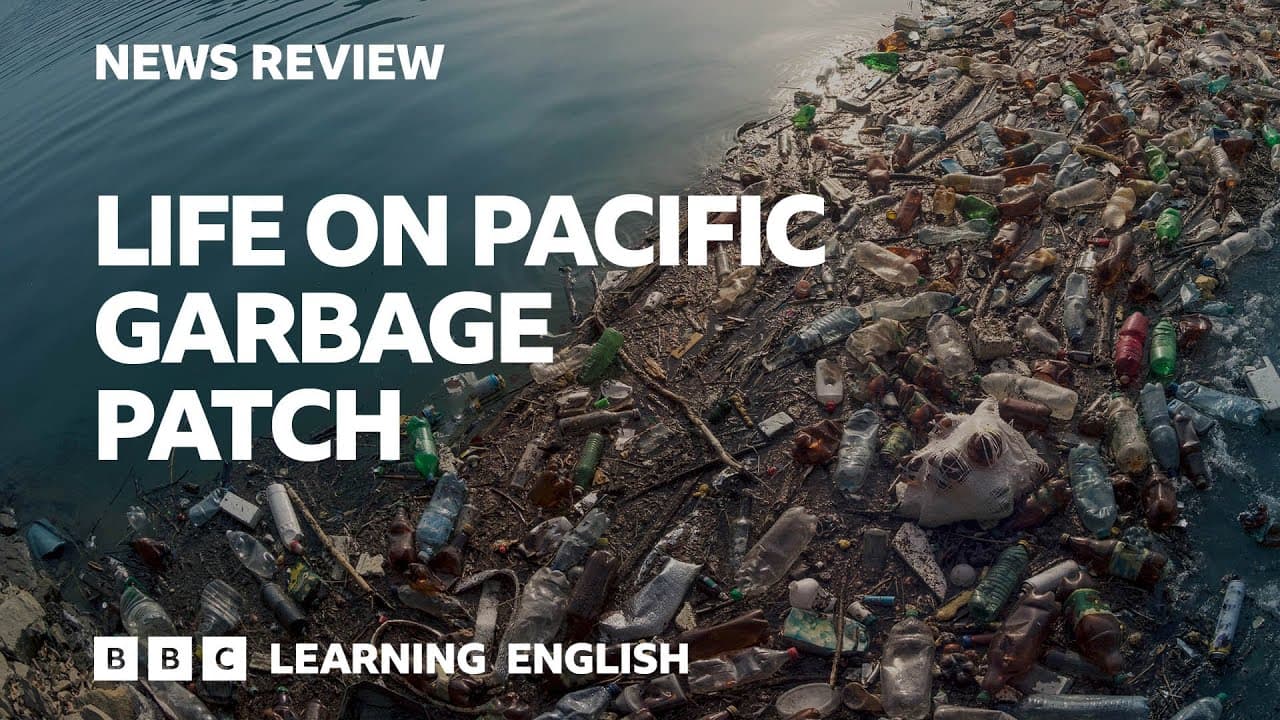
Coastal creatures are thriving on the Great Pacific Garbage Patch by using the plastic debris as a new habitat, which has led to increased reproduction. This phenomenon highlights the unexpected role of ocean plastic waste in supporting marine life, despite its overall negative impact on the environment.
Transcript
Plastic in the ocean. Could it actually be helping some creatures? This is News Review from BBC Learning English. I'm Neil. And I'm Sian. Make sure you watch to the end to learn vocabulary about this story. Don't forget to subscribe to our channel, like this video, and try the quiz on our website. Now, the story. The Great Pacific Garbage Patch. It... Read More
Key Insights
- Scientists have found that coastal creatures are adapting to life on the Great Pacific Garbage Patch, using it as a new habitat.
- The plastic waste in the ocean is providing these creatures with additional space, leading to increased reproduction rates.
- The term 'piggyback' is used to describe how these organisms are using the garbage patch to travel across the ocean.
- The phrase 'hitched a ride' illustrates how these creatures are utilizing the plastic debris as a mode of transportation.
- The garbage patch is humorously referred to as a 'love shack' due to the organisms breeding and establishing new life there.
- The discussion introduces vocabulary related to the environmental impact of plastic waste and its unexpected benefits for marine life.
- The video aims to teach English language learners new expressions and vocabulary through the context of environmental news.
- The story highlights the dual nature of plastic waste as both a problem and an unexpected facilitator of marine biodiversity.
Install to Summarize YouTube Videos and Get Transcripts
Explore YouTube Video Summarizer or Get YouTube Transcript Extractor
Questions & Answers
Q: What have scientists discovered about coastal creatures and the Great Pacific Garbage Patch?
Scientists have discovered that coastal creatures are making the Great Pacific Garbage Patch their new home. The plastic debris provides additional space, allowing these organisms to reproduce in larger numbers than before. This adaptation showcases the resilience of marine life in response to human-created environmental challenges.
Q: How is the term 'piggyback' used in the context of this story?
In this context, 'piggyback' is used to describe how coastal creatures are utilizing the Great Pacific Garbage Patch to travel across the ocean. The plastic waste acts as a platform, allowing these organisms to move to new areas, much like a person being carried on someone else's back.
Q: What does the expression 'hitched a ride' mean in relation to the coastal creatures?
The expression 'hitched a ride' refers to the way coastal creatures are using the plastic debris of the Great Pacific Garbage Patch as a vehicle to travel. Just as a hitchhiker travels in someone else's car for free, these organisms are using the floating garbage to move across the ocean.
Q: Why is the Great Pacific Garbage Patch referred to as a 'love shack'?
The term 'love shack' is used humorously to describe the Great Pacific Garbage Patch because it has become a place where coastal species are reproducing and creating new life. The phrase draws a parallel between the patch of rubbish and a romantic getaway, highlighting the unexpected role of the garbage in marine life reproduction.
Q: What educational purpose does the BBC News Review serve in this video?
The BBC News Review aims to teach English language learners new vocabulary and expressions through the context of current environmental news. By discussing the Great Pacific Garbage Patch, the program introduces terms like 'piggyback', 'hitched a ride', and 'love shack', helping viewers expand their language skills while learning about important global issues.
Q: What are the dual aspects of plastic waste highlighted in the story?
The story highlights that plastic waste in the ocean is both a significant environmental problem and an unexpected facilitator of marine biodiversity. While the Great Pacific Garbage Patch poses ecological challenges, it also provides new habitat space for coastal creatures, leading to increased reproduction and adaptation of marine life.
Q: How does the video encourage viewers to engage with the content?
The video encourages viewers to engage with the content by subscribing to the channel, liking the video, and taking quizzes on the BBC Learning English website. It also invites viewers to watch related videos on reducing plastic waste and improving their English vocabulary, creating an interactive learning experience.
Q: What is the significance of teaching vocabulary through environmental news stories?
Teaching vocabulary through environmental news stories is significant because it contextualizes language learning within real-world issues, making it more relevant and engaging for learners. It helps viewers understand complex topics while expanding their vocabulary, promoting both language development and awareness of global environmental challenges.
Summary & Key Takeaways
-
Scientists have discovered that coastal creatures are using the Great Pacific Garbage Patch as a new habitat, leading to increased reproduction. This phenomenon is explained using terms like 'piggyback' and 'hitched a ride', which describe how these organisms are traveling and thriving on the plastic debris.
-
The BBC News Review discusses the environmental implications of the Great Pacific Garbage Patch, highlighting how plastic waste is inadvertently aiding marine life. The discussion includes vocabulary lessons to help learners understand and use expressions related to this environmental issue.
-
The video humorously refers to the garbage patch as a 'love shack', illustrating the unexpected role it plays in marine life reproduction. The program also encourages viewers to learn more about reducing plastic waste and improving their English vocabulary through related content.
Read in Other Languages (beta)
Share This Summary 📚
Summarize YouTube Videos and Get Video Transcripts with 1-Click
Try YouTube Summary with ChatGPT & Claude or YouTube Transcript Generator
Explore More Summaries from BBC Learning English 📚
Summarize YouTube Videos and Get Video Transcripts with 1-Click
Try YouTube Summary with ChatGPT & Claude or YouTube Transcript Generator