Melody vs. Harmony

TL;DR
Explains melody and harmony in music with examples.
Transcript
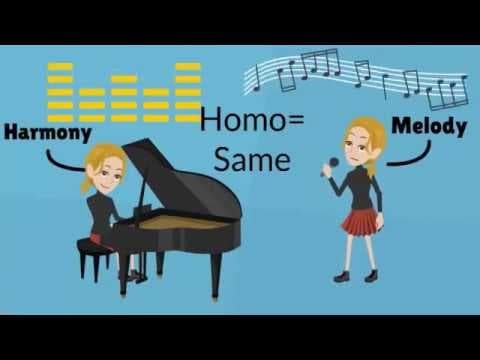
Musical Layers: Melody and Harmony Melody: the “catchy” or memorable part of music. In most popular songs that feature a vocalist, the melody is easily identified, because it is the layer of music that is being sung. In more technical terms, a melody is a series of individual notes. These notes are often broken up into musical phrases, which are sm... Read More
Key Insights
- Melody is the memorable part of music, often sung by vocalists and made up of individual notes forming musical phrases.
- Musical phrases in a melody function similarly to verbal phrases, creating a sense of completion or continuation.
- Harmony supports the melody by providing a background of pitches, contributing to the song's mood but not being the main focus.
- Chords, formed by playing three or more pitches together, are the foundation of western harmony.
- Percussion instruments, like drums, do not play melody or harmony as they produce indefinite pitches.
- Without a singer, melody is often the most prominent layer, typically higher in pitch or louder than other layers.
- In some pieces, harmony is made up of separate notes, repetitive and in the background, unlike chord-based harmony.
- Listening practice can help in identifying different musical layers, enhancing the understanding of melody and harmony.
Install to Summarize YouTube Videos and Get Transcripts
Explore YouTube Video Summarizer or Get YouTube Transcript Extractor
Questions & Answers
Q: What is the role of melody in music?
Melody serves as the catchy or memorable part of music, often sung by vocalists. It is composed of individual notes that form musical phrases, which function similarly to verbal phrases, providing a sense of completion or continuation. Melody is typically the most prominent layer, higher in pitch or louder than others.
Q: How does harmony contribute to music?
Harmony provides support for the melody by offering background pitches that enhance the song's mood. It is often constructed from chords, which are formed by playing three or more pitches simultaneously. Although not the main focus, harmony significantly influences the overall feel of a song.
Q: What distinguishes percussion instruments from melody or harmony?
Percussion instruments, such as drums, differ from melody and harmony as they produce indefinite pitches. This characteristic means they do not play a role in creating melody or harmony, which are defined by specific pitches and notes. Instead, percussion provides rhythm and texture to the music.
Q: How can one identify melody in instrumental music?
In instrumental music, melody is typically the most obvious layer, often higher in pitch or louder in dynamics compared to other layers. It stands out as the main musical line, drawing the listener's attention, even in the absence of a vocalist, as demonstrated by the violinist Lindsey Stirling.
Q: What is the relationship between melody and harmony in music?
Melody and harmony interact in music by complementing each other. The melody serves as the main musical theme or line, while harmony provides supportive background pitches. This relationship enhances the song's mood and texture, with harmony often constructed from chords that underpin the melody.
Q: Can harmony exist without chords?
Yes, harmony can exist without chords. In some musical pieces, harmony is made up of separate, repetitive notes that remain in the background. These notes do not form chords but still provide harmonic support, creating a different texture compared to traditional chord-based harmony.
Q: What is the significance of musical phrases in a melody?
Musical phrases in a melody are significant because they create a sense of structure and flow, similar to verbal phrases in language. These phrases can suggest continuation or completion, often ending with a sense of resolution, much like commas or periods in sentences, enhancing the listener's experience.
Q: How can listening practice improve understanding of musical layers?
Listening practice improves understanding of musical layers by training the ear to distinguish between melody, harmony, and rhythm. By focusing on identifying these elements in different pieces, listeners can develop a deeper appreciation of music's structure and the interplay between its various components.
Summary & Key Takeaways
-
Melody is the catchy part of music, often sung and made up of individual notes forming phrases. These phrases can function similarly to verbal phrases, creating a sense of completion or continuation. Harmony supports the melody by providing background pitches, contributing to the song's mood.
-
In music, chords are formed by playing three or more pitches together, forming the basis of western harmony. Percussion instruments like drums do not play melody or harmony due to their indefinite pitch. Melody, without a singer, is often the most prominent layer.
-
Harmony can consist of separate notes, repetitive and in the background, unlike chord-based harmony. Practicing listening to music helps in identifying different musical layers, enhancing the understanding of melody and harmony, as demonstrated by examples in the content provided.
Read in Other Languages (beta)
Share This Summary 📚
Summarize YouTube Videos and Get Video Transcripts with 1-Click
Try YouTube Summary with ChatGPT & Claude or YouTube Transcript Generator
Explore More Summaries from Alisha Nypaver 📚
Summarize YouTube Videos and Get Video Transcripts with 1-Click
Try YouTube Summary with ChatGPT & Claude or YouTube Transcript Generator