CIA operatives in Iran | Abbas Amanat and Lex Fridman
TL;DR
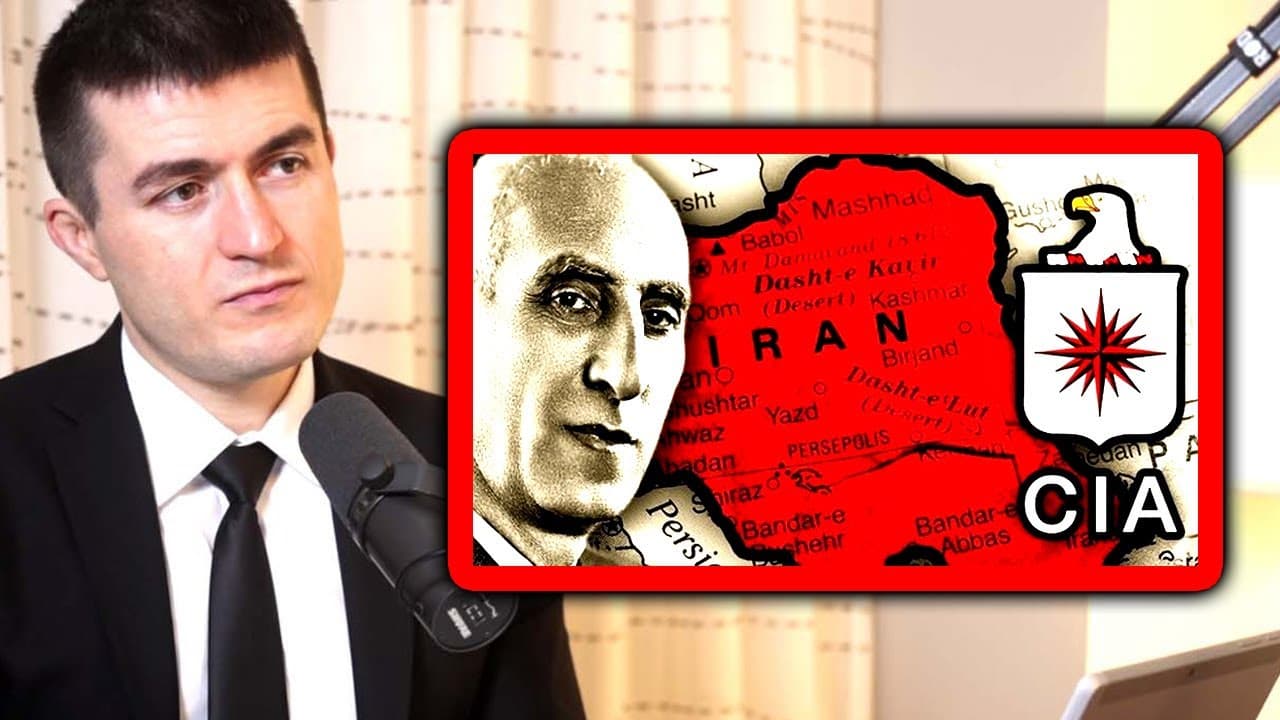
The 1953 coup in Iran, orchestrated by the CIA to protect Western oil interests, led to the rise of Islamic politics and the eventual revolution in 1979.
Transcript
Iran was going through a period of demanding nationalization of his old resources that's a very important episode with mosadir whom you might have heard about his name Dr Muhammad musadir who was the Prime Minister and the national charismatic leader from 1951 to 1953 prior to that he was a famous parliamentarian but this period was the Prime Minis... Read More
Key Insights
- 🧑🤝🧑 The 1953 coup in Iran was orchestrated by the CIA to protect Western oil interests and prevent Soviet influence.
- 😮 The coup led to a negative perception of the American presence in Iran and contributed to the rise of authoritarian rule under the Shah.
- 🖐️ The coup created a sense of betrayal among Iranian nationalists and played a role in the eventual revolution in 1979.
- 😮 The politicization of religion during the period of isolation and suppression led to the rise of Islamic politics in Iran.
- 🧑🌾 The coup had far-reaching consequences and hindered Iran's progress towards political participation and modernization.
- ✊ The revolution in 1979 provided an opportunity for the religious establishment to gain power and influence.
- 💋 The revolution marked a shift from secular nationalism to Islamic politics in Iran.
Install to Summarize YouTube Videos and Get Transcripts
Explore YouTube Video Summarizer or Get YouTube Transcript Extractor
Questions & Answers
Q: Why did the British and Americans support the 1953 coup in Iran?
The British and Americans were concerned about the influence of the Soviet Union and the potential threat to Western oil resources in the Persian Gulf. They saw the coup as a way to protect their national security interests.
Q: How did the coup impact the perception of the American presence in Iran?
The coup created a negative perception of the American presence in Iran, as it was seen as a betrayal of Iranian nationalism. This sentiment was later exploited by Ayatollah Khomeini during the 1979 revolution.
Q: Why did the revolution in Iran turn towards Islamic politics?
The revolution provided an opportunity for the religious establishment to gain power and influence after being sidelined by the secular authoritarian regime. The politicization of religion and the lack of reform within the religious establishment led to the rise of Islamic politics.
Q: What were the consequences of the coup for Iran's modernization efforts?
The coup resulted in the suppression of voices calling for greater political participation and modernization. The authoritarian regime led by Shah Reza Pahlavi focused on rapid modernization but failed to address issues such as women's rights and civil liberties.
Summary & Key Takeaways
-
Iran's nationalization of the oil industry in 1951 led to a conflict with Britain and the US, resulting in the CIA-backed coup in 1953.
-
The coup aimed to prevent Iranian oil resources from falling under Soviet influence and threatened Western oil interests in the Persian Gulf.
-
The coup created a distressing memory for nationalists and contributed to the rise of authoritarian rule and the eventual revolution in 1979.
Read in Other Languages (beta)
Share This Summary 📚
Summarize YouTube Videos and Get Video Transcripts with 1-Click
Try YouTube Summary with ChatGPT & Claude or YouTube Transcript Generator
Explore More Summaries from Lex Clips 📚




Summarize YouTube Videos and Get Video Transcripts with 1-Click
Try YouTube Summary with ChatGPT & Claude or YouTube Transcript Generator