How America Creates Its Own Enemies: ISIS, Terrorism, Insecurity | William Ruger | Big Think
TL;DR
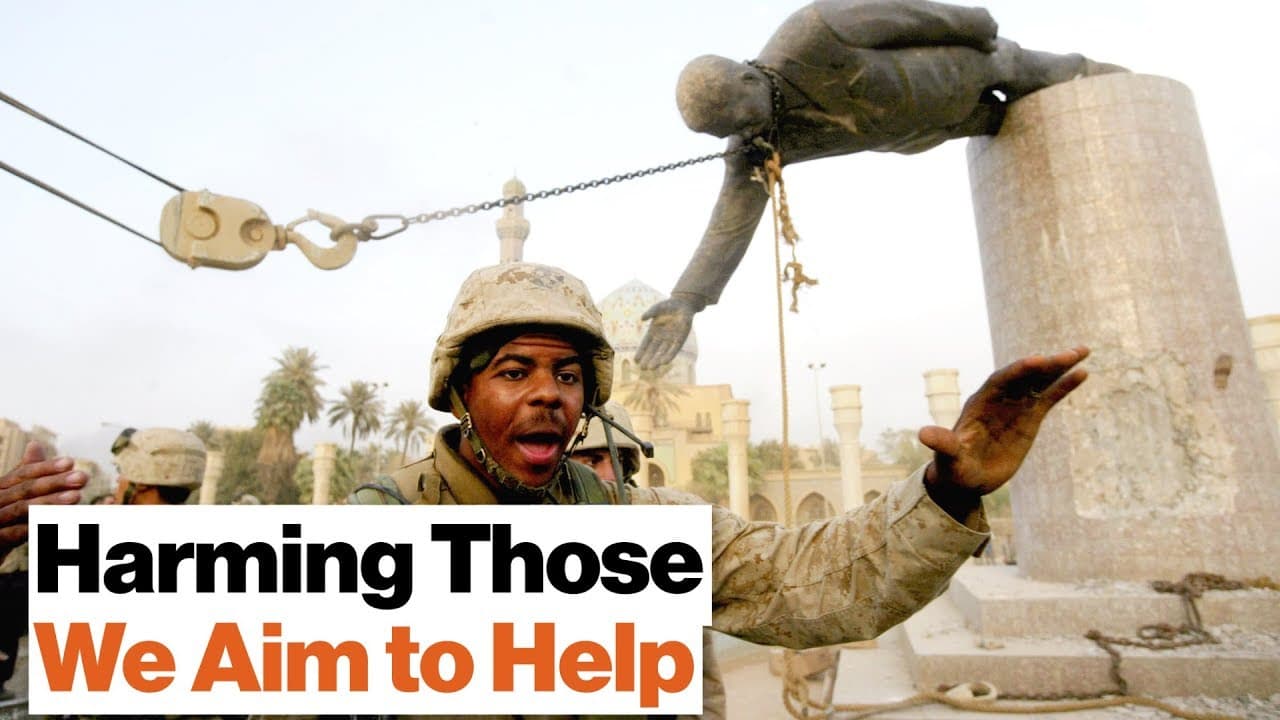
U.S. foreign policy has unintentionally led to instability and unintended consequences.
Transcript
U.S. foreign policy over the last 15 to 25 years hasn’t really been working on delivering the goods, on making sure that America is safe and secure, and at the same time being cognizant of the economic and human costs of our engagements. If the United States had followed a more realist or restrained approach to the world then it’s not as if Libya o... Read More
Key Insights
- 🍝 U.S. foreign policy over the past decades has failed to deliver on ensuring American safety and security.
- 🥺 Attempts at nation-building in countries like Iraq and Libya have led to unintended consequences and human costs.
- 🏈 A more prudent and realistic foreign policy approach is needed to avoid further instability and harm to American interests.
- 🏈 Unintended consequences of foreign policy, such as spillover effects and counter-proliferation challenges, have negatively impacted American security.
- 🪡 Lessons from failed interventions in Libya and Iraq highlight the need for a cautious and restrained foreign policy approach.
- 🇱🇾 Destabilization in regions like Mali due to the spillover effects of Libya showcases the repercussions of misguided foreign policy decisions.
- 🌍 The overthrow of leaders like Muammar Gaddafi in Libya has sent a clear message to the world regarding the risks of engaging in regime change.
Install to Summarize YouTube Videos and Get Transcripts
Explore YouTube Video Summarizer or Get YouTube Transcript Extractor
Questions & Answers
Q: How has U.S. foreign policy in the last few decades impacted stability in regions like Iraq and Libya?
U.S. foreign policy has unintentionally led to instability in places like Iraq and Libya, creating unintended consequences and human costs due to failed attempts at nation-building and regime changes.
Q: What are the risks associated with American interventions in regions like Libya?
American interventions in Libya, although well-intentioned, have resulted in destabilization, the proliferation of arms, and the creation of safe havens for terrorist organizations, harming both American interests and the stability of the region.
Q: Why is a more realistic and restrained approach to foreign policy necessary?
A cautious and realistic approach to foreign policy is crucial to considering second-order consequences, human and financial costs, and avoiding unintended consequences that could negatively impact American security interests.
Q: How have past regime changes in countries like Libya and Iraq affected American security?
Regime changes in Libya and Iraq, despite good intentions, have not resulted in positive outcomes for American security and have instead harmed stability in these regions, impacting American interests negatively.
Summary & Key Takeaways
-
U.S. foreign policy in the past 15-25 years has lacked effectiveness in ensuring American safety and has led to instability and unintended consequences.
-
This approach has resulted in failed attempts at nation-building in countries like Iraq and Libya, creating more problems and human costs.
-
A more cautious and realistic foreign policy approach is needed to avoid further unintended consequences and prioritize American security interests.
Read in Other Languages (beta)
Share This Summary 📚
Summarize YouTube Videos and Get Video Transcripts with 1-Click
Try YouTube Summary with ChatGPT & Claude or YouTube Transcript Generator
Explore More Summaries from Big Think 📚




Summarize YouTube Videos and Get Video Transcripts with 1-Click
Try YouTube Summary with ChatGPT & Claude or YouTube Transcript Generator