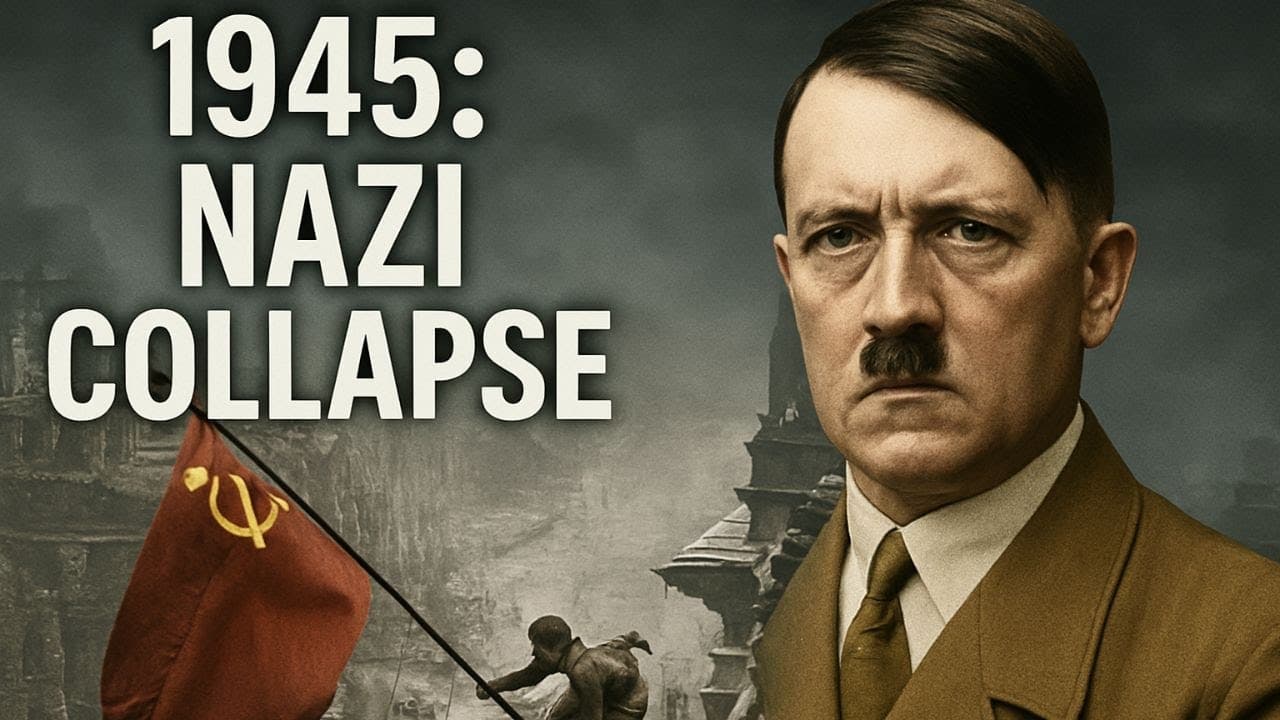
Bedtime Story| 1945: Nazi Collapse
TL;DR
Witness the dramatic fall of Nazi Germany in 1945.
Transcript
winter 1945 europe trembles beneath the boots of advancing armies on both ends of a crumbling empire the noose tightens to the west rain lashes the steel hulls of American tanks rolling through the muddy plains of Belgium and the Netherlands the Ryan River the final natural barrier protecting Hitler's Reich looms ahead behind the months of bitter f... Read More
Key Insights
- The collapse of Nazi Germany in 1945 was marked by simultaneous assaults from the Western Allies and the Soviet Union, leading to the final destruction of the Third Reich.
- The capture of the Ludendorff Bridge at Remagen by American forces was a pivotal moment, allowing the Allies to cross the Rhine and penetrate deeper into Germany.
- The Soviet Red Army's advance from the east was characterized by overwhelming force and a desire for retribution, culminating in the capture of Berlin.
- Hitler's refusal to surrender and his obsession with holding onto territory, such as the Hungarian oil fields, weakened Germany's defenses at critical moments.
- The liberation of concentration camps by Allied forces revealed the horrific extent of Nazi atrocities, transforming the war into a moral crusade against genocide.
- The psychological collapse of the Nazi regime was evident as German civilians fled westward in fear of Soviet retribution, experiencing the horrors of war firsthand.
- The final days of Hitler were spent in a bunker in Berlin, where he issued delusional orders to non-existent armies before ultimately committing suicide.
- The unconditional surrender of Germany in May 1945 marked the end of World War II in Europe, but it also set the stage for the Cold War and the division of Germany.
Install to Summarize YouTube Videos and Get Transcripts
Explore YouTube Video Summarizer or Get YouTube Transcript Extractor
Questions & Answers
Q: What was the significance of the Ludendorff Bridge during the collapse of Nazi Germany?
The Ludendorff Bridge at Remagen was significant because its capture by American forces allowed the Allies to cross the Rhine River, a major natural barrier, and advance into the heartland of Germany. This unexpected opportunity bypassed German defenses and hastened the collapse of Nazi resistance in the west, opening the road to victory for the Allies.
Q: How did the Soviet Red Army contribute to the fall of Berlin?
The Soviet Red Army played a crucial role in the fall of Berlin by launching a massive offensive from the east. With overwhelming numbers and firepower, they pushed through German defenses, capturing towns and cities along the way. Their advance was marked by a desire for vengeance for the atrocities committed by the Nazis in the Soviet Union, culminating in the capture of Berlin and the end of the Nazi regime.
Q: What impact did the liberation of concentration camps have on the Allied forces?
The liberation of concentration camps had a profound impact on Allied forces, as they uncovered the horrific extent of Nazi atrocities. The discovery of these camps transformed the war into a moral crusade against genocide, with soldiers witnessing firsthand the inhumanity and suffering inflicted by the Nazis. It galvanized the Allies' resolve to bring justice to those responsible and highlighted the need for accountability and remembrance.
Q: How did Hitler's leadership decisions affect Germany's ability to defend itself?
Hitler's leadership decisions, marked by delusion and obsession, severely undermined Germany's ability to defend itself. His fixation on holding territory like the Hungarian oil fields diverted crucial resources away from defending Berlin. His refusal to listen to his generals, reliance on non-existent armies, and insistence on fighting to the last man led to strategic failures and accelerated the collapse of Nazi Germany.
Q: What was the psychological impact of the Soviet advance on German civilians?
The psychological impact of the Soviet advance on German civilians was profound, as fear of Soviet retribution led to mass evacuations. Civilians, including women and children, fled westward in harsh conditions, experiencing the terror and displacement they had once inflicted on others. The panic and chaos highlighted the collapse of the Nazi regime's promises and the harsh realities of war for the German population.
Q: What were the circumstances of Hitler's final days?
In Hitler's final days, he was isolated in a bunker in Berlin, issuing delusional orders to non-existent armies. As Allied forces closed in, he refused to surrender, choosing instead to commit suicide on April 30, 1945. His death marked the end of the Nazi regime, and his final acts were characterized by a refusal to face reality and an unwillingness to prevent further destruction.
Q: How did the unconditional surrender of Germany come about?
The unconditional surrender of Germany was the result of relentless Allied advances from both the west and east, leaving the Nazi regime with no options. On May 7, 1945, German representatives signed the surrender in Reims, France, with a second signing in Berlin on May 9 to satisfy Soviet demands. The surrender marked the official end of World War II in Europe, though it also laid the groundwork for post-war tensions and the Cold War.
Q: What were the immediate consequences of the end of World War II in Europe?
The immediate consequences of the end of World War II in Europe included the division of Germany into occupation zones, the beginning of the Cold War, and the need for reconstruction and reconciliation. The liberation of concentration camps forced the world to confront the atrocities committed by the Nazis, leading to the Nuremberg Trials and a commitment to preventing future genocides. The war's end also highlighted the challenges of rebuilding a continent devastated by conflict.
Summary & Key Takeaways
-
In early 1945, Nazi Germany faced simultaneous invasions from the Western Allies and the Soviet Union. The capture of strategic locations like the Ludendorff Bridge allowed Allied forces to penetrate deeper into German territory, while the Soviet advance from the east was relentless and fueled by a desire for revenge.
-
Hitler's leadership faltered as he prioritized holding onto territory like the Hungarian oil fields over defending Berlin. His refusal to surrender led to further destruction and suffering, with German civilians fleeing westward to escape the advancing Red Army, experiencing the horrors they had once inflicted on others.
-
The liberation of concentration camps exposed the full extent of Nazi atrocities, turning the war into a moral crusade. In the final days, Hitler committed suicide in his Berlin bunker, and Germany surrendered unconditionally in May 1945, marking the end of World War II in Europe and the beginning of the Cold War.
Read in Other Languages (beta)
Share This Summary 📚
Summarize YouTube Videos and Get Video Transcripts with 1-Click
Try YouTube Summary with ChatGPT & Claude or YouTube Transcript Generator