Answering Your Garment Construction Questions (Patternmaking, Draping, Sewing, and More)
TL;DR
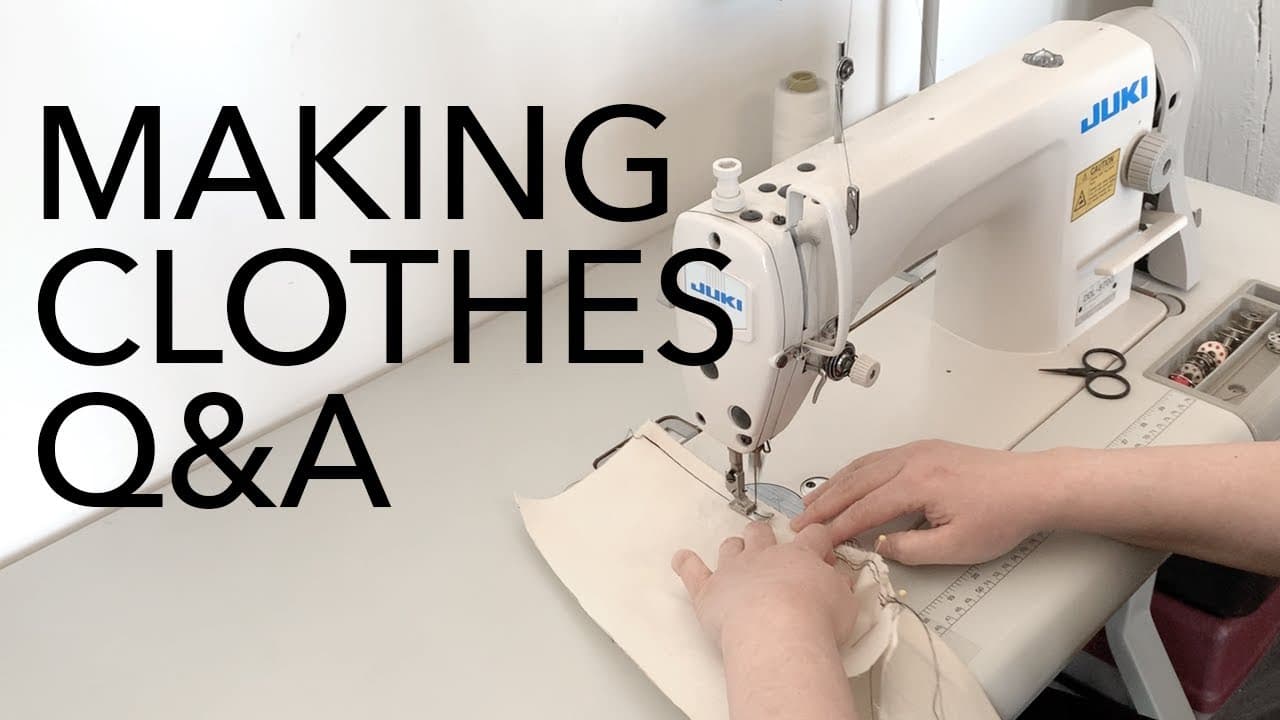
Fashion designer provides industry-based garment construction tips and advice for beginners.
Transcript
hey party people welcome to my garment construction frequently asked questions video couple of disclaimers to start number one I am a fashion designer who has been working in the fashion industry for a long time which means in the context of this video that means that the advice I give the instructions the techniques that I talk about are ones that... Read More
Key Insights
- 👷 Understanding the basics of garment construction is crucial for effective communication within the fashion industry.
- 🛟 Draping and pattern making serve different purposes in creating garments, each with unique benefits and applications.
- 🗯️ Selecting the right tools and materials, such as muslin fabric and industrial dress forms, is essential for successful garment construction.
- 🤩 Seam finishes, thread tension management, and structure creation are key components of quality garment construction.
- 🔕 Practicing techniques like slashing and spreading can help create volume and add design elements to garments.
- 🤗 Continuous learning and hands-on practice are essential for aspiring fashion designers to improve their skills and expertise in garment construction.
- 😄 Utilizing basting stitches and easing techniques can help control fabric movement and create seamless seams in garments.
Install to Summarize YouTube Videos and Get Transcripts
Explore YouTube Video Summarizer or Get YouTube Transcript Extractor
Questions & Answers
Q: What are the essential skills for aspiring fashion designers?
Aspiring fashion designers need to understand garment construction basics, be able to communicate with tech designers and sample making teams, and actively participate in fittings to offer solutions when needed.
Q: What is the difference between draping and pattern making?
Pattern making involves creating garment pieces on paper or digitally, while draping involves pinning fabric on a dress form to visualize a garment and transfer the design to paper patterns.
Q: What fabrics are suitable for draping and pattern making?
Muslin, a plain cotton fabric with no stretch or texture, is commonly used in draping and pattern making due to its versatility and ease of manipulation on dress forms.
Q: How important is it to have an industrial dress form for garment construction?
Industrial dress forms provide accurate representations of different body types and are essential for creating garments that fit well and look professional in the fashion industry.
Summary & Key Takeaways
-
Industry-based advice on garment construction techniques.
-
Importance of learning basics to communicate effectively.
-
Distinction between draping and pattern making in garment creation.
Read in Other Languages (beta)
Share This Summary 📚
Summarize YouTube Videos and Get Video Transcripts with 1-Click
Try YouTube Summary with ChatGPT & Claude or YouTube Transcript Generator
Explore More Summaries from Zoe Hong 📚

Summarize YouTube Videos and Get Video Transcripts with 1-Click
Try YouTube Summary with ChatGPT & Claude or YouTube Transcript Generator