What Is Downside Protection and Why Is It Risky?
TL;DR
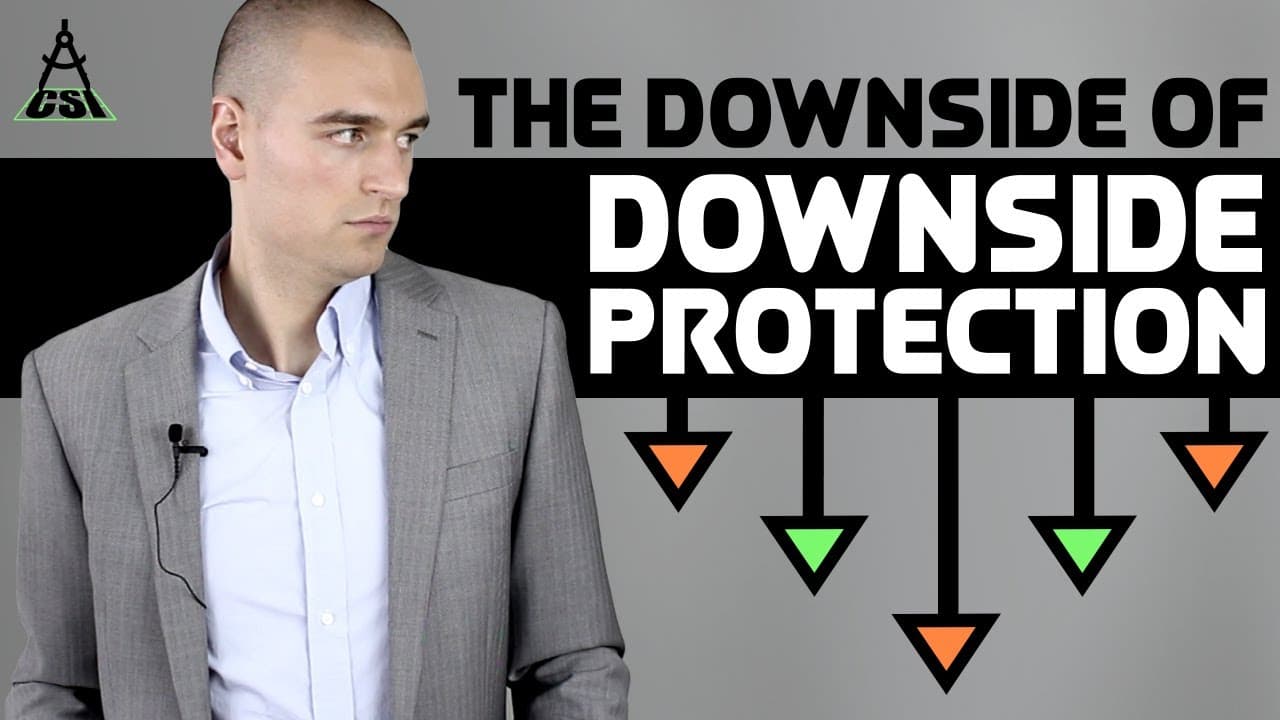
Downside protection may seem beneficial, but it often incurs high costs and can reduce long-term investment returns. While it aims to prevent short-term losses, embracing risk is essential for maximizing returns over time. Principal protected notes, a common downside protection strategy, frequently underperform compared to low-cost index fund portfolios.
Transcript
Downside protection is one of the financial industry’s favourite sales pitches. Why wouldn’t you want to buy a financial product that stops you from losing money? The fact is that a fear of losing money in the short-term is not a logical one, and over the long-term, downside protection ends up costing you. Long-term Investors tend to evaluate their... Read More
Key Insights
- 😨 Fear of short-term losses is often irrational, and over long periods of time, market fluctuations tend to even out.
- 🍉 Downside protection strategies add significant costs to portfolios, potentially reducing long-term returns.
- 🙃 Principal protected notes, which offer upside potential without downside risk, often underperform simple balanced portfolios of index funds.
- ✋ Enduring short-term volatility is important for achieving higher expected returns as rational investors.
- ❓ Financial institutions create products to profit from investors' emotional and irrational behavior.
Install to Summarize YouTube Videos and Get Transcripts
Explore YouTube Video Summarizer or Get YouTube Transcript Extractor
Questions & Answers
Q: Why is downside protection considered one of the least useful promises a financial product can make?
Downside protection adds significant costs to a portfolio, potentially reducing expected returns. Accepting the potential for losses is necessary for risk and return, and short-term declines are just noise over a long-term horizon.
Q: What are principal protected notes, and why do they underperform?
Principal protected notes are investment vehicles that guarantee the return of the initial investment while offering participation in the performance of underlying assets. However, their maturities are often longer than five years, and over historical periods, very few periods longer than five years have significant negative returns. As a result, principal protected notes tend to underperform compared to balanced portfolios of index funds.
Q: Why is enduring short-term volatility important for rational investors?
Enduring short-term volatility allows rational investors to achieve higher expected returns. By staying invested and not being deterred by short-term market fluctuations, investors can capture the long-term growth potential of the market.
Q: How can long-term investors benefit from minimizing costs and using low-cost index funds?
Minimizing costs and using low-cost index funds allows long-term investors to capture the returns of the global markets. These strategies help investors avoid high fees associated with downside protection while still achieving market returns.
Summary & Key Takeaways
-
Downside protection is a commonly pitched concept in the financial industry, offering to protect investors from short-term loss. However, this fear of loss is often irrational and can hinder long-term investment success.
-
Over long periods of time, financial markets tend to go up, and short-term declines in portfolio value are just noise. Accepting the potential for losses is necessary for risk and return in investments.
-
Principal protected notes, investment vehicles that offer upside potential without downside risk, often underperform compared to simple balanced portfolios of index funds.
Read in Other Languages (beta)
Share This Summary 📚
Summarize YouTube Videos and Get Video Transcripts with 1-Click
Try YouTube Summary with ChatGPT & Claude or YouTube Transcript Generator
Explore More Summaries from Ben Felix 📚




Summarize YouTube Videos and Get Video Transcripts with 1-Click
Try YouTube Summary with ChatGPT & Claude or YouTube Transcript Generator