How Poland's Economy Outpaced Former Soviet Peers
TL;DR
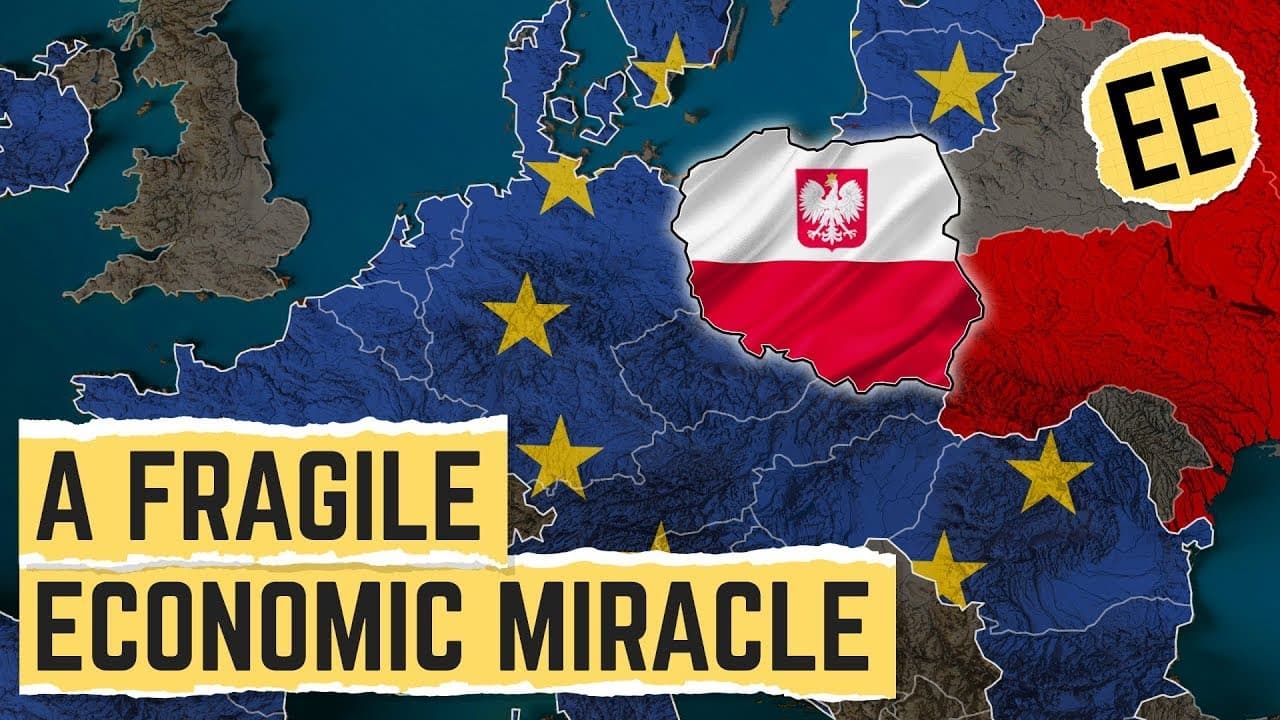
Poland has emerged as one of Europe's fastest-growing economies, outperforming its former Soviet neighbors due to a strategic transition from a state-controlled to a market economy. Key factors include political stability, EU membership, and a focus on manufacturing. However, challenges such as the middle-income trap and geopolitical tensions remain.
Transcript
This video is sponsored by HubSpot This is Poland, a country home to just under 38 million people and one of the fastest-growing economies in Europe, which is a continent that has unfortunately been characterized by slow or even negative economic progress in recent decades. Poland is a fascinating economy for a number of reasons, not least of which... Read More
Key Insights
- Poland's economy is one of the fastest-growing in Europe, despite its historical challenges and geopolitical situation.
- The country successfully transitioned from a state-controlled to a market economy, avoiding the pitfalls faced by other former Soviet states.
- Poland's EU membership provided a captive market, boosting its economy through trade with major European nations.
- The middle-income trap poses a significant challenge, as Poland's rising wages may erode its competitive advantage in low-cost manufacturing.
- Geopolitical tensions, especially the Ukraine conflict, have impacted Poland, with over 1.6 million refugees entering the country.
- Poland's strategy of slow and steady economic reform avoided the corruption seen in other post-Soviet transitions.
- The country faces demographic challenges, including brain drain and an aging population, which could affect future growth.
- Poland's commitment to expanding its military could strain its economy, despite its strategic necessity given regional tensions.
Install to Summarize YouTube Videos and Get Transcripts
Explore YouTube Video Summarizer or Get YouTube Transcript Extractor
Questions & Answers
Q: How did Poland transition from a state-controlled to a market economy?
Poland transitioned from a state-controlled to a market economy through a gradual approach known as 'shock therapy.' Unlike other former Soviet states, Poland maintained political stability by keeping state control over major industries initially and allowing private sectors to develop alongside. This strategy minimized corruption and economic disruption, fostering a stable transition to a market-based economy.
Q: Why is Poland's economic growth considered remarkable?
Poland's economic growth is remarkable due to its rapid expansion compared to other European nations, especially former Soviet states. Despite limited natural resources and historical challenges, Poland leveraged EU membership, political stability, and a strategic focus on manufacturing to achieve sustained growth. Its success offers a model for other countries transitioning from centrally planned economies.
Q: What challenges does Poland face in sustaining its economic growth?
Poland faces several challenges in sustaining economic growth, including the middle-income trap, where rising wages may reduce its competitiveness in low-cost manufacturing. Geopolitical tensions, particularly the Ukraine conflict, have led to an influx of refugees, straining resources. Additionally, demographic shifts, such as brain drain and an aging population, pose long-term economic risks.
Q: How has EU membership impacted Poland's economy?
EU membership has significantly impacted Poland's economy by providing a captive market for trade and investment. It facilitated economic growth through partnerships with major European nations, particularly in manufacturing. However, it also led to brain drain, as workers sought higher wages in wealthier EU countries, and created dependency on a region experiencing slow growth.
Q: What is the middle-income trap, and how does it affect Poland?
The middle-income trap refers to a situation where a country's rising wages erode its competitive advantage in low-cost manufacturing before it can develop advanced industries. Poland faces this challenge as its economy grows and wages increase, making it less competitive compared to other emerging markets. This trap could hinder Poland's transition to a high-income economy.
Q: How has the Ukraine conflict affected Poland's economy?
The Ukraine conflict has significantly affected Poland's economy by leading to an influx of over 1.6 million refugees, straining resources and public services. Poland's geographic proximity has also made it a base for military and civilian aid operations. These factors create economic pressures, potentially impacting Poland's growth and stability as it manages the humanitarian and economic fallout.
Q: What role does manufacturing play in Poland's economy?
Manufacturing plays a crucial role in Poland's economy, serving as a primary driver of growth. Poland's strategic location and lower labor costs have attracted European manufacturing partnerships, particularly with Germany and France. This sector has been vital in transitioning Poland from a state-controlled economy to a market-based one, though rising wages may challenge its competitiveness in the future.
Q: Why is Poland expanding its military, and what are the economic implications?
Poland is expanding its military in response to regional geopolitical tensions, particularly the Ukraine conflict and its vulnerable geographic location. This expansion aims to enhance national security but comes with significant economic implications. Increased military spending could strain Poland's budget, diverting resources from other areas crucial for economic growth, such as infrastructure and social services.
Summary & Key Takeaways
-
Poland's economy has grown rapidly, outpacing its former Soviet neighbors by transitioning to a market economy with political stability and EU membership. Its strategic location and low-cost manufacturing have attracted European trade, but challenges like the middle-income trap and geopolitical tensions remain.
-
The transition from a state-controlled economy was managed with a slow and steady approach, avoiding the corruption seen in other former Soviet states. Poland's EU membership provided economic opportunities, but also led to brain drain as workers sought higher wages abroad.
-
Poland faces challenges such as the middle-income trap, demographic shifts, and geopolitical tensions from the Ukraine conflict. Despite these hurdles, its economy remains one of Europe's fastest-growing, with potential to become a major economic force if it can navigate these issues.
Read in Other Languages (beta)
Share This Summary 📚
Summarize YouTube Videos and Get Video Transcripts with 1-Click
Try YouTube Summary with ChatGPT & Claude or YouTube Transcript Generator
Explore More Summaries from Economics Explained 📚
Summarize YouTube Videos and Get Video Transcripts with 1-Click
Try YouTube Summary with ChatGPT & Claude or YouTube Transcript Generator