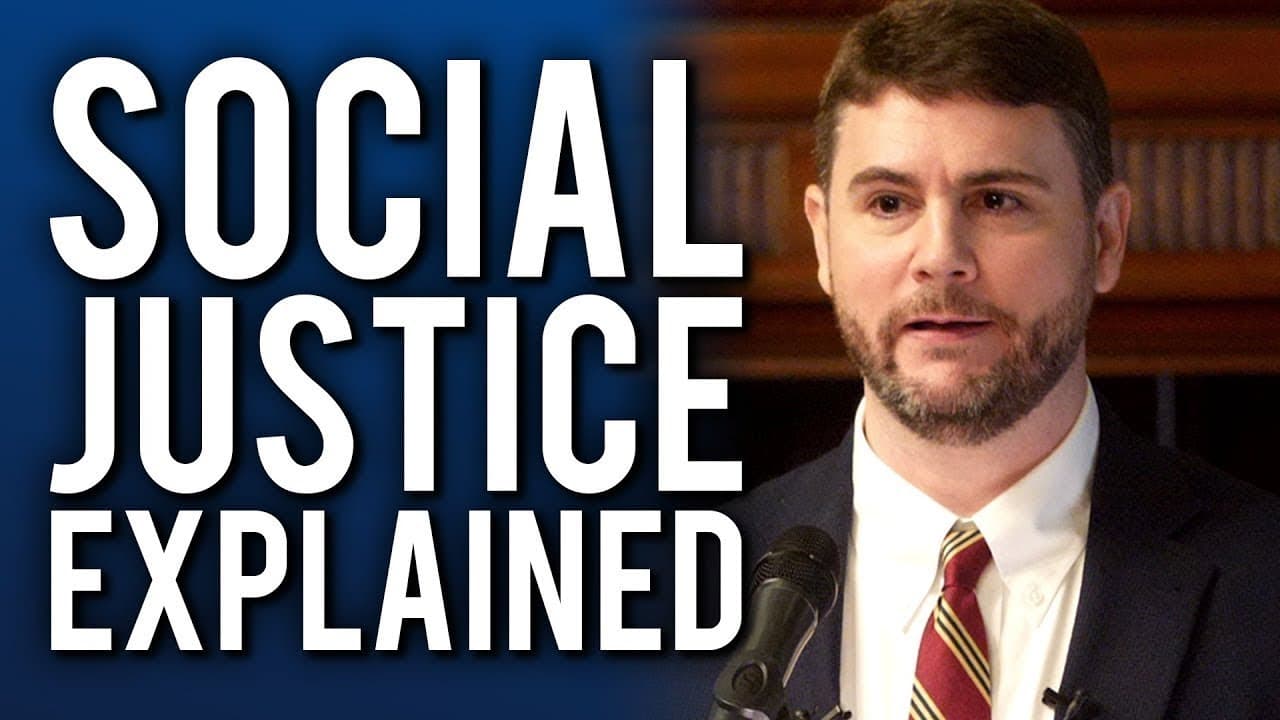
James Lindsay | Social Justice Explained: The Foundations Of Wokeness | Modern Wisdom Podcast 124
TL;DR
Critical theory is a way of viewing the world that analyzes power dynamics and seeks to uncover hidden biases and assumptions in society. It has evolved over time, becoming more malignant and identity-focused, leading to a polarized and hostile cultural climate.
Transcript
somebody will get upset that I've said this but the truly the whole thing is is steeped in like psychoanalyzing people you disagree with in paranoia and it's all about systems of power and the way that those influence everything so that nothing can be authentic and it's all kind of whining and complaining and very pessimistic very cynical it has th... Read More
Key Insights
- 💝 Critical theory originated in the late 19th century and has undergone significant evolution over time.
- 🥺 The integration of postmodern methods into critical theory led to a shift towards identity politics and a focus on power dynamics.
- 😮 The increasing institutionalization of social justice has resulted in a rise in woke culture and a polarization of political ideologies.
Install to Summarize YouTube Videos and Get Transcripts
Explore YouTube Video Summarizer or Get YouTube Transcript Extractor
Questions & Answers
Q: What is critical theory?
Critical theory is a way of viewing the world that focuses on power dynamics and aims to uncover hidden biases and assumptions in society. It analyzes social relations in terms of power and seeks to expose injustices and inequalities.
Q: How did critical theory evolve over time?
Critical theory has its roots in the social gospel movement in the late 1800s and gained prominence with the Frankfurt School in the early 1900s. It was influenced by postmodernism in the 1960s and 1970s, leading to a turn towards identity politics and a focus on power dynamics.
Q: What is the current state of social justice and critical theory?
Social justice and critical theory have become institutionalized, leading to a rise in woke culture and an emphasis on identity. However, this has also resulted in increased polarization and a lack of nuance in discussions.
Q: What can we expect in the future regarding critical theory and social justice?
The future is uncertain, but there is a growing interest in liberalism and the defense of liberal principles. This may lead to a resurgence of nuanced and open-minded thinking, countering the extreme ideologies associated with social justice and critical theory.
Summary & Key Takeaways
-
Critical theory originated in the late 1800s with the social gospel movement and gained traction in the early 1900s with the Frankfurt School. It was further influenced by postmodernism in the 1960s and 1970s.
-
The integration of postmodern methods into radical left thought in the late 1980s led to a shift towards identity politics and an emphasis on power dynamics.
-
In recent years, social justice and critical theory have become institutionalized, leading to an increase in woke culture and a polarization of political ideologies.
-
The future is uncertain, but there is a growing interest in liberalism and the defense of liberal principles, potentially leading to a resurgence of nuanced and open-minded thinking.
Read in Other Languages (beta)
Share This Summary 📚
Summarize YouTube Videos and Get Video Transcripts with 1-Click
Try YouTube Summary with ChatGPT & Claude or YouTube Transcript Generator
Explore More Summaries from Chris Williamson 📚



Summarize YouTube Videos and Get Video Transcripts with 1-Click
Try YouTube Summary with ChatGPT & Claude or YouTube Transcript Generator