World Trade Organization
TL;DR
The WTO facilitates trade agreements and dispute resolutions globally.
Transcript
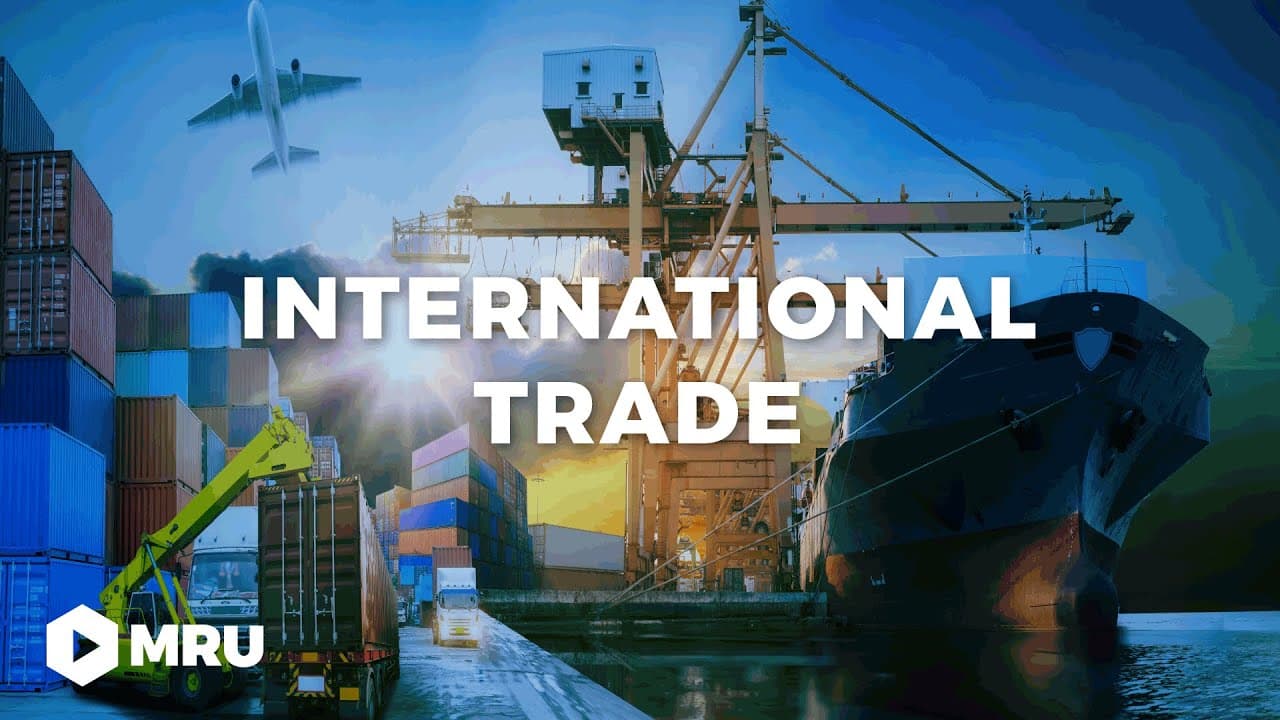
The World Trade Organization is a multilateral body which pops up frequently in discussions of development economics. Let's look at this a little more closely. The World Trade Organization or WTO as it is often called has two primary functions. The first is it oversees a series of trade agreements which individual nations sign onto when they j... Read More
Key Insights
- The World Trade Organization (WTO) oversees global trade agreements and settles disputes, acting as both a negotiator and enforcer in international trade conflicts.
- A significant case involving the WTO was between the United States and the European Union over alleged unfair subsidies to Airbus, highlighting the organization's role in resolving trade disputes.
- The WTO has 155 members as of 2012, with Russia on its way to joining, indicating its extensive global reach and influence in trade matters.
- Originating from the General Agreement on Tariffs and Trade (GATT), the WTO continues to promote non-discrimination, reciprocity, and transparency in trade policies.
- The Doha Development Round, initiated in 2001, aims to further reduce tariffs, although progress has been slow, especially in the agricultural sector.
- The WTO also oversees intellectual property through TRIPS, ensuring that trade-related aspects of intellectual property rights are maintained globally.
- Joining the WTO often requires significant economic reforms, as seen in China's accession, which involved dismantling numerous trade barriers.
- Critics argue that the WTO's influence is waning, with more countries opting for bilateral agreements and questioning the organization's impact on global trade.
Install to Summarize YouTube Videos and Get Transcripts
Explore YouTube Video Summarizer or Get YouTube Transcript Extractor
Questions & Answers
Q: What are the primary functions of the WTO?
The World Trade Organization (WTO) primarily oversees global trade agreements and acts as a forum for negotiating and settling disputes. It functions as a court with the ability to enforce trade rules and levy fines, ensuring member countries adhere to agreed-upon trade standards.
Q: Can you provide an example of a WTO dispute case?
A notable WTO case involved the United States and the European Union, where the U.S. accused the EU of providing unfair subsidies to Airbus, disadvantaging Boeing. The initial ruling favored the U.S., highlighting the WTO's role in mediating and resolving international trade disputes.
Q: How has the WTO evolved from the GATT?
The WTO evolved from the General Agreement on Tariffs and Trade (GATT), established post-World War II to maintain a relatively free global trading order. The WTO continues GATT's principles of non-discrimination, reciprocity, and transparency, adapting to modern trade challenges and expanding its member base.
Q: What challenges does the WTO face in reducing trade barriers?
The WTO struggles to reduce trade barriers, particularly in agriculture, where subsidies and tariffs persist. Despite the Doha Development Round's efforts to lower tariffs further, significant progress remains elusive, highlighting the complexities of achieving consensus among diverse member nations.
Q: How does the WTO influence intellectual property rights?
The WTO oversees intellectual property through the TRIPS agreement, which stands for Trade-Related Aspects of Intellectual Property Rights. This ensures that member countries maintain consistent intellectual property standards, facilitating fair trade and protecting innovations on a global scale.
Q: What are the benefits of joining the WTO?
Joining the WTO often requires countries to implement economic reforms, promoting freer trade policies. This process can lead to dismantling trade barriers, as seen in China's accession, which involved significant legal and economic changes, ultimately benefiting global trade and economic integration.
Q: Why do some critics question the WTO's impact on global trade?
Critics argue that the WTO's impact is diminishing as countries increasingly favor bilateral agreements. Economist Andrew Rose's research suggests ambiguity in the WTO's effectiveness, as many nations reduce tariffs independently, raising questions about the organization's true influence on global trade dynamics.
Q: What misconceptions exist about the WTO's power?
The WTO is often portrayed as a dominant force controlling global trade, but evidence suggests its impact is marginal. While it encourages freer trade and membership, its actual power is limited, with much of the criticism exaggerating its influence over international trade policies and practices.
Summary & Key Takeaways
-
The World Trade Organization (WTO) plays a crucial role in managing global trade agreements and resolving disputes, functioning as both a court and a forum for negotiation. Its influence extends to 155 countries, with Russia on the path to membership, highlighting its global significance.
-
Originating from the General Agreement on Tariffs and Trade (GATT), the WTO promotes non-discrimination, reciprocity, and transparency in trade policies. Despite its efforts, the organization faces criticism for its limited impact on reducing agricultural subsidies and tariffs, significant barriers to trade.
-
While the WTO encourages developing nations to adopt freer trade policies, its overall influence is debated. Many countries prefer bilateral agreements, questioning whether the WTO significantly impacts global trade dynamics or if countries naturally lean towards free trade.
Read in Other Languages (beta)
Share This Summary 📚
Summarize YouTube Videos and Get Video Transcripts with 1-Click
Try YouTube Summary with ChatGPT & Claude or YouTube Transcript Generator
Explore More Summaries from Marginal Revolution University 📚

Summarize YouTube Videos and Get Video Transcripts with 1-Click
Try YouTube Summary with ChatGPT & Claude or YouTube Transcript Generator