What Processes Are Involved in Semiconductor Wafer Fabrication?
TL;DR
Semiconductor wafer fabrication involves creating integrated circuits (ICs) through several key processes: layer deposition (using methods like thermal oxidation and chemical vapor deposition), lithography for pattern transfer, etching to engrave designs onto the substrate, and impurity doping to modify electrical properties. These processes work intricately together to ensure high precision in manufacturing.
Transcript
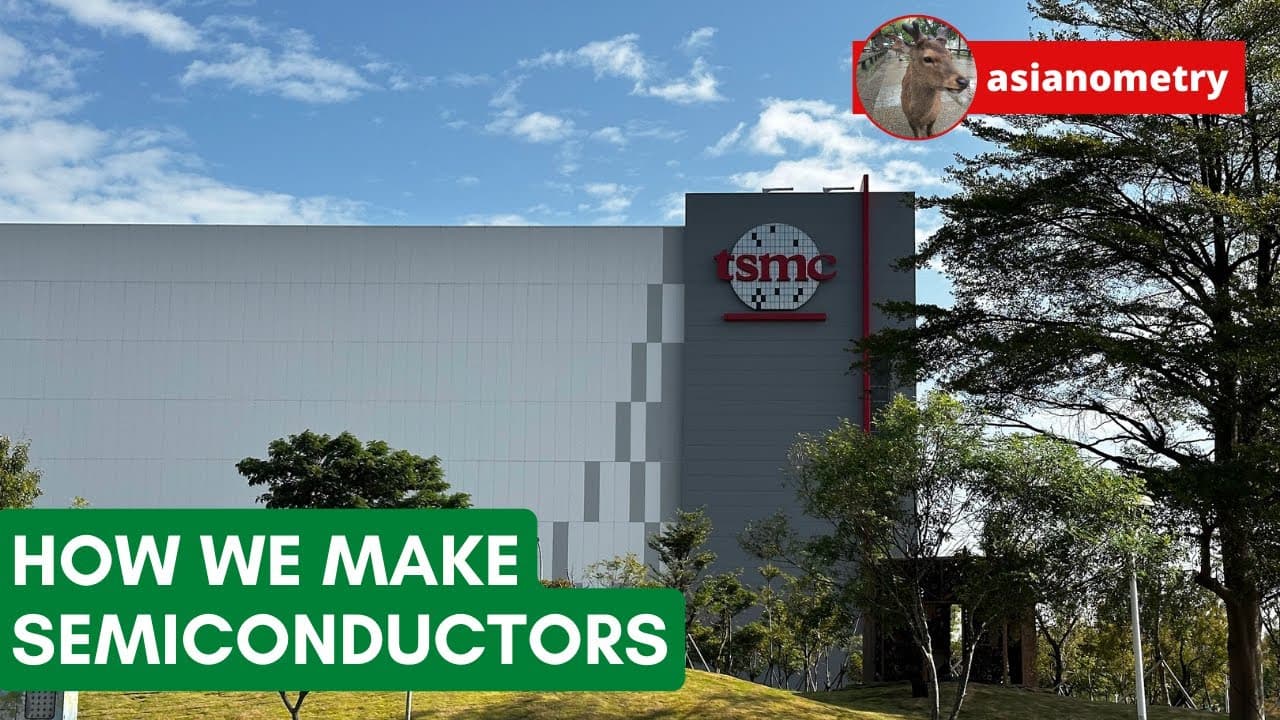
Is your fab running? Well, you better go catch it! Ha. Ha. I did this whole video just to make this joke. Anyway, semiconductor manufacturing is the most complicated process known to humanity that has ever been successfully performed at scale. But what does that actually mean? What is humanity doing inside those massive fabs? You curious? So am I. ... Read More
Key Insights
- ❓ Semiconductor manufacturing involves complex processes such as layer deposition, lithography, etching, and impurity doping.
- 🤘 Wafer fabrication is the foundation of integrated circuits, connecting active and passive devices with metal wires.
- ❓ Different layer deposition methods, including thermal oxidation, epitaxy, PVD, and CVD, are used to create the required material layers on the wafer.
- 🎨 Lithography is a crucial step in transferring the IC design onto the layers using a photomask and an exposure tool.
- 🤔 Etching helps in permanently transferring the pattern onto the layers by removing unprotected parts of the thin films.
- ❓ Impurity doping is necessary to give the silicon specific electrical properties required for the functioning of transistors and other components.
- ❓ Wet etching and dry etching (plasma etching) are the two main methods used for etching.
Install to Summarize YouTube Videos and Get Transcripts
Explore YouTube Video Summarizer or Get YouTube Transcript Extractor
Questions & Answers
Q: What is the purpose of wafer fabrication in the semiconductor manufacturing process?
Wafer fabrication involves the creation of integrated circuits (ICs) by connecting active and passive devices with metal wires on a silicon wafer.
Q: How are different material layers created on the wafer?
Layer deposition methods, such as thermal oxidation, epitaxy, physical vapor deposition (PVD), and chemical vapor deposition (CVD), are used to create different material layers on the wafer.
Q: What is the role of lithography in semiconductor manufacturing?
Lithography is the process used to transfer the IC design onto the layers of the wafer by creating a photomask and using an exposure tool.
Q: How is the pattern transferred onto the layers during etching?
Etching is performed to permanently transfer the pattern onto the layers by removing the unprotected parts of the thin films through either wet etching or dry etching (plasma etching).
Q: What is impurity doping and why is it necessary in semiconductor manufacturing?
Impurity doping involves introducing specific impurities into the silicon to give it desired electrical properties. It is necessary for the functioning of transistors and other components in the IC.
Key Insights:
- Semiconductor manufacturing involves complex processes such as layer deposition, lithography, etching, and impurity doping.
- Wafer fabrication is the foundation of integrated circuits, connecting active and passive devices with metal wires.
- Different layer deposition methods, including thermal oxidation, epitaxy, PVD, and CVD, are used to create the required material layers on the wafer.
- Lithography is a crucial step in transferring the IC design onto the layers using a photomask and an exposure tool.
- Etching helps in permanently transferring the pattern onto the layers by removing unprotected parts of the thin films.
- Impurity doping is necessary to give the silicon specific electrical properties required for the functioning of transistors and other components.
- Wet etching and dry etching (plasma etching) are the two main methods used for etching.
- Understanding the complexity and variety of processes in semiconductor manufacturing helps in appreciating the enormity of the semiconductor supply chain.
Summary & Key Takeaways
-
Wafer fabrication involves the creation of integrated circuits (ICs) made up of active and passive devices connected by fine metal wires.
-
Layer deposition methods such as thermal oxidation, epitaxy, physical vapor deposition (PVD), and chemical vapor deposition (CVD) are used to create different material layers on the wafer.
-
Lithography is a crucial process where the IC design is transferred onto the layers by creating a photomask and using an exposure tool.
-
Etching is performed to permanently transfer the pattern onto the layers, with wet etching and dry etching (plasma etching) being the two main methods.
-
Impurity doping, achieved through diffusion or ion implantation, is used to give the silicon specific electrical properties.
Read in Other Languages (beta)
Share This Summary 📚
Summarize YouTube Videos and Get Video Transcripts with 1-Click
Try YouTube Summary with ChatGPT & Claude or YouTube Transcript Generator
Explore More Summaries from Asianometry 📚






Summarize YouTube Videos and Get Video Transcripts with 1-Click
Try YouTube Summary with ChatGPT & Claude or YouTube Transcript Generator