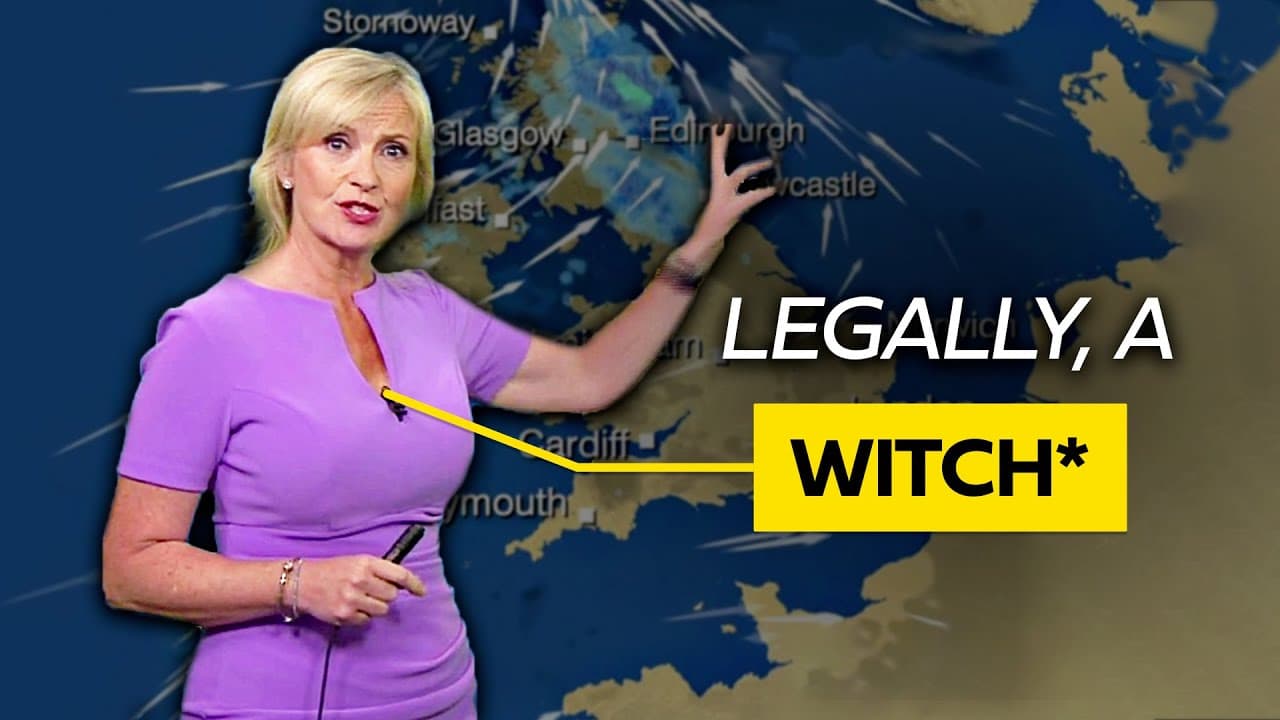
Why weathermen were illegal wizards for 97 years
TL;DR
From witchcraft to science, discover how weather predictions evolved through technology and legislation.
Transcript
thanks to brilliant for sponsoring a section of this video today we take it for granted that we can predict what the weather will do a week or so from now but for most of human history the idea that weather could be predicted was frankly ludicrous yes there was some folk wisdom for example if you saw a field of cows that was lying down that meant t... Read More
Key Insights
- 🌂 Weather prediction was once associated with witchcraft and punishable by death under witchcraft laws in England.
- ⌛ The development of the electric telegraph enabled real-time communication of weather observations across vast distances.
- 😖 Robert Fitzroy founded the UK Meteorological Office and issued the world's first weather forecast in 1861.
- ☀️ Legislation, such as the Witchcraft Act of 1735, hindered the progress of weather prediction due to outdated beliefs about predicting the future.
- 👻 The evolution of technology, such as the electric telegraph, revolutionized weather prediction by allowing for real-time data compilation and analysis.
- 👏 The UK government's use of sanctioned "wizards" to produce weather forecasts under outdated legislation raises questions about the intersection of law and technological progress.
- 🙈 Technology plays a crucial role in changing perceptions about predictability, as seen in the evolution of weather prediction from witchcraft to science.
Install to Summarize YouTube Videos and Get Transcripts
Explore YouTube Video Summarizer or Get YouTube Transcript Extractor
Questions & Answers
Q: How did laws targeting witches impact the ability to predict weather?
Laws targeting witches made it illegal to claim the ability to predict the future, hindering progress in weather prediction until the Witchcraft Act of 1735 was passed.
Q: What technological innovation allowed for more accurate weather predictions?
The development of the electric telegraph enabled the real-time communication of weather observations, leading to the prediction of future weather patterns.
Q: Who was Robert Fitzroy, and why is he significant in the history of weather prediction?
Robert Fitzroy founded the UK Meteorological Office and issued the world's first weather forecast in 1861, using synoptic charts to predict future weather patterns.
Q: How did legislation impact the perception of weather prediction?
The Witchcraft Act of 1735 remained in effect until 1951, highlighting the disconnect between technological progress in weather prediction and outdated legislation.
Summary & Key Takeaways
-
Weather prediction was once considered ludicrous, with laws targeting witches who claimed to predict the future.
-
The development of the electric telegraph enabled the UK Met Office to predict weather in advance.
-
Robert Fitzroy founded the UK Meteorological Office and issued the world's first weather forecast in 1861.
Read in Other Languages (beta)
Share This Summary 📚
Summarize YouTube Videos and Get Video Transcripts with 1-Click
Try YouTube Summary with ChatGPT & Claude or YouTube Transcript Generator
Explore More Summaries from Simon Clark 📚


Summarize YouTube Videos and Get Video Transcripts with 1-Click
Try YouTube Summary with ChatGPT & Claude or YouTube Transcript Generator