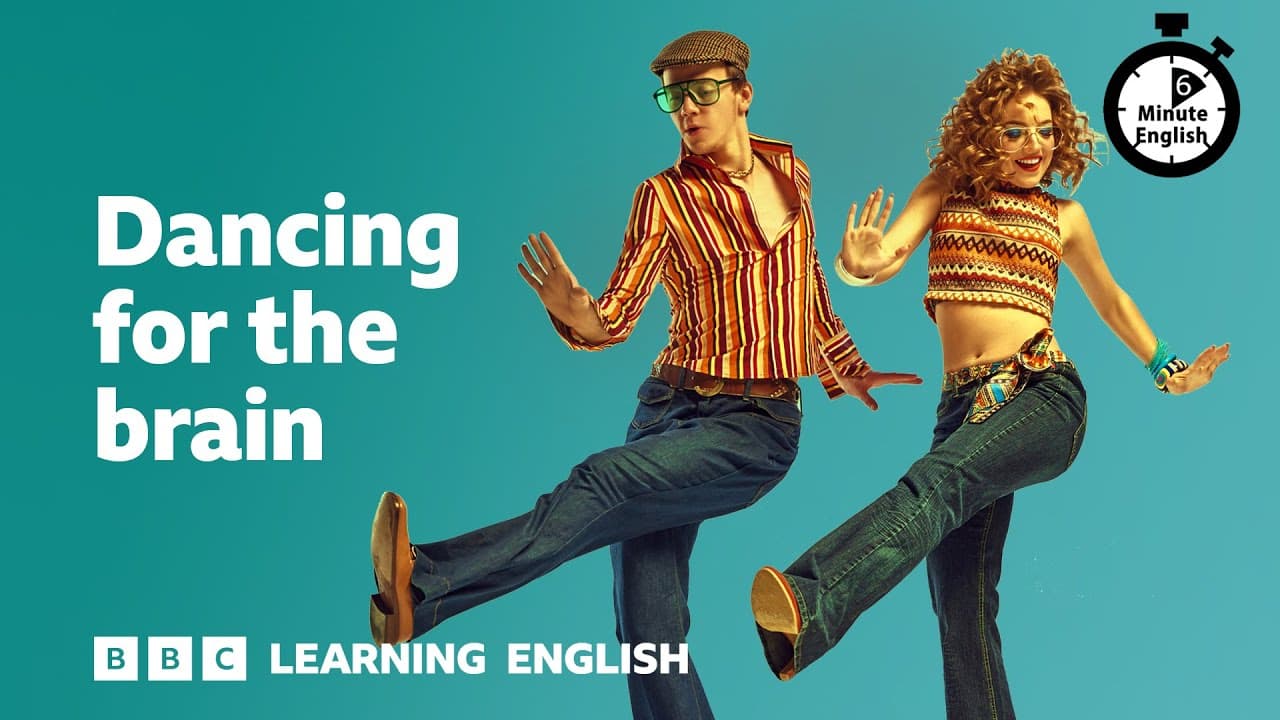
Dancing for the brain ⏲️ 6 Minute English
TL;DR
Dancing offers numerous mental and physical health benefits.
Transcript
Hello. This is Six Minute English from BBC Learning English. I'm Neil. And I'm Beth. Do you love to boogie on down, strut your stuff and throw shapes, Beth? What I mean is, do you like dancing? Yes, I love to dance! Just listening to the music and letting it move my body. What about you, Neil? Do you often hit the dance floor? Sometimes, but I'm no... Read More
Key Insights
- Dancing is proven to have many physical and mental health benefits, including stress relief and mood enhancement.
- There are numerous styles of dance, each offering unique benefits, from ballet to hip hop and traditional folk dances.
- Dancing can improve brain function across all ages, including for those with Parkinson's or Alzheimer's.
- Dance therapy encourages spontaneous movements, promoting divergent thinking and creativity.
- Even people who feel uncomfortable dancing can benefit by starting with simple movements to music.
- Dr. Peter Lovatt, known as Dr. Dance, has studied the positive effects of dance on the brain for over four decades.
- The idiom 'dance like nobody's business' means to dance very well or energetically.
- Morris dancing is a traditional English folk dance involving colorful costumes and rhythmic stick movements.
Install to Summarize YouTube Videos and Get Transcripts
Explore YouTube Video Summarizer or Get YouTube Transcript Extractor
Questions & Answers
Q: What are the mental health benefits of dancing?
Dancing offers numerous mental health benefits, such as reducing stress, boosting mood, and enhancing cognitive function. It promotes the release of emotions and tension, leading to a happier and more relaxed state. Dance therapy can also improve brain function and creativity, benefiting people of all ages.
Q: How does dance therapy work?
Dance therapy involves spontaneous movements, often with closed eyes, allowing the music to guide the body. This approach encourages divergent thinking and creativity, leading to happier and more mentally agile individuals. It is particularly beneficial for those with neurodegenerative diseases like Parkinson's and Alzheimer's.
Q: What is Morris dancing?
Morris dancing is a traditional English folk dance characterized by performers wearing black hats and colorful waistcoats. They hit sticks together while moving in patterns, creating a rhythmic and visually engaging performance. It is distinct from other dances like Flamenco or the Highland fling.
Q: Why might some people avoid dancing?
Some people might avoid dancing due to feelings of awkwardness or discomfort. They may feel embarrassed or self-conscious about their dancing abilities, leading them to avoid the dance floor. However, the benefits of dancing are significant, and even simple movements can help overcome these feelings.
Q: What advice does Dr. Lovatt give to hesitant dancers?
Dr. Lovatt advises hesitant dancers to start by lying down, closing their eyes, and listening to music they enjoy. By focusing on the music's beat and rhythm, they may feel a twitch or movement in their body, which can lead to more natural and comfortable dancing.
Q: What idioms are used to describe dancing in the transcript?
The transcript uses several idioms to describe dancing, including 'boogie,' 'strut your stuff,' 'throw shapes,' and 'hit the dance floor.' Additionally, 'dance like nobody's business' means to dance very well or energetically, highlighting the enjoyment and skill involved in dancing.
Q: How does dancing affect brain function?
Dancing positively affects brain function by promoting divergent thinking and enhancing cognitive abilities. It encourages creativity and can improve mental agility, making it beneficial for people of all ages, including those with neurodegenerative conditions like Parkinson's and Alzheimer's.
Q: What is the significance of music in dance therapy?
Music plays a crucial role in dance therapy by guiding movements and helping individuals connect with their emotions. It serves as a catalyst for spontaneous movement, allowing people to express themselves freely and experience the mental and physical benefits of dancing.
Summary & Key Takeaways
-
Dancing is not only a fun activity but also offers significant mental and physical health benefits, including stress relief and mood enhancement. Various styles of dance provide opportunities for everyone to enjoy, regardless of skill level.
-
Dance therapy, as advocated by Dr. Peter Lovatt, involves spontaneous movements that enhance brain function and creativity. This approach can benefit people of all ages, including those with neurodegenerative diseases.
-
For those hesitant to dance, starting with simple movements to music can help overcome discomfort. The benefits of dance are accessible to everyone, promoting happiness and mental well-being.
Read in Other Languages (beta)
Share This Summary 📚
Summarize YouTube Videos and Get Video Transcripts with 1-Click
Try YouTube Summary with ChatGPT & Claude or YouTube Transcript Generator
Explore More Summaries from BBC Learning English 📚
Summarize YouTube Videos and Get Video Transcripts with 1-Click
Try YouTube Summary with ChatGPT & Claude or YouTube Transcript Generator