Emergency Survival Sleeping Bag Review
TL;DR
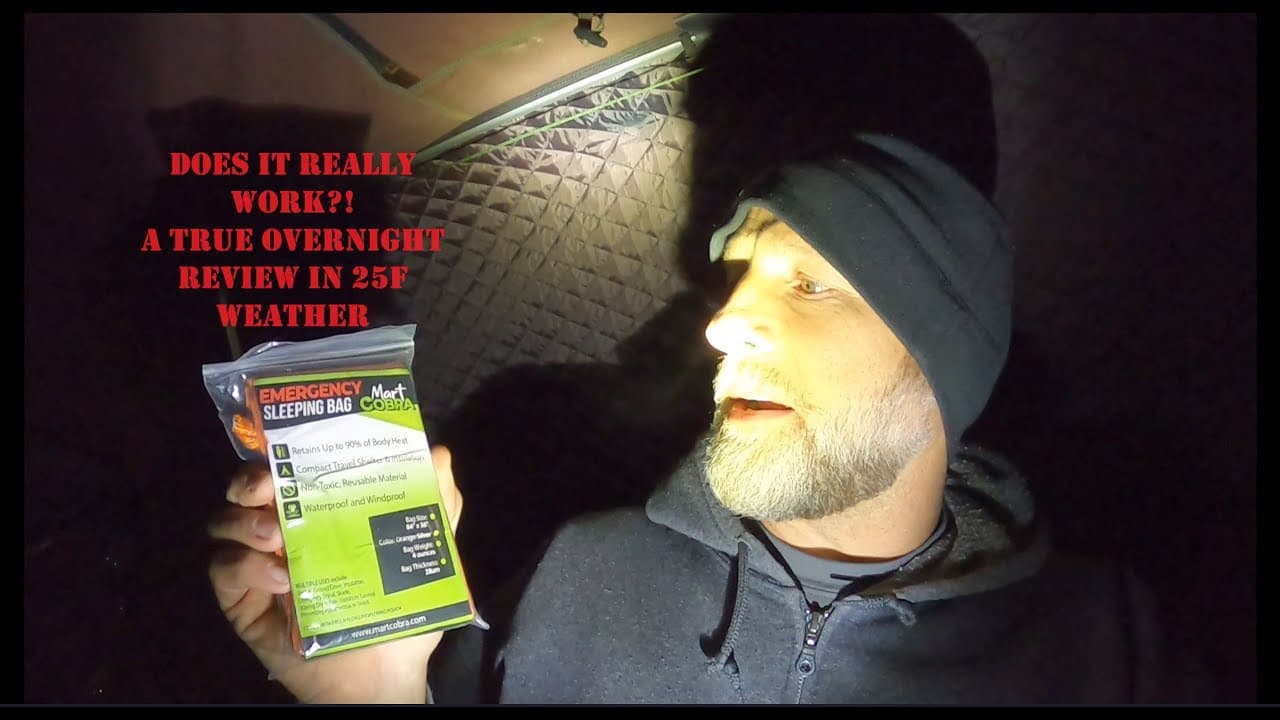
Emergency sleeping bags are not ideal for thriving in freezing conditions.
Transcript
well it's currently uh 32° out I pulled over to a uh side of the road and going to camp for the night up my roof tent on top of my Jeep I'm going to use trout this uh emergency sleeping bag they talk about basically myar uh space blanket in the bag and going to give it a whirl and see um see if that'll keep me keep me warm f... Read More
Key Insights
- The emergency sleeping bag is essentially a Mylar space blanket designed to protect against wind, snow, and rain but is not breathable, which can lead to condensation issues.
- In freezing temperatures, it's crucial to remove most clothing and use it as an external insulating layer to prevent condensation inside the bag.
- The ground can significantly drain body heat; thus, creating a thick cushion of debris is essential for insulation and comfort.
- Adding disposable hand warmers to feet and hands can improve survivability by providing additional warmth in critical areas.
- The bag is a last resort for survival, not comfort, as it was challenging to stay warm throughout the night in 25°F temperatures.
- Condensation inside the bag was present, but not excessive, with slight dampness noticed in thermal underwear after use.
- Covering the head is critical to retain heat, but care must be taken to avoid breathing inside the bag to prevent moisture buildup.
- The experience highlighted the importance of preparedness and having additional warming strategies when relying on minimalistic survival gear.
Install to Summarize YouTube Videos and Get Transcripts
Explore YouTube Video Summarizer or Get YouTube Transcript Extractor
Questions & Answers
Q: What is the primary material used in the emergency sleeping bag?
The emergency sleeping bag is primarily made from Mylar, a material commonly used in space blankets. This material is designed to protect against wind, snow, and rain, but it is not breathable, which can lead to condensation issues inside the bag.
Q: What are the main challenges faced when using the emergency sleeping bag in freezing temperatures?
The main challenges include staying warm throughout the night and managing condensation inside the bag. The bag is not very effective at retaining heat in freezing temperatures, and its non-breathable nature can lead to moisture buildup, making it uncomfortable for prolonged use.
Q: How can the effectiveness of the emergency sleeping bag be improved?
Effectiveness can be improved by removing most clothing and using it as an external insulating layer, adding disposable hand warmers to critical areas like feet and hands, and creating a thick cushion of debris to insulate from the ground. These measures help retain heat and increase comfort.
Q: Why is it important to avoid breathing inside the sleeping bag?
Breathing inside the sleeping bag can lead to condensation buildup as moisture from breath accumulates inside the non-breathable material. This can result in dampness and a decrease in warmth, making it uncomfortable and potentially dangerous in freezing conditions.
Q: What role does the ground play in heat loss when using the sleeping bag?
The ground can significantly soak away body heat, making it crucial to create a thick cushion of debris to insulate against this heat loss. Without proper insulation from the ground, staying warm in the sleeping bag becomes much more challenging.
Q: What additional items are suggested to enhance the sleeping bag's warmth?
The addition of disposable hand warmers placed at the bottom of the feet and in the hands can enhance warmth. These warmers provide localized heat that can help maintain core body temperature, especially in critical areas prone to cold.
Q: What was the overall experience of using the emergency sleeping bag overnight?
The overall experience was challenging, as the user faced significant cold and had to frequently wake up due to discomfort. While the bag served its purpose as a survival tool, it was not comfortable or effective for thriving in freezing temperatures without additional warming strategies.
Q: What is the primary takeaway from the emergency sleeping bag review?
The primary takeaway is that the emergency sleeping bag is a last-resort survival tool that provides minimal comfort and effectiveness in freezing temperatures. Proper preparation and additional warming strategies are essential to enhance its limited capabilities in extreme cold conditions.
Summary & Key Takeaways
-
The video reviews an emergency sleeping bag used in freezing temperatures, emphasizing its limitations in comfort and effectiveness. The user experienced significant cold and condensation issues, suggesting that the bag is a last-resort survival tool rather than a comfortable option.
-
Key strategies for improving warmth include using clothing as an external layer, adding hand warmers, and creating a thick debris cushion to insulate from the ground. Despite these measures, the bag is not suitable for thriving in extreme cold.
-
The review underscores the importance of preparedness in survival situations, particularly in cold weather. The user advises covering the head, avoiding breathing inside the bag, and utilizing additional warming techniques to enhance the bag's limited effectiveness.
Read in Other Languages (beta)
Share This Summary 📚
Summarize YouTube Videos and Get Video Transcripts with 1-Click
Try YouTube Summary with ChatGPT & Claude or YouTube Transcript Generator