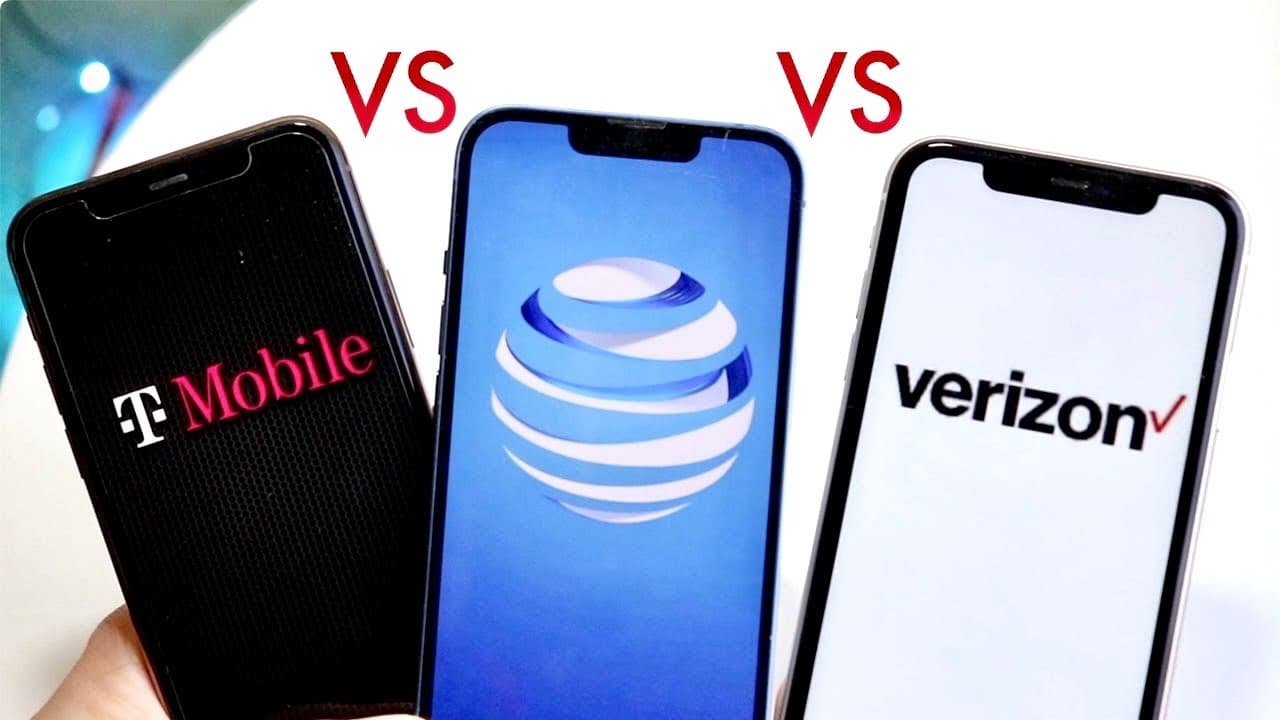
At&t Vs T Mobile Vs Verizon! (Which Should You Use?) (2023)
TL;DR
Analyzes AT&T, T-Mobile, and Verizon's services, pricing, and coverage.
Transcript
hello everyone it's time for us to go and do a quick little you know comparison between the three probably most popular cell service providers in America they may be available in other countries as well and if that's and if that's the case then that's beautiful so these three cell providers are ATT T-Mobile and Verizon now I've kind of used all the... Read More
Key Insights
- 🐕🦺 AT&T, T-Mobile, and Verizon dominate the U.S. cell service market, each presenting various advantages and pricing.
- 🦖 T-Mobile's recent acquisitions and strategic pricing have significantly boosted its competitiveness, appealing to price-sensitive consumers.
- 🙈 Verizon is often seen as a leader due to its rapid deployment of 5G technology, yet this does not always translate into the best value.
- 👤 Coverage consistency across the providers means users in a specific area may experience similar service quality regardless of their carrier.
- 🤝 The competition among these carriers includes promotional trade-in deals, which can greatly affect overall costs for consumers.
- 🐕🦺 Bundled streaming services can add value to certain plans, with each provider offering unique incentives to attract subscribers.
- 💗 Trends indicate T-Mobile’s growing market presence, especially from previously being viewed as an inferior option.
Install to Summarize YouTube Videos and Get Transcripts
Explore YouTube Video Summarizer or Get YouTube Transcript Extractor
Questions & Answers
Q: What are the primary cell service providers discussed in the content?
The content focuses on three major cell service providers: AT&T, T-Mobile, and Verizon. Each provider has its unique offerings and pricing structures, which can influence consumer choices based on their individual needs, such as coverage and plan costs.
Q: How does the pricing of the three providers compare?
T-Mobile generally offers the lowest pricing, starting at $25 per phone for basic unlimited plans, while Verizon's pricing ranges from $25 to $30. AT&T is typically the most expensive, starting at $35 for similar plans. For upgraded plans, AT&T's price is $40, T-Mobile's is $35, and Verizon ranges from $31 to $41, highlighting T-Mobile's competitive edge in affordability.
Q: What are the differences in 5G coverage and speed among the providers?
Verizon is recognized for having more extensive 5G coverage, being one of the first to deploy the service. However, T-Mobile may provide faster 5G speeds where available. This dynamic means that while Verizon offers broader access, customers in specific locations may experience better service speeds with T-Mobile.
Q: What promotional benefits do the providers offer to attract new customers?
T-Mobile provides incentives like device balance coverage and credit for switching, while Verizon bundles services such as Disney Plus with its plans. AT&T offers various similar trade-in values, but overall, T-Mobile seems to provide more attractive deals for new customers looking for trade-in arrangements.
Summary & Key Takeaways
-
This analysis examines the three leading cell service providers in the U.S.: AT&T, T-Mobile, and Verizon, focusing on their services and market position.
-
T-Mobile has significantly improved its offerings and competitive pricing, making it a viable choice for consumers, particularly with its cheaper plans.
-
Verizon leads in 5G coverage but is often more expensive than T-Mobile, which offers notable incentives and benefits for users seeking value.
Read in Other Languages (beta)
Share This Summary 📚
Summarize YouTube Videos and Get Video Transcripts with 1-Click
Try YouTube Summary with ChatGPT & Claude or YouTube Transcript Generator
Explore More Summaries from Simple Alpaca 📚


Summarize YouTube Videos and Get Video Transcripts with 1-Click
Try YouTube Summary with ChatGPT & Claude or YouTube Transcript Generator