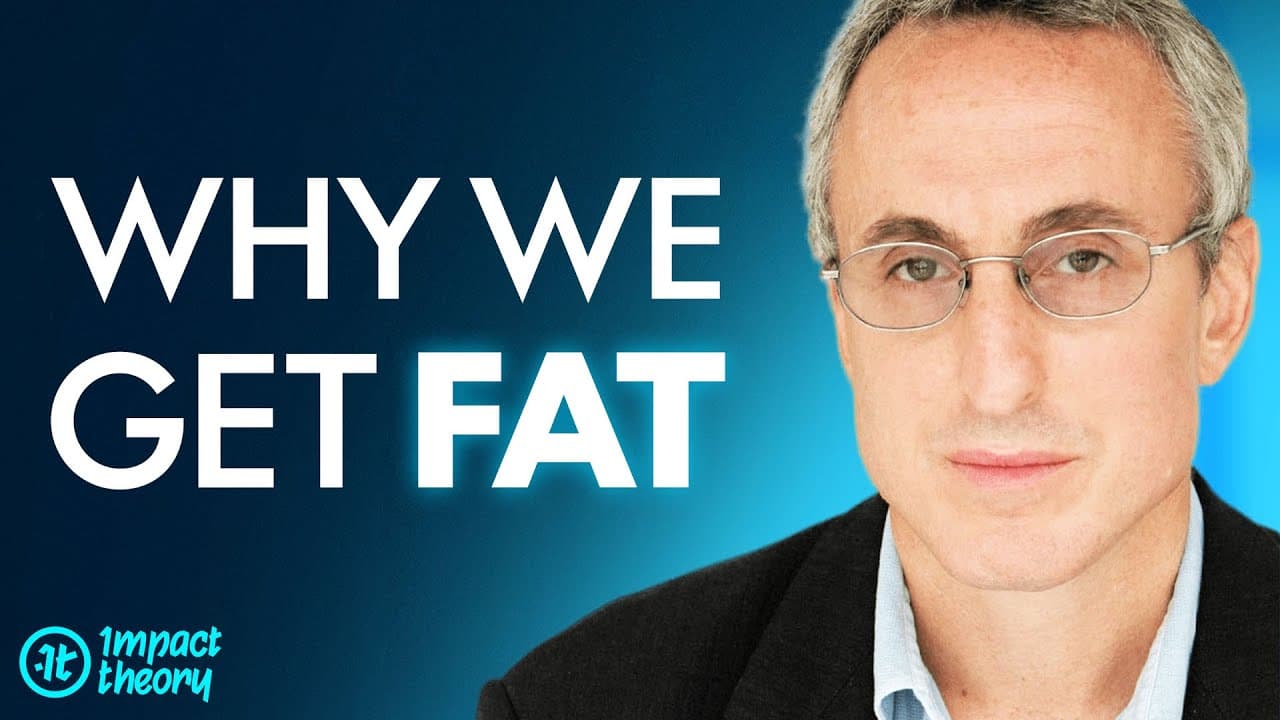
Lose FAT and Get HEALTHY With These Simple WEIGHT LOSS Hacks | Gary Taubes
TL;DR
Insulin, not caloric intake, triggers fat storage in obesity, advocating for a low-carb ketogenic diet to control weight.
Transcript
so there's clearly something about the american food environment that has triggered this obese diabetic phenotype the question is what is it gary talbs welcome to the show um pleasure to be here man i'm really excited for this your book good calories bad calories changed my life and my entire approach to diet and uh just read your new book the case... Read More
Key Insights
- 👨 Obesity is not solely due to caloric intake but is influenced by insulin levels and fat storage.
- 👨 The role of insulin in promoting fat accumulation challenges traditional beliefs about obesity.
- 😘 A low-carb ketogenic diet can help regulate insulin levels, manage weight, and address obesity.
- ❓ The content emphasizes the importance of understanding hormonal responses and metabolic processes in obesity.
- 😋 Environmental factors, like the American food environment, play a significant role in triggering obesity and metabolic disorders.
- 😋 Differential responses to food choices and diet can impact individuals' susceptibility to obesity and metabolic diseases.
- 👨🔬 Insufficient research and testing are highlighted as barriers to understanding the complex relationship between nutrition, insulin, and obesity.
Install to Summarize YouTube Videos and Get Transcripts
Explore YouTube Video Summarizer or Get YouTube Transcript Extractor
Questions & Answers
Q: How does insulin impact fat storage in the body, especially in those who are prone to obesity?
Insulin plays a key role in fat storage by promoting the uptake of glucose and fat, leading to excess fat accumulation, especially in individuals who are predisposed to gaining weight easily.
Q: What is the significance of the relationship between insulin levels and carbohydrate consumption in the context of obesity?
High carbohydrate intake elevates insulin levels, which drives fat storage, making it challenging for individuals prone to obesity to reduce weight. Therefore, limiting carbohydrate consumption can help regulate insulin levels and fat storage.
Q: How does a ketogenic diet, like the one proposed in "The Case for Keto," help control weight and manage obesity?
A ketogenic diet reduces carbohydrate intake, leading to lower insulin levels, which promotes fat burning and prevents fat storage, making it an effective strategy for weight control, especially in those prone to obesity.
Q: Why are traditional beliefs about obesity being solely linked to caloric intake challenged in the content?
The content challenges the conventional notion of obesity resulting from overeating by highlighting the critical role of insulin and fat storage. It emphasizes that understanding insulin regulation is vital for effective weight control.
Summary & Key Takeaways
-
Caloric intake is not the only factor in obesity; insulin plays a crucial role in fat storage.
-
Traditional beliefs of obesity being due to overeating are challenged by the effect of insulin and fat storage.
-
A low-carb ketogenic diet, like the case for keto, can help control weight by reducing insulin levels.
Read in Other Languages (beta)
Share This Summary 📚
Summarize YouTube Videos and Get Video Transcripts with 1-Click
Try YouTube Summary with ChatGPT & Claude or YouTube Transcript Generator
Explore More Summaries from Full Episodes of Health Theory 📚



Summarize YouTube Videos and Get Video Transcripts with 1-Click
Try YouTube Summary with ChatGPT & Claude or YouTube Transcript Generator