Daniel Kahneman: How Hard is Autonomous Driving? | AI Podcast Clips
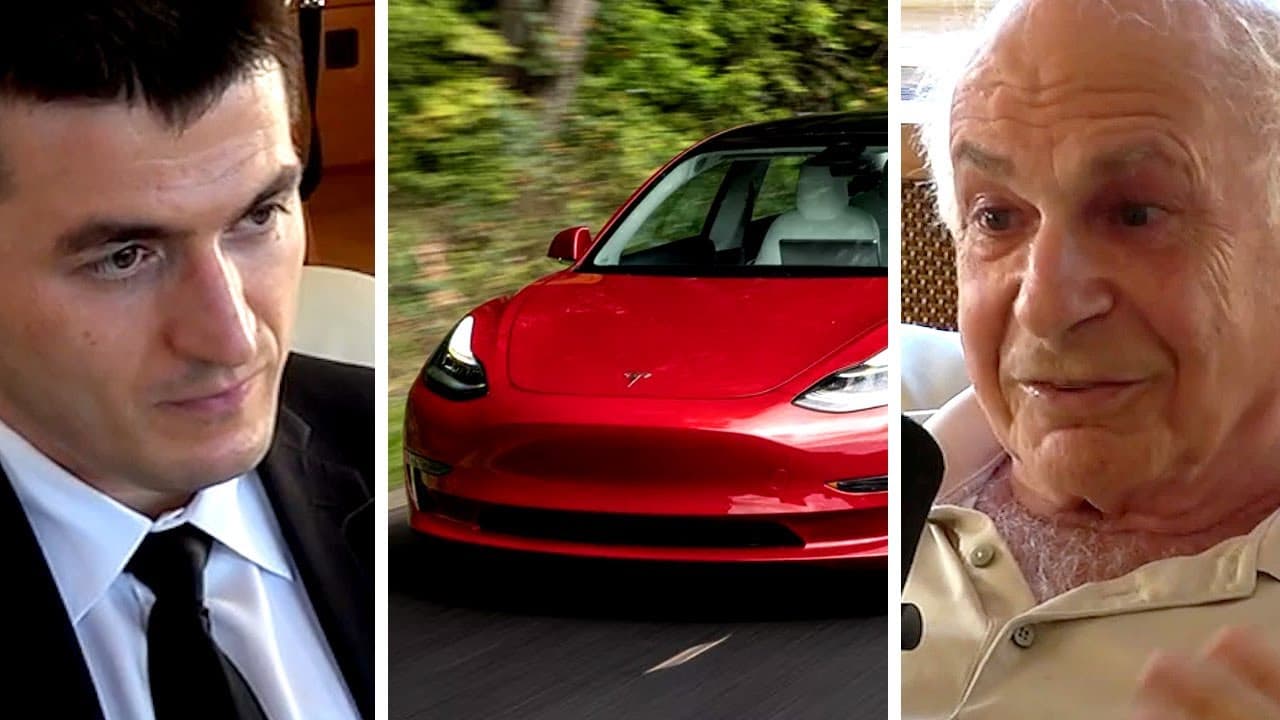
TL;DR
Human-robot collaboration is difficult, and while machines may not need humans for certain tasks, there will still be problems that only humans can solve.
Transcript
is it seems that almost every robot human collaboration system is a lot harder than people realize so do you think it's possible for robots and humans to collaborate successfully if we talked a little bit about semi autonomous vehicles like in the Tesla autopilot but just in tasks in general if you think we talked about current you'll know where it... Read More
Key Insights
- 🤖 Collaboration between humans and robots is challenging in various tasks.
- 🎰 As machines advance, they may become less dependent on human input.
- ❓ However, there will always be problems that require human intelligence to solve.
- ❓ Driving is a complex task that should not be underestimated, despite common misconceptions.
- 🥺 Evaluating the complexity of problems based on personal experience can lead to misconceptions about AI capabilities.
- 🎚️ Perception and reasoning tasks have different levels of complexity in AI application.
- ⌛ The public's intuitions about AI complexity have not significantly changed over time.
Install to Summarize YouTube Videos and Get Transcripts
Explore YouTube Video Summarizer or Get YouTube Transcript Extractor
Questions & Answers
Q: Is it possible for robots and humans to successfully collaborate?
Successful collaboration between robots and humans is possible, but as machines become more advanced, humans may become less necessary in certain tasks. However, there will always be problems that machines cannot solve, where human intervention is needed.
Q: Can semi-autonomous vehicles like Tesla autopilot collaborate with humans?
Yes, semi-autonomous vehicles can collaborate with humans. However, the level of collaboration depends on the capabilities of the machine. If the machine can adequately assist humans, it may not require human input for an extended period. However, if the machine encounters problems it cannot solve, it must be able to recognize and call for human assistance.
Q: How does the example of chess illustrate the potential for human-machine collaboration?
Chess serves as an example of successful human-machine collaboration. Over time, machines like Stockfish and Alpha Zero have surpassed humans in chess-playing abilities. However, the transition period for machines to outperform humans in all problems is uncertain, as some problems may require human intelligence that machines cannot replicate.
Q: Why is driving considered a more complicated task than chess?
Driving is more complicated than chess because it involves a hierarchical aspect. Recognizing various driving situations and efficiently accessing relevant knowledge requires a sophisticated system. People often underestimate the complexity of driving based on their own limited experience, leading to misconceptions about the difficulty of the task.
Key Insights:
- Collaboration between humans and robots is challenging in various tasks.
- As machines advance, they may become less dependent on human input.
- However, there will always be problems that require human intelligence to solve.
- Driving is a complex task that should not be underestimated, despite common misconceptions.
- Evaluating the complexity of problems based on personal experience can lead to misconceptions about AI capabilities.
- Perception and reasoning tasks have different levels of complexity in AI application.
- The public's intuitions about AI complexity have not significantly changed over time.
- Models of vision and theorem proving have different levels of complexity in AI research.
Summary & Key Takeaways
-
Collaboration between humans and robots in various tasks is harder than it seems.
-
Machines may become advanced enough to not need human assistance, rendering humans superfluous in certain situations.
-
However, there will still be problems that machines cannot solve and require human intervention.
Read in Other Languages (beta)
Share This Summary 📚
Summarize YouTube Videos and Get Video Transcripts with 1-Click
Try YouTube Summary with ChatGPT & Claude or YouTube Transcript Generator
Explore More Summaries from Lex Fridman 📚





Summarize YouTube Videos and Get Video Transcripts with 1-Click
Try YouTube Summary with ChatGPT & Claude or YouTube Transcript Generator