How to Analyze Mitochondrial Function with Flow Cytometry
TL;DR
Flow cytometry is a powerful tool for measuring mitochondrial function and related parameters in various cell types, including stem cells and neurons. This method allows for dynamic and precise analysis of mitochondrial health, which is crucial for understanding diseases like Parkinson's and Alzheimer's. The technique can be applied to both live and fixed cells, offering insights into mitochondrial potential, volume, and reactive oxygen species production.
Transcript
hey Welcome to our webinar today uh my name is Ron Meers um I'm the director of editorial here at Joe um so today we have a presentation from Dr leang um so she published with us in the past on um a Flo cytometry technique um to measure different parameters in uh mitochondrial analysis um so she'll she'll be presenting some new new uh developments ... Read More
Key Insights
- Flow cytometry is used to measure mitochondrial parameters in single cells.
- Mitochondria are crucial for ATP production and cell function.
- Mitochondrial dysfunction is linked to neurodegenerative diseases.
- The method involves both live and fixed cell staining techniques.
- Parameters measured include mitochondrial potential, volume, and ROS.
- Flow cytometry provides both total and specific mitochondrial data.
- The technique can be applied to stem cells and their derivatives.
- The protocol is adaptable for various cell types and conditions.
Install to Summarize YouTube Videos and Get Transcripts
Explore YouTube Video Summarizer or Get YouTube Transcript Extractor
Questions & Answers
Q: How to measure mitochondrial membrane potential using flow cytometry?
Mitochondrial membrane potential can be measured using flow cytometry by staining cells with specific dyes such as TMRE. These dyes accumulate in mitochondria based on their membrane potential. By analyzing the fluorescence intensity with flow cytometry, researchers can determine the membrane potential, which is indicative of mitochondrial health and function.
Q: What are the challenges in measuring mitochondrial function?
Measuring mitochondrial function is challenging due to their dynamic nature and heterogeneity. Techniques like flow cytometry must account for these factors and provide accurate snapshots of mitochondrial dynamics. Additionally, isolating specific mitochondrial parameters without disrupting cellular integrity can be difficult, requiring precise protocols and controls.
Q: Why is mitochondrial dysfunction important in neurodegenerative diseases?
Mitochondrial dysfunction is critical in neurodegenerative diseases because neurons are highly energy-dependent and sensitive to changes in ATP production. Dysfunctional mitochondria can lead to impaired energy metabolism, increased oxidative stress, and cell death, contributing to conditions like Parkinson's and Alzheimer's disease.
Q: How does flow cytometry differentiate between total and specific mitochondrial data?
Flow cytometry differentiates between total and specific mitochondrial data by using dual staining techniques. Total mitochondrial levels are measured using dyes that stain all mitochondria, while specific data is obtained by comparing the fluorescence intensity of mitochondrial markers relative to mitochondrial volume, allowing for precise analysis of mitochondrial function per cell.
Q: What cell types can be analyzed using this mitochondrial function protocol?
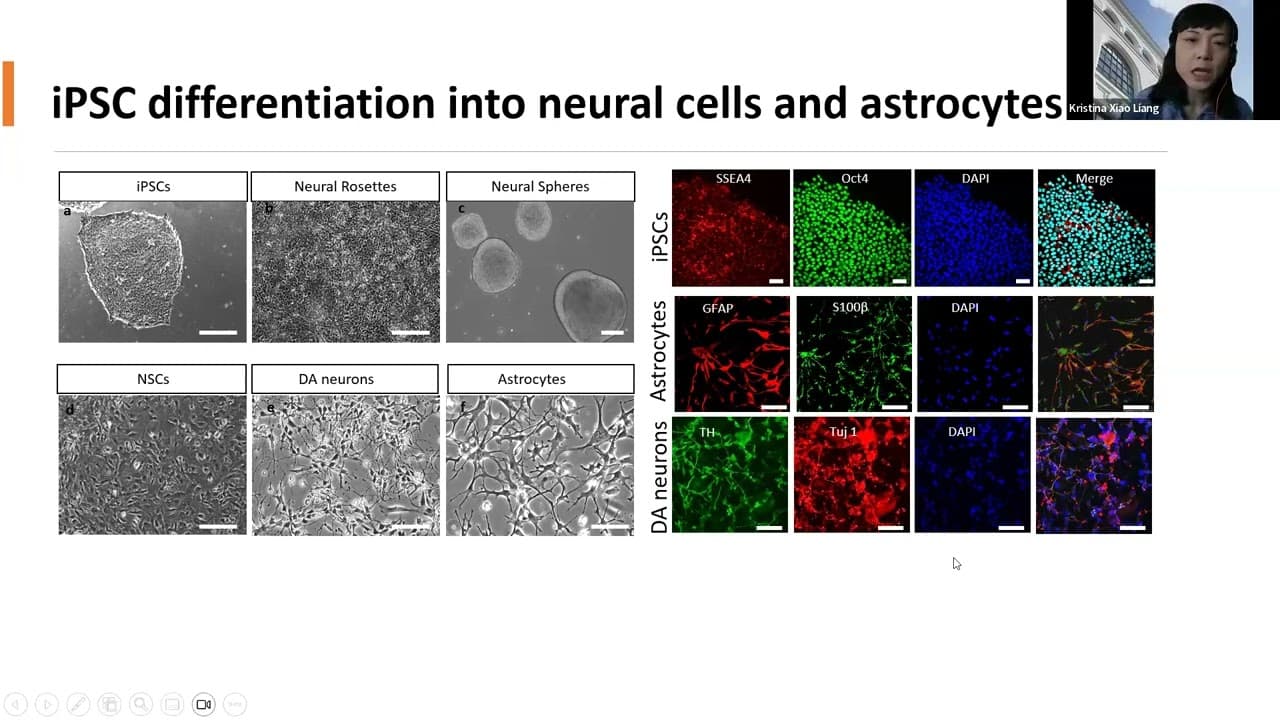
This protocol is versatile and can be applied to various cell types, including human-induced pluripotent stem cells and their neural and glial derivatives. It is designed to assess mitochondrial parameters in both differentiated and undifferentiated cells, making it suitable for a wide range of research applications in cellular and molecular biology.
Q: How is reactive oxygen species (ROS) production measured in mitochondria?
Reactive oxygen species (ROS) production in mitochondria is measured using flow cytometry by staining cells with specific fluorescent dyes such as MitoSOX Red. These dyes specifically react with ROS, allowing researchers to quantify ROS levels based on fluorescence intensity, providing insights into oxidative stress and mitochondrial health.
Q: What are the benefits of using flow cytometry for mitochondrial analysis?
Flow cytometry offers several benefits for mitochondrial analysis, including the ability to measure multiple parameters simultaneously at a single-cell level. It provides both quantitative and qualitative data, allowing for detailed insights into mitochondrial function, dynamics, and their role in cellular processes. This high-throughput technique is also adaptable to various cell types and experimental conditions.
Q: How can this protocol be adapted for 3D brain organoids?
This protocol can be adapted for 3D brain organoids by optimizing the cell staining and flow cytometry conditions to accommodate the complex structure of organoids. Researchers can use similar dyes and techniques, but may need to adjust incubation times and staining concentrations to ensure accurate measurement of mitochondrial parameters within the three-dimensional cellular context.
Summary & Key Takeaways
-
Flow cytometry provides a detailed method for analyzing mitochondrial function in different cell types. It measures parameters such as mitochondrial membrane potential, volume, and reactive oxygen species production. This technique is crucial for studying diseases like Parkinson's and Alzheimer's, allowing for both total and specific mitochondrial data analysis.
-
The method uses both live and fixed cell staining to assess mitochondrial health. It is applicable to human-induced pluripotent stem cells and their neural derivatives, offering insights into mitochondrial dynamics and their role in cellular energy production.
-
This protocol allows researchers to measure mitochondrial parameters at a single-cell level, providing insights into the specific changes in mitochondrial function associated with various diseases. It is adaptable for use with different cell types, including neurons and glial cells.
Read in Other Languages (beta)
Share This Summary 📚
Summarize YouTube Videos and Get Video Transcripts with 1-Click
Try YouTube Summary with ChatGPT & Claude or YouTube Transcript Generator