Hitler's brain | David Eagleman and Lex Fridman
TL;DR
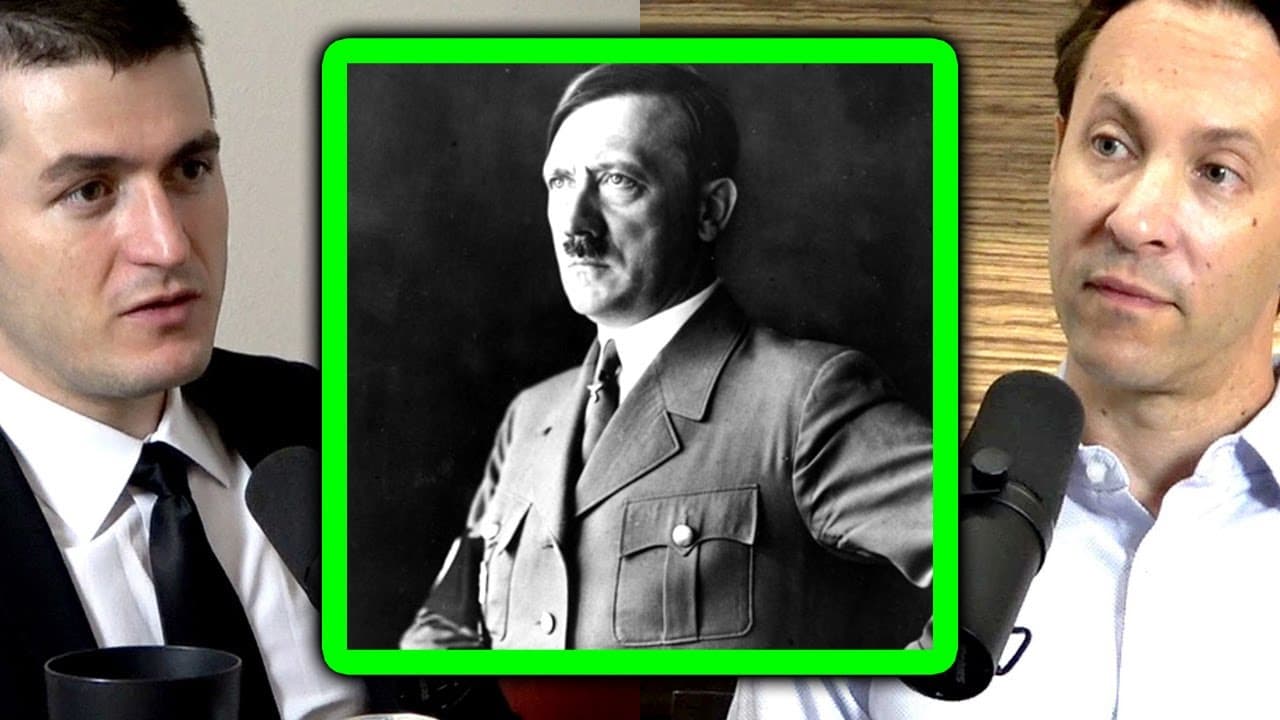
The author explores the nature of genius and evil, discussing how the brain's wiring and social feedback influence extreme behaviors.
Transcript
let me kind of ask uh a weird maybe a difficult question part of the it has to do with i've been uh recently reading a lot about world war ii i'm currently reading a book i recommend for people which is uh uh as a jew it's been difficult to read but uh the horizon follows the third reich um so let me just ask about like the nature of genius the nat... Read More
Key Insights
- 😈 The nature of genius and evil cannot be solely attributed to an individual's brain structure but is heavily influenced by societal and cultural factors.
- ♻️ Positive feedback and reinforcement from the social environment can shape extreme behaviors in individuals.
- 👥 Humans have a natural tendency to prioritize their in-group over out-group members, which can lead to social divisions and conflicts.
- 👥 In-group biases can be formed even with arbitrary group assignments, indicating the brain's ability to quickly adapt and develop preference for certain groups.
- 🙈 Studying the behavior of monkeys in different troops provides insights into how humans form and switch allegiance to various groups.
Install to Summarize YouTube Videos and Get Transcripts
Explore YouTube Video Summarizer or Get YouTube Transcript Extractor
Questions & Answers
Q: What factors contribute to the extreme behaviors of individuals like Hitler and Epstein?
The author believes that the feedback these individuals received from their social environment played a significant role in their extreme actions. Positive reinforcement for their ideas or behaviors fueled their actions, with crowds of people supporting their beliefs.
Q: Can evil be solely attributed to a person's brain structures?
The author argues against the idea that evil actions can be pinpointed to specific brain regions. They emphasize that social and cultural factors, as well as the influence of others, play a crucial role in the development and manifestation of evil behaviors.
Q: How does the brain prioritize in-groups over out-groups?
Research conducted by the author's lab shows that individuals tend to exhibit more empathy and concern for members of their in-group compared to out-group members. This response is a basic, low-level reaction and is not influenced by cognitive processes. In-group biases seem to be an inherent part of human nature.
Q: Can the preference for in-groups and out-groups be influenced by cultural factors?
The author's research indicates that in-group biases can be manipulated even with arbitrary group assignments. Participants who were randomly assigned to different tribes showed a greater preference and empathy for their assigned group, highlighting how easily the brain can form associations and prioritize one group over another.
Summary & Key Takeaways
-
The author raises questions about the relationship between genius and evil, using examples of historical figures like Einstein, Hitler, Stalin, and modern-day figures like Jeffrey Epstein.
-
They argue that the nature of genius and evil cannot be attributed solely to specific brain structures but is influenced by the cultural and social environment in which individuals exist.
-
The author also presents research on in-groups and out-groups, showing that humans naturally prioritize their in-group over out-group members, which contributes to societal divisions and conflicts.
Read in Other Languages (beta)
Share This Summary 📚
Summarize YouTube Videos and Get Video Transcripts with 1-Click
Try YouTube Summary with ChatGPT & Claude or YouTube Transcript Generator
Explore More Summaries from Lex Clips 📚




Summarize YouTube Videos and Get Video Transcripts with 1-Click
Try YouTube Summary with ChatGPT & Claude or YouTube Transcript Generator