Your pandemic business takeaways are wrong | Masters of Scale
TL;DR
Pandemic lessons may need rethinking for future crises.
Transcript
I had a perspective from the beginning of the pandemic that the conventional wisdom was perhaps not the right one are we hoping that somehow if we lock down hard enough the virus goes away well that's just splish little thinking the lockdown class the zoom class kept thinking oh we're so virtuous meanwhile door Dash Amazon workers FedEx drivers UPS... Read More
Key Insights
- The conventional wisdom during the pandemic, such as the effectiveness of lockdowns, may not have been the right approach, highlighting the need for a fact-based analysis.
- Lockdowns exacerbated income inequality, affecting essential workers while benefiting those who could work remotely, revealing societal and economic disparities.
- Leadership during crises requires balancing multiple factors, not just relying on expert advice, to make informed decisions.
- The pandemic exposed weaknesses in capitalism, particularly in healthcare, where private equity ownership of nursing homes and hospitals raised concerns.
- Operation Warp Speed demonstrated the importance of government and private sector collaboration in overcoming market limitations to achieve rapid vaccine development.
- The pandemic revealed the need for flexible pandemic plans, as applying past lessons to new situations can be ineffective.
- Businesses learned that government support during crises often favors large corporations, leaving small businesses vulnerable.
- A key takeaway is the importance of re-evaluating assumptions and adapting to new information rather than relying on established norms.
Install to Summarize YouTube Videos and Get Transcripts
Explore YouTube Video Summarizer or Get YouTube Transcript Extractor
Questions & Answers
Q: What was the main argument presented by Bethany McLean and Joe Nocera about pandemic lessons?
Bethany McLean and Joe Nocera argue that the conventional wisdom during the pandemic, particularly regarding lockdowns, may have been misguided. They emphasize the need for a fact-based approach to crisis management, advocating for leadership that balances expert advice with broader considerations. Their critique focuses on the societal and economic impacts, highlighting the exacerbation of income inequality and the need for adaptable, flexible pandemic plans.
Q: How did lockdowns affect income inequality during the pandemic?
Lockdowns during the pandemic exacerbated income inequality by disproportionately affecting essential workers who had to continue working in person, such as delivery drivers and meat packers, while those in the 'Zoom class' could work remotely and maintain their income. This division highlighted societal and economic disparities, as the lockdowns primarily benefited those who could stay home, leaving essential workers vulnerable to health risks and financial instability.
Q: What role did Operation Warp Speed play during the pandemic?
Operation Warp Speed was a government initiative that demonstrated the importance of collaboration between the government and the private sector in overcoming market limitations. It facilitated the rapid development and distribution of vaccines, addressing the limitations of the private market in handling such an urgent public health crisis. Despite criticisms about the profits made by pharmaceutical companies, the initiative is seen as a successful example of public-private cooperation.
Q: What concerns did the authors raise about capitalism during the pandemic?
The authors raised concerns about capitalism, particularly in the healthcare sector, where private equity ownership of nursing homes and hospitals has led to prioritizing profits over patient care. They argue that the pandemic highlighted these flaws, as market-driven incentives often conflicted with the public's health needs. The authors call for a reevaluation of market structures and incentives, emphasizing the need for a more balanced approach that considers public health interests.
Q: Why do the authors believe flexible pandemic plans are necessary?
The authors believe flexible pandemic plans are necessary because each health crisis is unique, and applying lessons from past pandemics without adaptation can be ineffective. For example, lockdowns were initially embraced due to panic, but their prolonged use ignored new data and insights. The authors advocate for plans that are adaptable, allowing for adjustments based on evolving evidence and circumstances, rather than rigid adherence to pre-established protocols.
Q: What are the implications of government support for businesses during crises, according to the authors?
According to the authors, government support during crises often favors large corporations, providing them with financial safety nets, while small businesses are left vulnerable. This disparity was evident during the pandemic, as large businesses received significant aid, while small businesses, which are crucial for economic recovery and job creation, struggled to survive. The authors highlight the need for more equitable support systems that consider the vital role of small businesses in the economy.
Q: How did the pandemic challenge conventional business wisdom?
The pandemic challenged conventional business wisdom by demonstrating the need for adaptability and critical thinking. Initially, businesses embraced remote work and digital solutions, but over time, the importance of in-person collaboration and culture became apparent. The authors stress the importance of questioning prevailing assumptions and being open to new information, as reliance on conventional wisdom can lead to misguided decisions and missed opportunities for growth and innovation.
Q: What leadership lessons do the authors emphasize from the pandemic experience?
The authors emphasize that effective leadership during crises involves balancing expert advice with broader considerations, such as economic and social impacts. Leaders should avoid making decisions out of panic and instead focus on fact-based analysis and adaptability. They also highlight the importance of listening to diverse perspectives and being open to re-evaluating assumptions as new information emerges. This approach can lead to more informed, effective decision-making in complex, high-risk situations.
Summary & Key Takeaways
-
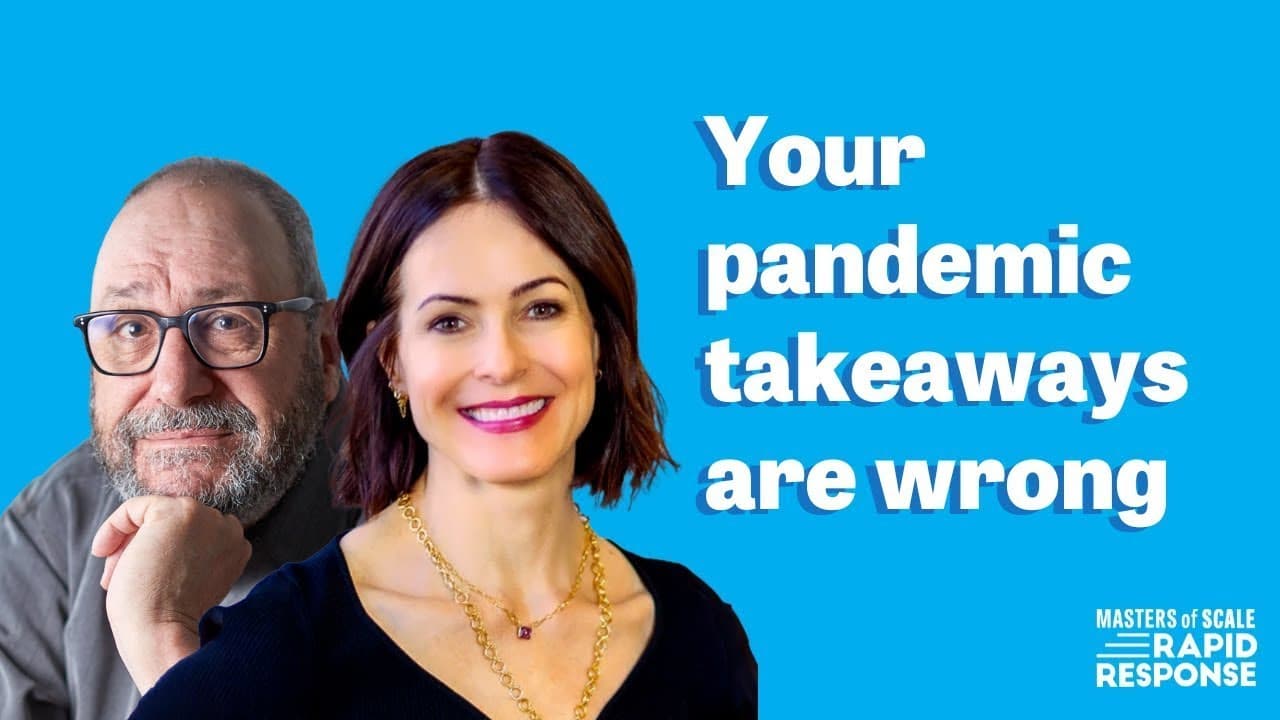
Bethany McLean and Joe Nocera argue that the pandemic's conventional wisdom, especially regarding lockdowns, needs reevaluation. They emphasize the importance of balancing expert advice with broader considerations in leadership decisions. Their book, The Big Fail, critiques the societal and economic impacts of the pandemic, highlighting disparities and the need for thoughtful leadership.
-
The pandemic exposed flaws in capitalism, particularly in healthcare, where private equity ownership raised concerns. Lockdowns worsened income inequality, affecting essential workers. The authors advocate for a fact-based approach to crisis management, emphasizing the need for flexible, adaptable plans and the importance of government and private sector collaboration.
-
Operation Warp Speed is cited as a successful example of government and private sector cooperation. The authors stress the need for businesses to adapt to new information rather than relying on conventional wisdom. They highlight the challenges faced by small businesses during the pandemic and call for a reevaluation of market structures and incentives.
Read in Other Languages (beta)
Share This Summary 📚
Summarize YouTube Videos and Get Video Transcripts with 1-Click
Try YouTube Summary with ChatGPT & Claude or YouTube Transcript Generator
Explore More Summaries from Masters of Scale 📚
Summarize YouTube Videos and Get Video Transcripts with 1-Click
Try YouTube Summary with ChatGPT & Claude or YouTube Transcript Generator