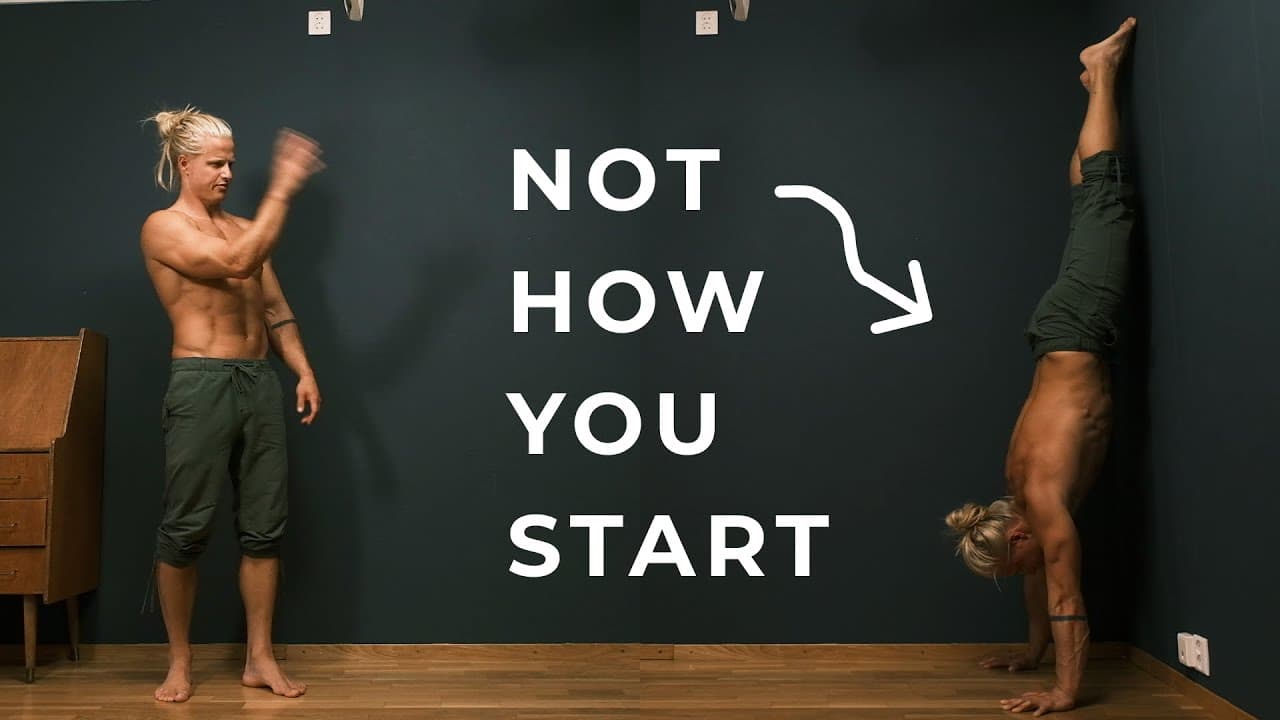
Absolute beginner handstand tutorial - NO REQUIREMENTS NEEDED!
TL;DR
Anyone can learn to handstand with practice and patience, starting with getting comfortable upside down through learning to fall, building strength, and developing body awareness.
Transcript
i know a lot of people are struggling to learn handstands especially if you are totally new to the art of being upside down and i totally get why most beginner tutorials out there aren't even for beginners no wonder people whose motivation when what is claimed to be the first step feels impossible now my aim with this video is to do something about... Read More
Key Insights
- 😥 Learning handstands requires patience and practice, regardless of your starting point or prior experience.
- 🍂 Falling safely is a skill that needs to be learned and practiced step by step to build confidence.
- 🥹 Building strength through specific drills, such as walking up and down the wall, is essential for holding the handstand position.
- 👻 Headstands are valuable for body awareness and control, allowing for exploration of different lower body shapes and alignment.
- 🤩 Consistency and gradual progression are key in mastering the basics of handstands.
- 😨 Overcoming fears and insecurities through exposure therapy is an effective approach to improving handstand skills.
- 🍦 Practicing on soft surfaces or using safety nets can provide a sense of security for beginners.
Install to Summarize YouTube Videos and Get Transcripts
Explore YouTube Video Summarizer or Get YouTube Transcript Extractor
Questions & Answers
Q: How do I overcome my fear of falling when learning to handstand?
Overcoming the fear of falling is crucial in learning to handstand. Start by practicing falling safely, step by step, using the wheel out fall technique. Gradually build up your confidence by moving up the wall and exposing yourself to controlled falling.
Q: How can I strengthen my body for handstands?
A simple drill to build strength for handstands is walking up and down the wall in a push-up position. Start with one step and gradually increase repetitions and intensity as you become more comfortable and stronger.
Q: Why is learning to headstand important for handstand practice?
Headstands help develop body awareness, stability, and control. They allow you to focus on lower body shapes, pelvic alignment, and spinal awareness without the worry of balancing with the hands.
Q: Is it necessary to have prior experience with handstands to start learning?
No, prior experience is not necessary. Anyone can start learning handstands from scratch. The key is to start with the basics, including getting comfortable upside down, building strength, and developing body awareness.
Key Insights:
- Learning handstands requires patience and practice, regardless of your starting point or prior experience.
- Falling safely is a skill that needs to be learned and practiced step by step to build confidence.
- Building strength through specific drills, such as walking up and down the wall, is essential for holding the handstand position.
- Headstands are valuable for body awareness and control, allowing for exploration of different lower body shapes and alignment.
- Consistency and gradual progression are key in mastering the basics of handstands.
- Overcoming fears and insecurities through exposure therapy is an effective approach to improving handstand skills.
- Practicing on soft surfaces or using safety nets can provide a sense of security for beginners.
- Following a specific program and tracking progress can enhance the learning process and provide structure to handstand training.
Summary & Key Takeaways
-
Learning to handstand requires getting comfortable upside down by building the skill of falling safely. This involves stepwise progressions, starting from easy positions and gradually moving up the wall.
-
Strengthening the body is crucial to holding the handstand position without fear of muscle failure. A simple drill involves walking up and down the wall, gradually increasing intensity and repetitions.
-
Developing body awareness and control can be achieved through headstands, where balance is less of a concern. Headstands help understand body alignment, hip placement, and lower body shapes.
Read in Other Languages (beta)
Share This Summary 📚
Summarize YouTube Videos and Get Video Transcripts with 1-Click
Try YouTube Summary with ChatGPT & Claude or YouTube Transcript Generator
Explore More Summaries from Sondre Berg 📚
Summarize YouTube Videos and Get Video Transcripts with 1-Click
Try YouTube Summary with ChatGPT & Claude or YouTube Transcript Generator