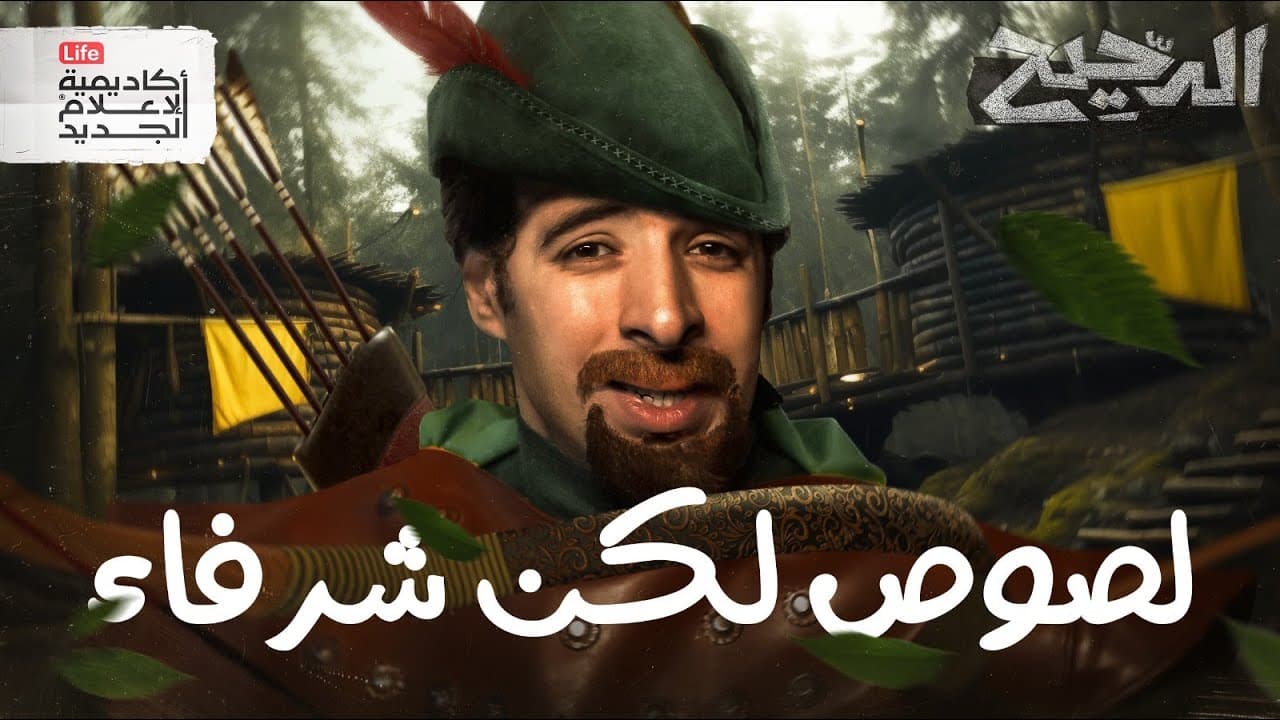
لصوص لكن شرفاء | الدحيح
TL;DR
Robin Hood's story reflects the struggle against injustice and continues to evolve through various mediums.
Transcript
Robin Hood, the defender of the poor, promised you and he kept his promise. I stole from the rich to give to you. May God protect you, Robin Hoor, the supporter of the poor! Thank you for the beautiful prayer. Here you go. May God protect you, you short one, son of castles! My love, thank you! Here you go. Thank you, dear Robin Hood! What is this? ... Read More
Key Insights
- 😀 Robin Hood's origins are rooted in the socio-economic disparities of medieval England, where the poor faced extreme hardship.
- 🦸 Cultural narratives surrounding Robin Hood evolved to reflect changing societal values, transforming him from a villain to a folk hero.
- 💪 The character of Maid Marian shifted from a minor role to a strong figure, illustrating the increasing emphasis on female empowerment in storytelling.
- 🧑🚒 Historical events like the signing of the Magna Carta are woven into the fabric of Robin Hood’s legends, adding layers to his fight against authority.
- 💢 Adaptations of Robin Hood showcase ongoing social issues, making the character relevant across different eras and societies.
- 🤨 Philosophical discussions surrounding Robin Hood’s theft raise questions of morality, justifying actions based on their consequences versus inherent ethics.
- 🤬 Robin Hood represents a universal symbol of resistance against authority and the desire for societal justice, resonating with oppressed communities globally.
Install to Summarize YouTube Videos and Get Transcripts
Explore YouTube Video Summarizer or Get YouTube Transcript Extractor
Questions & Answers
Q: What historical circumstances led to the creation of Robin Hood's character?
Robin Hood emerged during the late 12th century when England was divided into a few wealthy landowners and many impoverished farmers suffering under heavy taxes. This oppressive socioeconomic climate and the introduction of Forest Law that restricted hunting rights contributed to the need for a heroic figure to champion the poor.
Q: How did the perception of Robin Hood change over time?
Initially seen as a mere criminal, Robin Hood's character evolved into a folk hero as stories portrayed him as a champion of justice helping the poor. This shift in perception reflects societal values at different points in history, where he became synonymous with noble qualities like bravery, kindness, and intelligence.
Q: Why did the character of Maid Marian develop alongside Robin Hood?
Maid Marian began as a secondary character in Robin Hood’s tale but evolved into a prominent figure as the narrative progressed. Her growing role in the tales reflects changing social values that sought to include strong female characters who embody bravery and independence, paralleling Robin Hood’s own heroism.
Q: What role did the Magna Carta play in the context of Robin Hood’s story?
The Magna Carta, signed in 1215, represented a significant reduction of the monarch’s power and an early step towards democracy. Robin Hood’s narratives often reflect the spirit of this document, as he fought against King John’s oppressive rule and represented the struggle for rights, justice, and fair governance.
Q: How did Robin Hood adapt to modern cultural contexts?
Robin Hood's story has continuously transformed to resonate with contemporary audiences, appearing in various forms including films, TV series, and literature. Each adaptation reflects societal issues of its time, addressing themes of wealth disparity and social justice, making the character universally relatable.
Q: What philosophical questions arise from Robin Hood's actions?
Robin Hood's actions prompt discussions around morality and ethics, particularly in evaluating whether stealing from the rich is justified if the outcome benefits the poor. These debates often reference utilitarianism, which considers the consequences of actions, contrasting with deontological views that maintain certain actions are inherently wrong.
Q: How does Robin Hood embody the characteristics of a folk hero?
Robin Hood represents the archetype of a folk hero due to his complex nature as both a criminal and a champion of the oppressed. His story illustrates common themes of rebellion against injustice and the aspiration for social equity, serving as an enduring symbol of resistance across cultures.
Q: Can Robin Hood be considered a real historical figure?
The existence of Robin Hood as a historical figure is debated among historians. Some suggest he may represent a composite of multiple outlaws, while others propose individual figures like Robert of Wetherby may have inspired the legend. Regardless, the character embodies shared values and struggles relevant to many societies.
Summary & Key Takeaways
-
The story of Robin Hood originated in the late 12th century, depicting an outlaw who stole from the wealthy to aid impoverished farmers, fighting against oppressive authority.
-
Over centuries, Robin Hood transformed from a despised bandit to a beloved folk hero, embodying values such as justice and resistance against corruption, adapting to cultural changes.
-
The legend has inspired numerous adaptations in literature, film, and television, illustrating humanity's enduring desire for justice and equality amidst widening wealth gaps.
Read in Other Languages (beta)
Share This Summary 📚
Summarize YouTube Videos and Get Video Transcripts with 1-Click
Try YouTube Summary with ChatGPT & Claude or YouTube Transcript Generator
Explore More Summaries from New Media Academy Life 📚






Summarize YouTube Videos and Get Video Transcripts with 1-Click
Try YouTube Summary with ChatGPT & Claude or YouTube Transcript Generator