What Is Computer Music and How Does It Connect Us?
TL;DR
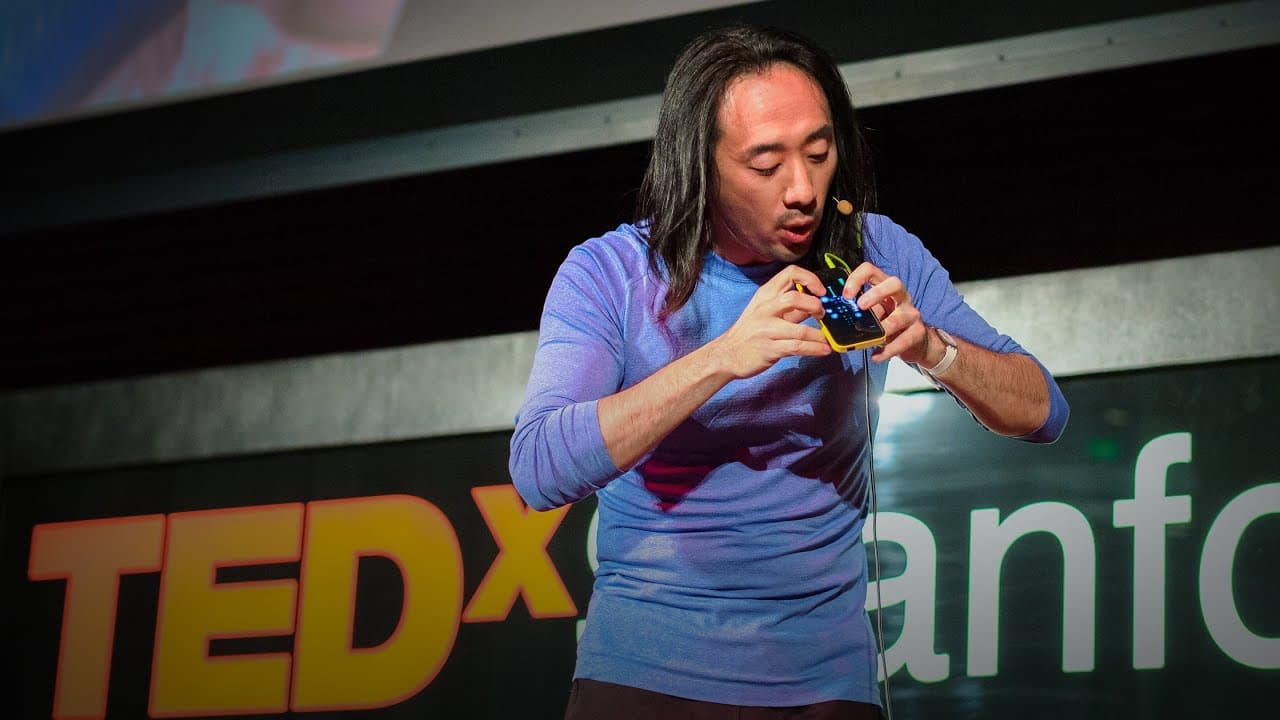
Computer music is about using technology to enhance human creativity and connection through music. It involves tools like ChucK, a programming language that allows users to create and manipulate sound, and initiatives like the Stanford Laptop Orchestra and Smule, which foster collaborative music-making. Ultimately, it's less about the computers themselves and more about the people and relationships formed through music.
Transcript
I want to talk to you about one thing and just one thing only, and this has to do with when people ask me, what do you do? To which I usually respond, I do computer music. Now, a number of people just stop talking to me right then and there, and the rest who are left usually have this blank look in their eye, as if to say, what does that mean? And ... Read More
Key Insights
- 💻 Computer music is a term that may not be well understood by many people, leading to blank looks and confusion when it is mentioned.
- 💡 ChucK is an open-source programming language for music that is freely available and can be used on various operating systems.
- 🎵 ChucK allows users to create sine wave oscillators and manipulate frequencies to generate different tones and sounds.
- 🔁 Repetition is a powerful tool in computer music and can be used to create continuous and evolving compositions.
- 🎹 The Stanford Laptop Orchestra uses ChucK to build instruments and create computer-generated music that emulates the sound of traditional acoustic instruments.
- 🔉 The Laptop Orchestra focuses on creating instruments with speakers that are placed near the performers for a more immersive and authentic sound experience.
- 📱 Smule, a startup company co-founded by the speaker, aims to create expressive mobile music instruments such as the Ocarina, which uses the microphone and accelerometer to generate sound.
- 🌍 Technology can be used to connect people through music, as demonstrated by the global singing collaboration that took place after the 2011 earthquake and tsunami in Japan.
Install to Summarize YouTube Videos and Get Transcripts
Explore YouTube Video Summarizer or Get YouTube Transcript Extractor
Questions & Answers
Q: What is computer music and how is it defined?
Computer music is a form of music created using programming languages and technology. It involves using computers to generate sounds and manipulate them in various ways. In the video, the speaker defines computer music as a combination of technology and human creativity, using technology to change the way we think, do, and make music.
Q: How does the speaker demonstrate computer music using the programming language ChucK?
The speaker demonstrates computer music by using the programming language ChucK. They create a sine wave oscillator called "Ge" and connect it to the sound output of the computer. They then manipulate the frequency of "Ge" to create different tones and melodies. By doing this, the speaker showcases how computer programming can be used to generate music.
Q: What is the Stanford Laptop Orchestra and how does it utilize computer music?
The Stanford Laptop Orchestra is an ensemble of laptops, humans, and special speaker arrangements. It is based at the Stanford Center for Computer Research in Music and Acoustics. The orchestra utilizes computer music by creating instruments and compositions through programming. The speaker explains that the orchestra aims to have the sound of the instruments come from speakers located near the performers, similar to traditional acoustic instruments.
Q: How does the speaker's company, Smule, contribute to computer music?
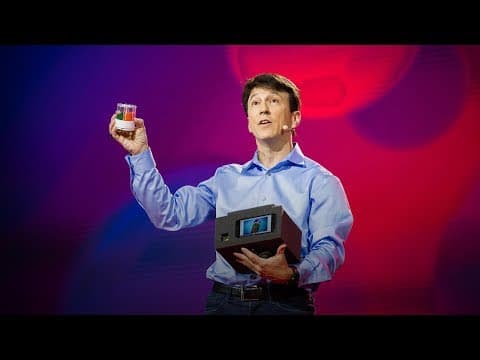
Smule is a startup company founded by the speaker with the mission of creating expressive, mobile music experiences. The company has created several musical instruments, such as the Ocarina, that utilize technology to produce sound. The speaker demonstrates the Ocarina instrument, which is played by blowing into the microphone of an iPhone. Smule's goal is to bring music-making experiences to a broader audience through technology.
Q: What is the significance of technology in relation to making music?
The speaker discusses the role of technology in making music. While technology has provided greater access to music as listeners and consumers, the act of making music has decreased. The speaker suggests that technology, when used in the right way, can bring back the joy and connection of making music. Technology can enable new musical experiences and collaborations, as demonstrated by the example of people from different locations joining together to sing a song in the aftermath of a disaster.
Summary & Key Takeaways
-
The speaker discusses his response to the question "what do you do?" and his panic in not being able to fully explain his work in computer music.
-
He introduces ChucK, an open-source programming language for music, and demonstrates how it can be used to create different tones and sounds.
-
The speaker also talks about his work in creating instruments for the Stanford Laptop Orchestra and his involvement in founding a startup company called Smule, which aims to create expressive, mobile music instruments.
Read in Other Languages (beta)
Share This Summary 📚
Summarize YouTube Videos and Get Video Transcripts with 1-Click
Try YouTube Summary with ChatGPT & Claude or YouTube Transcript Generator
Explore More Summaries from TED 📚

Summarize YouTube Videos and Get Video Transcripts with 1-Click
Try YouTube Summary with ChatGPT & Claude or YouTube Transcript Generator