How Can You Use M1 Finance to Borrow Money Safely?
TL;DR
You can leverage M1 Finance's portfolio line of credit to borrow money against your securities and potentially earn higher returns than the interest you pay. By borrowing at low rates, like 2% for M1 Plus members, and investing wisely, you could generate profits known as 'free money' — but be aware of the risks involving interest rate fluctuations and market volatility.
Transcript
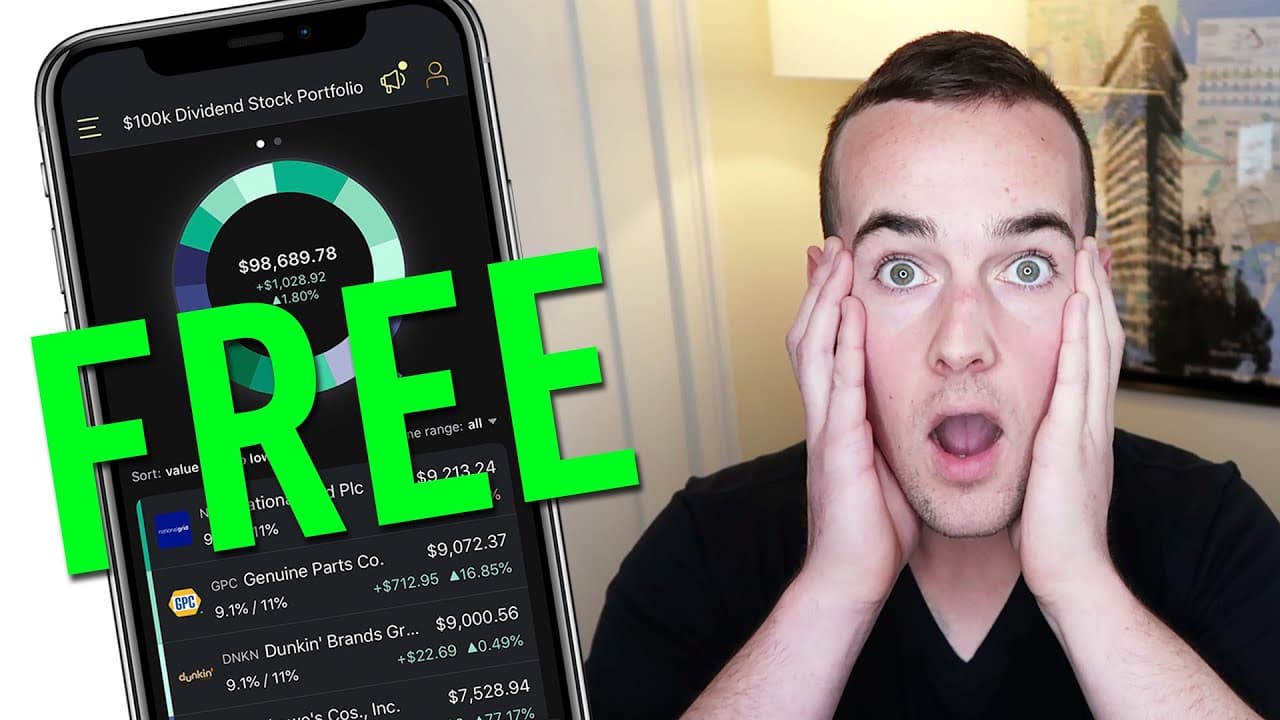
so last week I did a video talking about my m'lord finance dividend portfolio and how I borrowed twenty five thousand dollars to invest back into my portfolio and on that video I was getting a lot of questions about how this worked in people looking for me to explain this in more detail so in this video today we're going to be talking about this fe... Read More
Key Insights
- 🤑 M1 Finance offers a portfolio line of credit called m1 borrow, allowing investors to borrow money against their securities.
- 🎴 Borrowing against securities can be a lower-cost alternative to unsecured loans or credit cards.
- 🤑 While the concept of earning free money through borrowing sounds appealing, it is important to consider the risks associated with market volatility and changing interest rates.
- 🤑 Investing borrowed money in durable, time-tested assets can help mitigate risks of significant declines in portfolio value.
- ☠️ The rate at which money can be borrowed using m1 borrow is influenced by the federal funds rate, which can change over time.
- ☠️ Leveraging borrowed funds for investment can potentially result in higher returns if the investments outperform the interest rate.
- 🤙 It is crucial to maintain a sufficient equity cushion in the portfolio to avoid margin calls and potential forced selling of securities.
Install to Summarize YouTube Videos and Get Transcripts
Explore YouTube Video Summarizer or Get YouTube Transcript Extractor
Questions & Answers
Q: What is m1 borrow and how does it work?
M1 borrow is a portfolio line of credit offered by m1 finance, allowing investors to borrow money against the securities in their account. The borrowed funds can be used for various purposes, including reinvesting in the portfolio or covering expenses.
Q: What are the benefits of borrowing against securities?
Borrowing against securities allows investors to access funds without selling their investments, potentially avoiding capital gains taxes. Additionally, interest rates for portfolio lines of credit are typically lower than unsecured loans or credit cards.
Q: What are the risks associated with borrowing money for investment purposes?
The main risks include changes in interest rates, which can increase the cost of borrowing, and potential losses due to market volatility. If the value of the investments declines significantly, it may trigger a margin call, requiring the borrower to deposit additional funds or sell securities.
Q: How can borrowing money for investment potentially result in free money?
If the return on the invested funds exceeds the interest paid on the borrowed money, it can result in a net profit. This can be achieved through dividends, asset appreciation, or a combination of both.
Summary & Key Takeaways
-
M1 Finance offers a feature called m1 borrow, which allows investors with at least $10,000 to borrow money against the securities in their account.
-
The borrowed money can be reinvested in a portfolio, potentially earning a return higher than the interest rate.
-
While this strategy can result in free money, it is not without risks, including potential changes in interest rates and the volatility of the stock market.
Read in Other Languages (beta)
Share This Summary 📚
Summarize YouTube Videos and Get Video Transcripts with 1-Click
Try YouTube Summary with ChatGPT & Claude or YouTube Transcript Generator
Explore More Summaries from Ryan Scribner 📚






Summarize YouTube Videos and Get Video Transcripts with 1-Click
Try YouTube Summary with ChatGPT & Claude or YouTube Transcript Generator