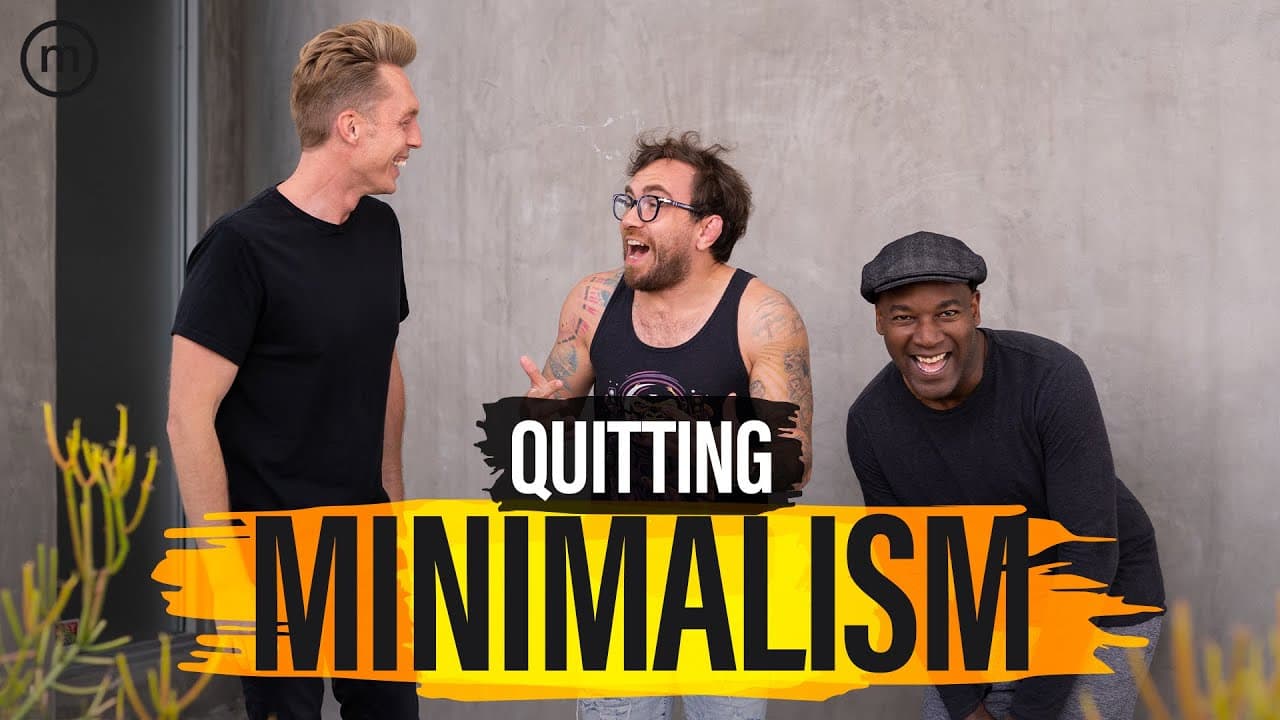
Ep. 353 | Quitting Minimalism (with @jamiekilstein)
TL;DR
Exploring the concept of quitting minimalism and handling unwanted gifts.
Transcript
this podcast has bad words hello everybody Welcome to the minimalist podcast where we discuss what it means to live a meaningful life with less my name is Joshua Fields Milbourne Ryan Nicodemus is on vacation this week but don't worry we're here with malab and TK Coleman and the rest of our team coming up today on this free public minimal episode w... Read More
Key Insights
- Minimalism is often misunderstood as a strict lifestyle choice rather than a flexible tool for living intentionally.
- The trend of 'quitting minimalism' is partly driven by social media clickbait and the challenges of maintaining minimalist practices.
- Minimalism, like any other lifestyle, can be adapted to individual needs and circumstances without abandoning its core principles.
- Gift-giving should focus on adding value to the recipient's life, allowing them the freedom to use or discard the gift.
- Honest communication is essential in relationships, especially when discussing preferences for gifts or lifestyle choices.
- The phenomenon of 'new-convert syndrome' highlights the initial excitement and need for validation when adopting new practices.
- Community and shared experiences are vital for personal growth and maintaining lifestyle practices like minimalism.
- The podcast emphasizes love for people over material possessions, advocating meaningful living with less material clutter.
Install to Summarize YouTube Videos and Get Transcripts
Explore YouTube Video Summarizer or Get YouTube Transcript Extractor
Questions & Answers
Q: What is your perspective regarding people quitting minimalism?
People often announce they are quitting minimalism due to societal pressures and the challenges of maintaining minimalist practices. This trend is partly driven by social media clickbait. Minimalism should be seen as a flexible tool for intentional living rather than a strict lifestyle choice. It's about adapting the principles to individual needs and circumstances.
Q: Why do we often blame our problems on everything but ourselves?
Blaming external factors for our problems is a common human tendency. It allows us to avoid facing uncomfortable truths about ourselves and our choices. This avoidance can lead to misguided decisions, like relocating to solve relationship issues, which ultimately do not address the root causes of our problems.
Q: What is 'new-convert syndrome'?
'New-convert syndrome' refers to the initial excitement and need for validation when adopting new practices or beliefs. People often talk excessively about their new lifestyle as they process and integrate it into their lives. Over time, as they become more comfortable, they internalize the practices and no longer feel the need to broadcast their identity.
Q: How do you tactfully refuse gifts?
Tactfully refusing gifts involves honest communication about your preferences. Explain to the gift-giver that while you appreciate the gesture, you prefer non-material gifts or experiences. Emphasize the value of their presence and shared moments over physical items, ensuring the conversation is rooted in love and mutual understanding.
Q: What are T.K.’s three options regarding gifts?
T.K. suggests three options for handling unwanted gifts: reject, receive, or redistribute. You can politely refuse the gift, accept it graciously, or pass it on to someone who would appreciate it more. This approach empowers you to handle gifts in a way that aligns with your values without offending the giver.
Q: How can minimalism be adapted to individual needs?
Minimalism can be adapted by focusing on its core principles of intentional living and decluttering. Individuals can tailor the practice to suit their unique circumstances, such as adjusting the level of material possessions based on personal comfort and needs. The goal is to simplify life and focus on what truly matters, not to adhere to a rigid set of rules.
Q: Why is community important in maintaining minimalist practices?
Community provides support, shared experiences, and accountability, which are crucial for maintaining minimalist practices. Engaging with like-minded individuals can inspire and motivate you to stay committed to your minimalist lifestyle. It also offers a space to share challenges and solutions, fostering personal growth and reinforcing the values of minimalism.
Q: What is the core message of the podcast?
The core message of the podcast is to love people and use things, as the opposite never works. It advocates for a meaningful life with less material clutter, emphasizing the importance of relationships and experiences over possessions. The podcast encourages listeners to focus on what truly adds value to their lives and to live intentionally.
Summary & Key Takeaways
-
The podcast discusses the misconception of minimalism as a rigid lifestyle, emphasizing its role as a tool for intentional living. The trend of 'quitting minimalism' is explored, revealing it as a reaction to societal pressures and personal challenges.
-
Gift-giving is examined, highlighting the importance of allowing recipients the freedom to use or discard gifts. Honest communication in relationships is encouraged to ensure that gifts add value rather than clutter.
-
The episode also addresses the excitement and validation-seeking behavior of 'new-convert syndrome,' stressing the importance of community and shared experiences in maintaining minimalist practices.
Read in Other Languages (beta)
Share This Summary 📚
Summarize YouTube Videos and Get Video Transcripts with 1-Click
Try YouTube Summary with ChatGPT & Claude or YouTube Transcript Generator
Explore More Summaries from The Minimalists Podcast 📚


Summarize YouTube Videos and Get Video Transcripts with 1-Click
Try YouTube Summary with ChatGPT & Claude or YouTube Transcript Generator