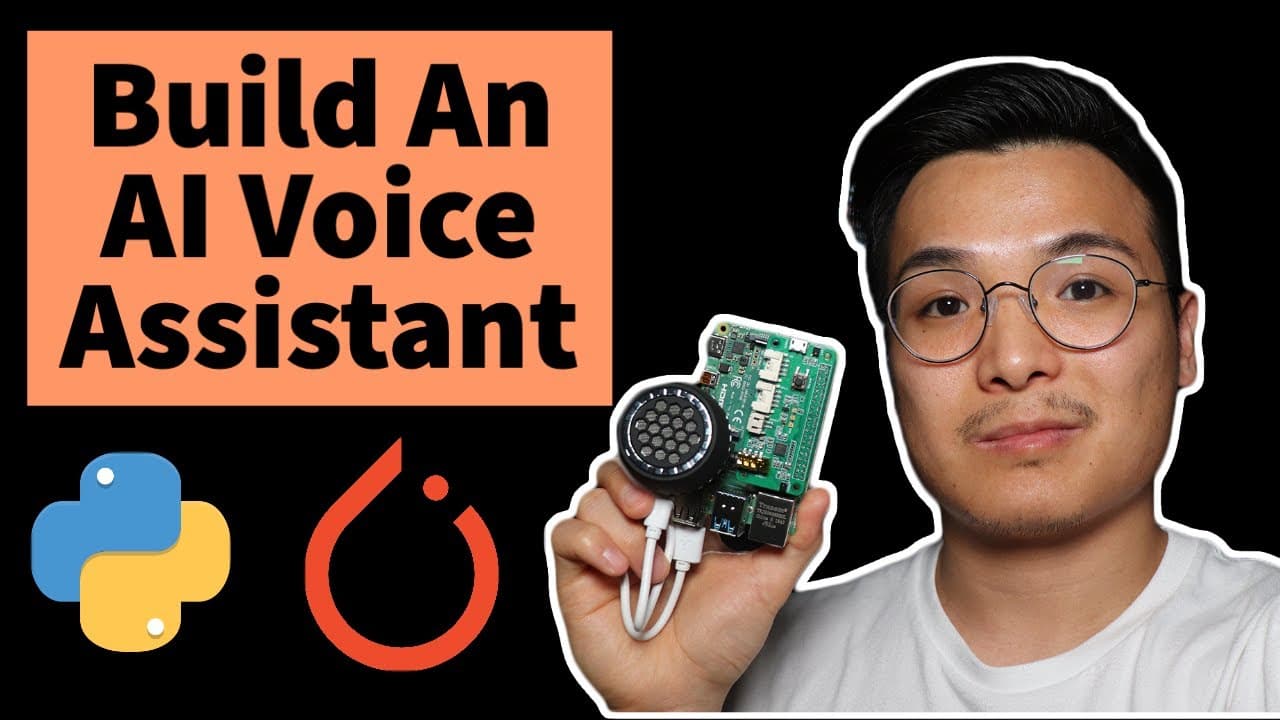
I Built an A.I. Voice Assistant using PyTorch - part 1, Wake Word Detection
TL;DR
In this video, the creator documents the process of building an AI voice assistant from scratch using machine learning, with the goal of fitting it onto a single Raspberry Pi to protect privacy and challenge big tech companies.
Transcript
you voice is set to be the next big thing in tech if it isn't already digital personal assistants from Google Amazon Microsoft and the like are increasingly part of our lives I can build one of those yo what's up world Michael here and I'm gonna build my very own AI voice assistant from scratch using machine learning and I'm gonna document the enti... Read More
Key Insights
- 🏛️ The creator aims to build an AI voice assistant from scratch using machine learning and document the process.
- ♓ The voice assistant will be challenging to create by fitting it onto a single Raspberry Pi and prioritizing privacy.
- 😯 Four machine learning algorithms are involved: wake word detection, automatic speech recognition, natural language understanding, and speech synthesis.
- 🚂 Data collection and preprocessing are crucial for training the wake word detection model.
- 🔑 The wake word detection model is implemented using a binary classification recurrent neural network.
- ☠️ The model is trained using optimization techniques such as dropout, layer normalization, and a learning rate schedule.
- 👨💻 Testing the model on a Raspberry Pi involves implementing the wake word listener code and inference code.
- 🔑 The wake word engine responds to the wake word with a pre-programmed reply or action.
Install to Summarize YouTube Videos and Get Transcripts
Explore YouTube Video Summarizer or Get YouTube Transcript Extractor
Questions & Answers
Q: What are the four machine learning algorithms involved in building an AI voice assistant?
The four machine learning algorithms are wake word detection, automatic speech recognition, natural language understanding, and speech synthesis. Each algorithm has a specific function in the voice assistant's system.
Q: How will the creator make the voice assistant more challenging?
The creator plans to fit the voice assistant onto a single Raspberry Pi, which presents engineering challenges due to limited resources. This also aims to protect user privacy and challenge big tech companies.
Q: What is the role of the wake word detection algorithm?
The wake word detection algorithm triggers the voice assistant to start listening to voice queries. It listens to audio sequences and feeds them into the wake word model to determine if the wake word is present.
Q: What data is needed for training the wake word detection model?
The creator needs a diverse set of audio data, including random speech data and environment noise. The open-source common voice data set from Mozilla is used for the non-wake word data, and the creator records themselves saying the wake word for the wake word data.
Key Insights:
- The creator aims to build an AI voice assistant from scratch using machine learning and document the process.
- The voice assistant will be challenging to create by fitting it onto a single Raspberry Pi and prioritizing privacy.
- Four machine learning algorithms are involved: wake word detection, automatic speech recognition, natural language understanding, and speech synthesis.
- Data collection and preprocessing are crucial for training the wake word detection model.
- The wake word detection model is implemented using a binary classification recurrent neural network.
- The model is trained using optimization techniques such as dropout, layer normalization, and a learning rate schedule.
- Testing the model on a Raspberry Pi involves implementing the wake word listener code and inference code.
- The wake word engine responds to the wake word with a pre-programmed reply or action.
- The voice assistant's development is ongoing, with plans to build other components such as speech recognition, natural language understanding, and speech synthesis models.
Summary & Key Takeaways
-
The content is about building an AI voice assistant from scratch using machine learning and documenting the entire process.
-
The creator aims to make the voice assistant more challenging by fitting it onto a single Raspberry Pi and prioritizing privacy.
-
The process involves creating four machine learning algorithms: wake word detection, automatic speech recognition, natural language understanding, and speech synthesis. Additionally, the creator will build their own skills for the voice assistant.
Read in Other Languages (beta)
Share This Summary 📚
Summarize YouTube Videos and Get Video Transcripts with 1-Click
Try YouTube Summary with ChatGPT & Claude or YouTube Transcript Generator
Explore More Summaries from The AI Hacker 📚
Summarize YouTube Videos and Get Video Transcripts with 1-Click
Try YouTube Summary with ChatGPT & Claude or YouTube Transcript Generator