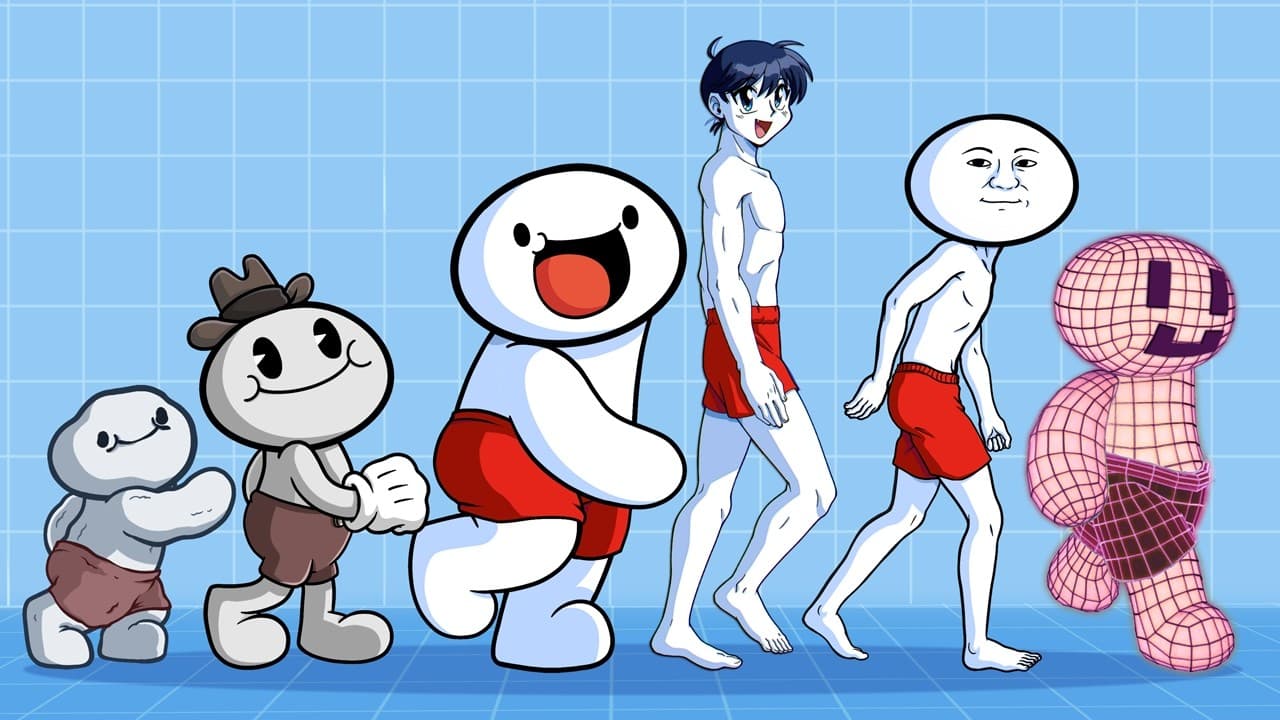
Every Form of Animation
TL;DR
Explores animation's evolution from stop motion to CGI.
Transcript
this brick is alive not convinced well what if I did this I I'm going to do a backflip that's going to look so cool bricky what are you boys doing is going to do a back with Grandma are you convinced now did the brick feel more alive I mean sure it's still a brick that can't move on its own but maybe because I put go... Read More
Key Insights
- Animation aims to make inanimate objects appear alive, using techniques like googly eyes and storytelling to evoke emotions.
- Stop motion involves posing characters frame by frame, a technique still used today, as seen in movies like ParaNorman.
- Smear frames are used to mimic fast movements in animation, creating a sense of realism despite their odd appearance when isolated.
- Rotoscoping offers ultra-realistic animation by tracing over live-action footage, though it can lead to uncanny valley effects.
- Anime developed unique styles and storytelling, influenced by both cultural events and Western animation techniques.
- Computer-generated imagery (CGI) revolutionized animation, allowing for complex 3D shapes and textures that traditional methods couldn't achieve.
- Rigs in animation allow for more efficient and flexible character movement, reducing the need for drawing each frame individually.
- Motion capture technology captures real human movements, but can result in uncanny animations if not used carefully.
Install to Summarize YouTube Videos and Get Transcripts
Explore YouTube Video Summarizer or Get YouTube Transcript Extractor
Questions & Answers
Q: How do animators make inanimate objects appear alive?
Animators make inanimate objects appear alive by adding elements like googly eyes and creating a narrative around them, which helps evoke emotions and create a connection with the audience. Techniques such as stop motion and storytelling are used to give the illusion of life to these objects.
Q: What is the role of smear frames in animation?
Smear frames are used to mimic fast movements in animation, creating a sense of realism and fluidity. These frames often involve exaggerated, stretched, or multiplied body parts, which look odd in isolation but blend seamlessly within the context of a moving sequence, enhancing the perception of speed.
Q: How has CGI impacted the animation industry?
CGI has revolutionized the animation industry by allowing for the creation of complex 3D shapes and realistic textures that traditional methods couldn't achieve. It has enabled animators to render entire scenes digitally, reducing the need for manual drawing and expanding creative possibilities in storytelling and visual effects.
Q: What challenges does rotoscoping present in animation?
Rotoscoping presents challenges in animation by potentially leading to uncanny valley effects, where characters appear almost human but slightly off, triggering discomfort in viewers. While it offers high realism by tracing live-action footage, it requires careful execution to maintain the animated feel and avoid overly rigid movements.
Q: How did anime develop its unique style?
Anime developed its unique style through a combination of cultural influences and inspiration from Western animation. Early Japanese animators experimented with paper cutouts and borrowed techniques from Disney, eventually creating distinct character designs and storytelling methods that resonated globally, leading to anime's widespread popularity.
Q: What are the benefits of using rigs in animation?
Rigs in animation offer significant benefits by allowing for more efficient and flexible character movement. They reduce the need for drawing each frame individually, enabling animators to manipulate character parts like a digital puppet. This method saves time and resources while maintaining high-quality animation standards.
Q: Why is motion capture compared to rotoscoping in animation?
Motion capture is compared to rotoscoping because both involve capturing real human movements for animation. Motion capture records an actor's movements using sensors, which are then applied to digital characters. Like rotoscoping, it can lead to uncanny results if not used carefully, as it may produce overly realistic animations that clash with the animated world.
Q: How did stop motion contribute to the evolution of animation?
Stop motion contributed to the evolution of animation by pioneering the technique of frame-by-frame manipulation of physical objects to create the illusion of movement. This method laid the groundwork for future animation techniques, demonstrating the power of storytelling through inanimate objects and inspiring innovations in both traditional and digital animation.
Summary & Key Takeaways
-
Animation has evolved from simple stop motion techniques to advanced CGI, aiming to make inanimate objects appear alive. Early animators used physical manipulation of objects, while modern techniques involve digital rigs and motion capture to create lifelike animations.
-
Rotoscoping, a technique of tracing over live-action footage, offers realism but can lead to uncanny valley effects if not executed carefully. Anime has developed its unique style, influenced by both Western animation and cultural events, becoming a global phenomenon.
-
The advent of CGI has transformed animation, allowing for complex textures and 3D shapes. Despite technological advancements, animators still play a crucial role in manually posing characters to create believable animations, whether through digital rigs or traditional hand-drawn methods.
Read in Other Languages (beta)
Share This Summary 📚
Summarize YouTube Videos and Get Video Transcripts with 1-Click
Try YouTube Summary with ChatGPT & Claude or YouTube Transcript Generator
Explore More Summaries from TheOdd1sOut 📚




Summarize YouTube Videos and Get Video Transcripts with 1-Click
Try YouTube Summary with ChatGPT & Claude or YouTube Transcript Generator