How to Use Generative Engine Optimization for Better Rankings
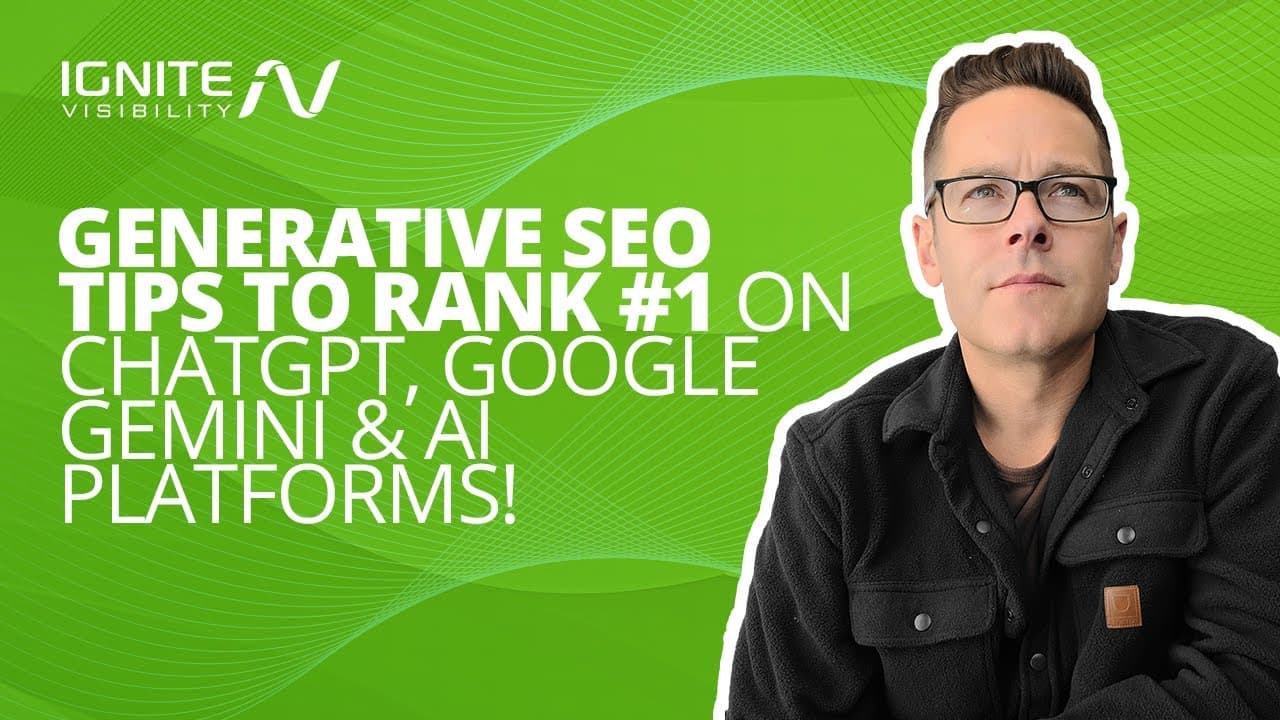
TL;DR
To improve rankings on generative engines like ChatGPT and Google Gemini, focus on creating rich, factual, and credible content aligned with EEAT principles. Ensure consistent storytelling across the web and utilize structured data to detail product features and specifications. Monitoring and correcting misinformation is crucial to maintain your brand's reputation and influence AI responses.
Transcript
today we're covering a Hot Topic how do you rank in generative engine optimization by that I mean generative engines like chat GPT Google Gemini co-pilot perplexity and more in this video we're going to talk about some of the things that we know about the topic first let's start with some of the basics generative engine optimization is a lot like s... Read More
Key Insights
- Generative engine optimization resembles SEO, focusing on content discoverability, comprehension, and credibility to be utilized by AI engines.
- AI models prioritize context and relevance over mere keywords, requiring rich, factual, comprehensive, and credible content.
- Experience, Expertise, Authority, and Trust (EEAT) are crucial for effective SEO and generative engine optimization.
- Structured data enhances product pages by highlighting features, reviews, pricing, and specifications, aiding AI evaluation.
- Negative feedback from generative engines can impact reputation; ensure accurate brand information across all platforms.
- Consistency in brand storytelling across the web is vital to maintain credibility and prevent misinformation.
- Generative engines disclose their information sources, necessitating accurate storytelling to influence AI responses.
- Digital PR is essential for generative engine optimization, ensuring correct brand narratives on external websites.
Install to Summarize YouTube Videos and Get Transcripts
Explore YouTube Video Summarizer or Get YouTube Transcript Extractor
Questions & Answers
Q: What is generative engine optimization?
Generative engine optimization is akin to search engine optimization but tailored for AI platforms like ChatGPT and Google Gemini. It focuses on ensuring content is easily found, understood, and deemed credible by AI models, which prioritize context and relevance over just keywords.
Q: Why is EEAT important in generative engine optimization?
EEAT, which stands for Experience, Expertise, Authority, and Trust, is crucial because it ensures that content is credible and authoritative. Both SEO and generative engine optimization rely on these principles to evaluate the quality and reliability of content, influencing its ranking and usage by AI engines.
Q: How does structured data benefit product pages?
Structured data benefits product pages by clearly highlighting features, reviews, pricing, and specifications. This detailed information aids generative engines in evaluating and understanding the product comprehensively, which can improve the content's ranking and visibility on AI platforms.
Q: What role does context play in AI content evaluation?
Context plays a significant role in AI content evaluation as AI models look beyond keywords to understand the entire context of the content. This approach ensures that the content is relevant, comprehensive, and credible, which is essential for it to be effectively used by generative engines.
Q: How can negative feedback from generative engines be avoided?
Negative feedback from generative engines can be avoided by ensuring that accurate and positive information about the brand is consistently presented across all platforms. Monitoring and correcting misinformation is crucial to maintain a positive reputation and prevent misleading AI-generated responses.
Q: Why is consistent storytelling important for brand credibility?
Consistent storytelling is important for brand credibility because it ensures that the correct narrative is presented across all platforms. Inconsistent information can lead to misunderstandings and misinformation, affecting the brand's reputation and how it is perceived by generative engines.
Q: How do generative engines disclose information sources?
Generative engines disclose their information sources by indicating where they obtained the information used in their responses. This transparency allows brands to verify and ensure that the correct story is being told, influencing how their content is ranked and utilized by AI models.
Q: What is the role of digital PR in generative engine optimization?
Digital PR plays a critical role in generative engine optimization by ensuring that the brand's story is accurately and consistently represented on external websites. This helps maintain the brand's credibility and ensures that AI models receive the correct information, positively influencing their responses.
Summary & Key Takeaways
-
Generative engine optimization parallels SEO, emphasizing content's discoverability, understanding, and credibility for AI platforms. It requires rich, factual, and comprehensive content, adhering to EEAT guidelines. Structured data is crucial for product pages, enhancing features, reviews, and specifications visibility.
-
AI models prioritize context and relevance, necessitating accurate brand storytelling across the web to maintain credibility. Generative engines disclose their information sources, so ensuring correct narratives on external platforms is essential to influence AI responses positively.
-
Negative feedback from generative engines can affect brand reputation, highlighting the importance of consistent, accurate information across all platforms. Digital PR plays a critical role in generative engine optimization, ensuring the brand's story is correctly represented online.
Read in Other Languages (beta)
Share This Summary 📚
Summarize YouTube Videos and Get Video Transcripts with 1-Click
Try YouTube Summary with ChatGPT & Claude or YouTube Transcript Generator
Explore More Summaries from IgniteVisibility 📚



Summarize YouTube Videos and Get Video Transcripts with 1-Click
Try YouTube Summary with ChatGPT & Claude or YouTube Transcript Generator