What Is Quantum Ransomware and How Does It Work?
TL;DR
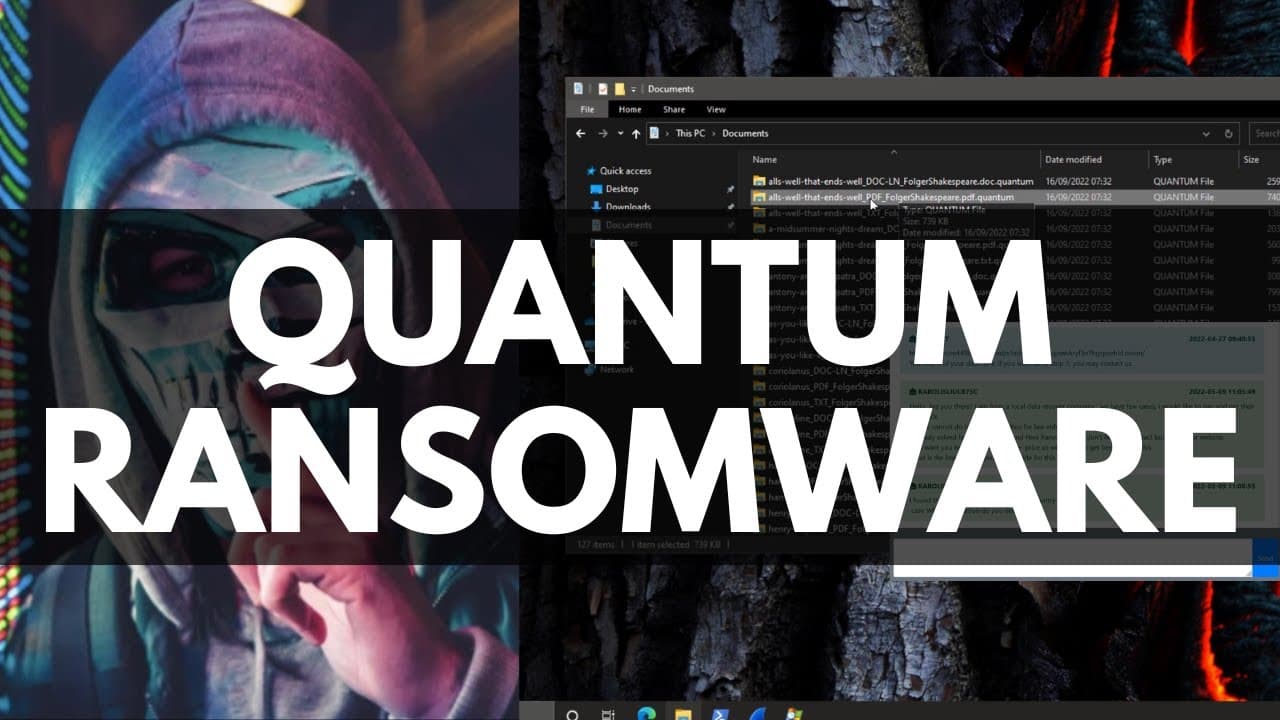
Quantum ransomware disguises itself as a document file and utilizes malicious DLLs to avoid detection by antivirus software. It has targeted government agencies, demanding ransoms of up to $650,000 and threatening to release stolen data. Effective prevention and detection strategies are crucial due to its sophisticated evasion techniques.
Transcript
hello and welcome to the pc security channel in this video we will be looking at quantum ransomware of course we'll be running it in this virtual machine but first the way it executes many of you may think that you need to open an exe file to be infected by ransomware this one not so much often what these threats will do is they will pretend to be ... Read More
Key Insights
- 😒 Quantum ransomware disguises itself as a document file and uses malicious DLLs to execute its code, making it difficult to detect.
- 🎯 The ransomware has targeted government agencies, demonstrating its potential to impact critical infrastructure.
- ❓ The ransom amount demanded by quantum ransomware can be substantial, emphasizing the importance of preventive measures and cybersecurity awareness.
- 💁 Quantum ransomware includes an info stealer component, highlighting the risk of data breaches and the need for robust data protection measures.
- 🕵️ Antivirus engines may not always detect quantum ransomware due to its evasive techniques, underscoring the importance of a multi-layered defense strategy.
- 😷 IP addresses associated with quantum ransomware attacks can be masked to appear legitimate, further complicating the identification of malicious activities.
- ↩️ Ransomware victims often turn to local data recovery companies for help, but they are usually unable to decrypt the data without the attackers' assistance.
Install to Summarize YouTube Videos and Get Transcripts
Explore YouTube Video Summarizer or Get YouTube Transcript Extractor
Questions & Answers
Q: How does quantum ransomware evade detection by antivirus engines?
Quantum ransomware uses malicious DLLs to execute its code without the need for an actual executable file, thus avoiding detection by antivirus engines that rely on the presence of executable files.
Q: What is the typical ransom amount demanded by quantum ransomware?
The ransom amount demanded by quantum ransomware can vary depending on the victim, but it has been reported to be as high as $650,000. However, the amount may be negotiable depending on the victim's likelihood of paying.
Q: Does quantum ransomware steal data in addition to encrypting files?
Yes, quantum ransomware includes an info stealer component that claims to have stolen one terabyte of data. The attackers threaten to release the stolen data if the ransom is not paid.
Q: How do ransomware authors mask their payloads to avoid detection?
Ransomware authors are becoming increasingly clever in hiding their payloads, making it possible for well-known antivirus engines to miss their detection. They may use different techniques such as DLL-based ransomware to bypass traditional antivirus measures.
Summary & Key Takeaways
-
Quantum ransomware disguises itself as a document file using a shortcut icon and utilizes malicious DLLs to avoid detection by antivirus engines.
-
The ransomware has targeted government agencies, such as the Dominican Republic, with the potential to steal one terabyte of data and demand a ransom of $650,000.
-
Detecting and recovering from quantum ransomware attacks can be challenging due to its evasive nature and encryption methods.
Read in Other Languages (beta)
Share This Summary 📚
Summarize YouTube Videos and Get Video Transcripts with 1-Click
Try YouTube Summary with ChatGPT & Claude or YouTube Transcript Generator
Explore More Summaries from The PC Security Channel 📚

Summarize YouTube Videos and Get Video Transcripts with 1-Click
Try YouTube Summary with ChatGPT & Claude or YouTube Transcript Generator