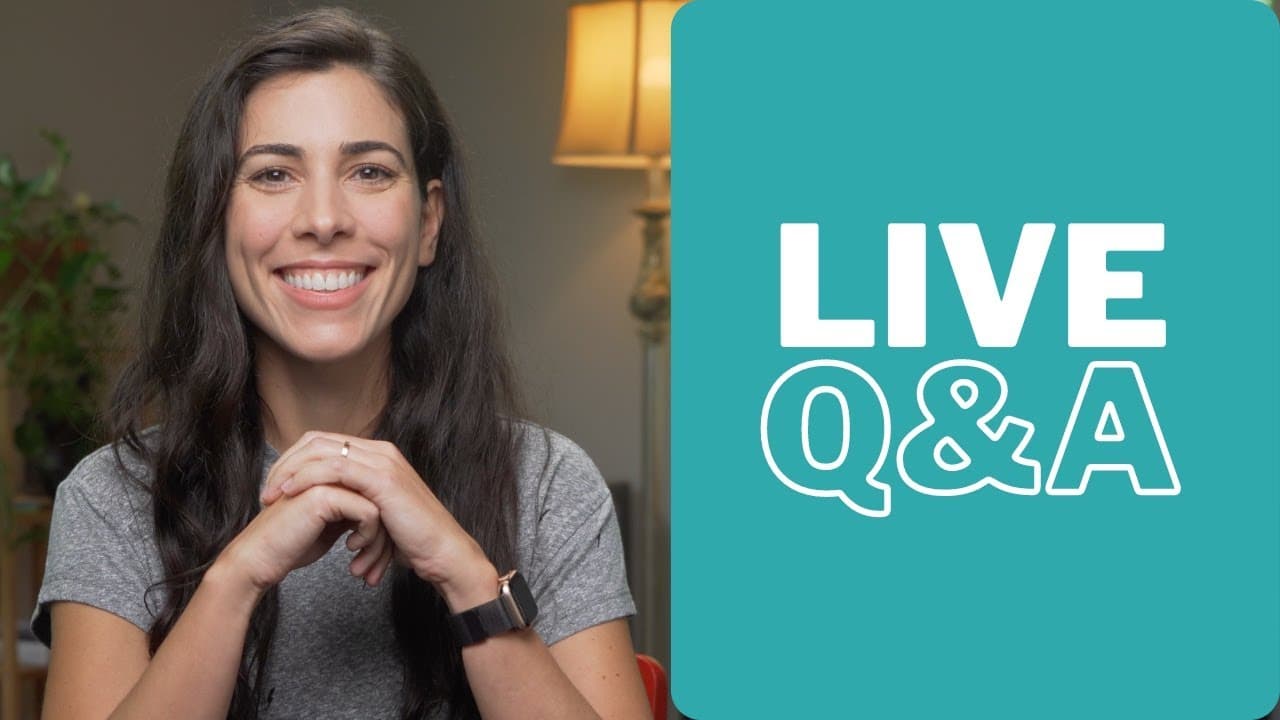
LIVE Q&A with teacher Virginia Langhammer
TL;DR
Virginia Langhammer answers questions on learning Brazilian Portuguese.
Transcript
welcome to this q a i'm sorry i'm two minutes late i had some issues with my internet i hope everything is working now to the phone oh yeah alejandro jacob tom margus okay so whoops i'm i'm listening to my own voice this is so weird what's going on here okay so i just solved that problem okay guys i'm also going to connect on instagram so people fr... Read More
Key Insights
- Virginia Langhammer hosts a monthly live Q&A session to assist learners of Brazilian Portuguese, addressing questions from both beginners and advanced students.
- Brazilians often do not use 'yes' in the same way as English speakers, opting instead for context-specific responses.
- Practicing with native speakers and using shadowing techniques can enhance naturalness and fluency in Portuguese speaking.
- Virginia emphasizes the importance of patience and consistent practice in language learning, recommending various resources like podcasts and YouTube channels.
- She advises on the significance of choosing high ground when renting or buying property in New York due to flood risks.
- Virginia discusses the difference between formal grammar and colloquial usage in Brazilian Portuguese, highlighting common informal expressions.
- She suggests utilizing multiple learning methods and platforms for effective self-study in Portuguese.
- Virginia notes the regional nature of Brazilian slang and advises learners to focus on standard language initially.
Install to Summarize YouTube Videos and Get Transcripts
Explore YouTube Video Summarizer or Get YouTube Transcript Extractor
Questions & Answers
Q: How can I sound more natural when speaking Portuguese?
To sound more natural in Portuguese, practice regularly and listen to native speakers. Use shadowing techniques to mimic pronunciation and intonation. Over time, you'll gain confidence and your speech will become more fluid and less robotic. Patience and consistent practice are key to mastering natural expressions.
Q: What should I consider when buying property in New York?
When buying property in New York, consider choosing locations on higher ground to avoid flood risks, especially during hurricanes. Flooding can cause significant damage, so prioritizing elevation in property selection can mitigate potential water-related issues.
Q: How do Brazilians typically answer questions without using 'yes'?
Brazilians often answer questions by repeating the verb used in the question or using context-specific words, rather than directly saying 'sim' (yes). This approach can vary depending on the context, and understanding these nuances comes with practice and exposure to the language.
Q: What are some effective methods for self-studying Portuguese?
Effective self-study methods include using YouTube channels, podcasts, and language apps like Anki for vocabulary building. Combine these with regular practice and interaction with native speakers. Diversifying your learning tools helps reinforce language skills and keeps the learning process engaging.
Q: What is the difference between formal and colloquial Brazilian Portuguese?
Formal Brazilian Portuguese follows strict grammar rules, while colloquial language is more flexible and commonly used in everyday conversations. Colloquial Portuguese often includes informal expressions and slang, which might not adhere to traditional grammar but are widely understood by native speakers.
Q: What is the importance of shadowing in language learning?
Shadowing involves listening to native speakers and immediately repeating what they say. This technique helps improve pronunciation, intonation, and fluency. It's particularly effective at intermediate and advanced levels, allowing learners to practice real-time language processing and mimic native-like speech patterns.
Q: How do regional differences affect Brazilian Portuguese slang?
Brazilian Portuguese slang is highly regional, meaning expressions can vary significantly across different areas of Brazil. A slang term common in São Paulo might be unfamiliar in the Northeast. Learners should initially focus on standard Portuguese before delving into regional slang to ensure broader comprehension.
Q: Is it too late to start learning Portuguese at 59?
It's never too late to learn Portuguese or any language. At 59, you can still successfully learn Portuguese, especially if you approach it as a fun and rewarding activity. Many learners in their later years find joy and satisfaction in acquiring new language skills, proving age is no barrier to learning.
Summary & Key Takeaways
-
Virginia Langhammer's live Q&A session is a platform for learners to ask questions about Brazilian Portuguese, with a focus on practical language use.
-
She explains the nuances of Brazilian Portuguese, such as the unique way Brazilians respond to questions without using 'yes' directly.
-
Virginia provides learning tips, emphasizing the use of diverse resources and consistent practice to achieve fluency.
Read in Other Languages (beta)
Share This Summary 📚
Summarize YouTube Videos and Get Video Transcripts with 1-Click
Try YouTube Summary with ChatGPT & Claude or YouTube Transcript Generator
Explore More Summaries from Speaking Brazilian Language School 📚



Summarize YouTube Videos and Get Video Transcripts with 1-Click
Try YouTube Summary with ChatGPT & Claude or YouTube Transcript Generator